Avivores: The Specialized Predators That Hunt Birds
In the natural world, an avivore is a specialized predator whose diet consists primarily of birds. While many animals may occasionally eat a bird, true avivores rely on avian prey as a significant portion of their nutritional intake. These predators span a diverse range of biological groups, from high-speed raptors to opportunistic invertebrates.
Key Facts
- Avivores are animals that specialize in hunting and eating birds.
- Peregrine falcons can reach speeds exceeding 300 km/h during hunting dives.
- Sexual dimorphism is often more pronounced in bird-eating raptors, with females typically being larger.
- Some mammals, like the red fox, engage in surplus killing, where they kill more prey than they consume.
- While some arthropods eat birds, no known arthropod is a strict avivore.
Avian Avivores: Birds Hunting Birds
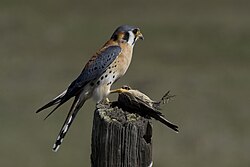
Certain birds, particularly falcons and accipiters, have evolved specifically to hunt other birds. These predators possess skull structures optimized for grasping and crushing prey with their beaks, though they are less adapted for twisting the neck of their prey.
Hunting strategies vary widely among these species. The shikra, besra, Eurasian sparrowhawk, and sharp-shinned hawk utilize ambush tactics, launching surprise attacks from the cover of trees or bushes. In contrast, the lanner falcon employs horizontal pursuit in open terrain, while the aplomado falcon utilizes a combination of both ambush and extended flight.
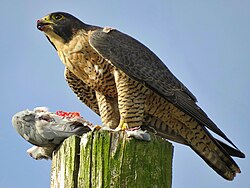
The peregrine falcon (Falco peregrinus) is perhaps the most famous avian avivore, known for diving from great heights at speeds over 300 km/h to strike flying prey.
Historically, this specialization reached extremes with the extinct Haast's eagle of New Zealand, which preyed upon large flightless birds such as the moa.
Mammalian Avivores
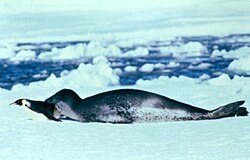
In specific environments, mammals become primary predators of birds. For example, adult leopard seals prey heavily on penguins, and Arctic foxes in coastal regions target colonies of gulls, auks, and murres. In New Zealand, stoats prey on defenseless flightless birds like the kiwi and takahē.
Some mammals possess specialized physical adaptations for bird hunting. The caracal and serval are medium-sized cats capable of leaping high into the air to snatch birds, sometimes capturing two at once. Other mammals, such as the greater noctule bat in Southern Europe, are believed to hunt small migrating birds mid-flight.
Certain carnivores exhibit a behavior known as surplus killing. A notable observation by Kruuk in 1972 recorded four red foxes killing 230 black-headed gulls in a single night, with fewer than 3% of the birds actually being eaten.
Beyond specialized hunters, many mammals—including primates (such as chimpanzees and baboons), orcas, rodents, and squirrels—occasionally eat birds, eggs, or nestlings.
Amphibians and Arthropods
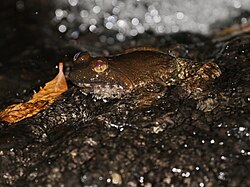
While less common, some amphibians and invertebrates are capable of avivory. The fanged frog (Limnonectes megastomias) is a documented predator of both insects and birds.
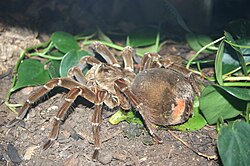
Among arthropods, no species is a strict avivore, but many are opportunistic. The Goliath birdeater (Theraphosa blondi) is named for this habit, though it rarely actually preys on birds. Other spiders, such as golden orb-weavers, have been known to consume small finches and mannikins.
The Phillip island centipede (Cormocephalus coynei) occupies a unique niche on Phillip Island, where it may consume between 2,100 and 3,730 petrel chicks annually, likely due to a lack of endemic mammalian predators.
Praying mantises are also prolific bird hunters, often capturing hummingbirds (such as the ruby-throated hummingbird) and other small birds like warblers and flycatchers. Genera known for this include Mantis, Tenodera, and Sphodromantis. Additionally, the coconut crab (Birgus latro) has been observed ambushing sleeping red-footed boobies, using its powerful claws to shatter wing bones.
Avivore Summary Table
| Animal Group | Example Species | Primary Hunting Method |
|---|---|---|
| Birds | Peregrine Falcon | High-speed aerial dive |
| Mammals | Caracal / Serval | High-leaping ambush |
| Mammals | Leopard Seal | Aquatic ambush (Penguins) |
| Amphibians | Fanged Frog | Opportunistic predation |
| Arthropods | Praying Mantis | Ambush capture |
| Arthropods | Coconut Crab | Physical ambush/crushing |
Frequently Asked Questions
What is an avivore?
An avivore is an animal that specializes in eating birds, meaning that birds make up a large proportion of its overall diet.
Do all raptors eat birds?
No, but those that specialize in avivory often show greater sexual dimorphism (females being larger than males) and have skull forms adapted for grasping and crushing with the beak.
Can insects really eat birds?
Yes, although no insect is a strict avivore. Praying mantises and certain large spiders and centipedes are known to capture and consume small birds.
What is surplus killing in avivores?
Surplus killing occurs when a predator kills more prey than it can possibly eat. This has been observed in red foxes and martens.
How fast can a peregrine falcon dive?
The peregrine falcon can reach speeds exceeding 300 km/h when diving from a great height to strike its prey.