Autonomy March: Advocating for Upper Silesian Regional Identity
Every year, the streets of Katowice become a vibrant display of regional pride and political aspiration. The Autonomy March (Polish: Marsz Autonomii; Silesian: Marsz Autōnōmije) is an annual demonstration held in Upper Silesia, Poland, dedicated to the pursuit of regional self-governance. Since its inception in 2007, the event has served as a focal point for those seeking to restore autonomy to the region in a contemporary framework.
The Purpose and Vision of the March
The primary objective of the Autonomy March is to manifest support for restoring autonomy to Upper Silesia. Organizers envision a modern administrative structure modeled after successful regional solutions found in Germany or Spain. The event is organized by the Silesian Autonomy Movement, which describes the march as the largest cyclical manifestation of local community issues within Poland.
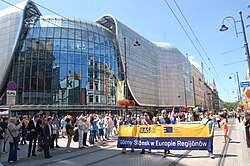
The march typically takes place around July 15th, a date chosen to commemorate the anniversary of the adoption of the Statute of the Silesian Voivodeship in 1920. The procession winds through the streets of Katowice, culminating in a gathering in front of the Voivodeship Office, the building that formerly housed the Silesian Parliament.
Symbols and Cultural Celebration
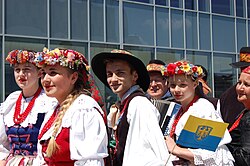
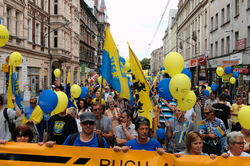
The event is not only a political demonstration but also a celebration of cultural identity. Participants prominently display the gold and blue colors of Upper Silesia, carrying banners and flags featuring the regional coat of arms—a golden eagle set against a blue background.
The timing of the march coincides with Silesian Flag Day (Dzień Ślonskij Fany), further intertwining the political goal of autonomy with the celebration of regional heritage. This cultural emphasis was bolstered in 2011 with the establishment of the 1st Upper Silesian Day, an initiative designed to nurture and maintain the unique identity and culture of the region.
Evolution of the Movement
The Autonomy March has seen significant growth in participation since its beginning. The inaugural march in 2007 attracted several hundred people who walked from the Market Square to the Voivodeship Office. This first event concluded with a rally where participants sent postcards to the then-President of the Republic of Poland, Lech Kaczyński, formally requesting the restoration of autonomy. Following the rally, attendees viewed films about Upper Silesia at the Upper Silesian Cultural Centre.
Over the years, the scale of the event expanded. By the sixth march in 2012, attendance had grown to approximately 5,000 participants, signaling an increase in the visibility of the movement.
Key Facts
- Location: Katowice, Upper Silesia, Poland.
- Annual Date: Around July 15th (Anniversary of the 1920 Statute of the Silesian Voivodeship).
- Main Organizer: Silesian Autonomy Movement.
- Regional Colors: Gold and blue.
- Growth: Increased from several hundred participants in 2007 to roughly 5,000 by 2012.
- Goal: Restoration of autonomy based on Spanish or German models.
| Event/Symbol | Date/Detail | Significance |
|---|---|---|
| Autonomy March | Annual (July 15th) | Advocacy for regional self-governance |
| Silesian Flag Day | July 15th | Celebration of regional colors and symbols |
| Upper Silesian Day | Established 2011 | Preservation of regional culture and identity |
| Regional Colors | Gold and Blue | Visual representation of Upper Silesia |
Frequently Asked Questions
What is the main goal of the Autonomy March?
The march aims to express support for restoring autonomy to Upper Silesia using a modern administrative model similar to those implemented in Germany or Spain.
Why is the march held on July 15th?
This date marks the anniversary of the adoption of the Statute of the Silesian Voivodeship in 1920 and is also celebrated as Silesian Flag Day.
Who organizes the event?
The event is primarily organized by the Silesian Autonomy Movement.
Where does the march take place?
The demonstration occurs in Katowice, Poland, typically moving from the Market Square to the Voivodeship Office (the former Silesian Parliament building).
How has the march grown since 2007?
The event began with several hundred participants in 2007 and grew to approximately 5,000 people by the sixth march in 2012.