Upper Silesia: A History of Cultural Crossroads and Industrial Power
Upper Silesia is a historical region of Central Europe, currently divided between Poland and the Czech Republic. Defined by its rich mineral deposits and a complex tapestry of ethnic identities, the region has served as a strategic prize for various empires over a millennium. From its early Slavic roots to its transformation into an industrial powerhouse, Upper Silesia embodies the shifting borders and cultural synthesis of the borderlands.
The region is characterized by its urban centers, with Katowice serving as the largest city and Opole as its historical capital. Its identity is forged from a blend of Polish, German, and Czech influences, creating a unique local culture and linguistic heritage.
Key Facts
- Current Location: Split between Poland and the Czech Republic.
- Major Cities: Katowice (largest) and Opole (historical capital).
- Historical Significance: A major center for coal and iron ore mining.
- Ethnic Composition: Historically a mix of Polish, German, and Silesian speakers.
- Key Events: The Silesian Uprisings (1919–1921) and the 1921 plebiscite.
Early History and the Piast Dynasty
The region's recorded history begins in the 9th century with the West Slavic Opolanie tribe, who settled along the upper Oder River. Early records suggest the area may have been part of the Great Moravian realm under Prince Svatopluk I before falling under the influence of the Bohemian Přemyslid rulers.
By 990, the Piast duke Mieszko I of the Polans conquered significant portions of Silesia. His successor, Bolesław I the Brave, subdued the pagan Opolanie, integrating Upper Silesia into Poland for several centuries. However, the region remained a point of contention with Bohemian dukes until a peace treaty in 1137 established the border along the Sudetes.
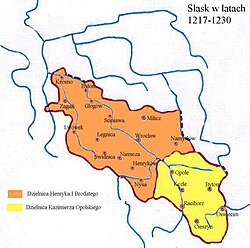
Internal political instability led to the fragmentation of the province. In 1172, Mieszko IV Tanglefoot established the Duchy of Racibórz. By 1202, after annexing the Duchy of Opole, Mieszko ruled all of Upper Silesia as the Duke of Opole and Racibórz.
The Ostsiedlung and German Influence
In the 13th century, ties with the Holy Roman Empire strengthened. Under the promotion of Duke Henry I the Bearded, the region experienced the Ostsiedlung—the eastward migration of German settlers. This period saw the establishment of numerous cities governed by German town law. However, the Mongol invasion of 1241 and the death of Duke Henry II the Pious halted efforts to reunify Silesia, leading to further fragmentation into smaller duchies, including Bytom, Opole, Racibórz, and Cieszyn.
Imperial Transitions: Bohemia, Austria, and Prussia
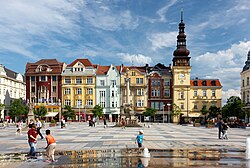
By 1327, Upper Silesian dukes became vassals of King John of Bohemia. The 1335 Treaty of Trentschin formally excluded Silesia from Polish lands, making it part of the Bohemian Crown and the Holy Roman Empire. While German settlers continued to arrive, the Black Death in the mid-14th century slowed this process, allowing a majority of the population to retain Polish and Silesian native languages.
The region later passed through several hands: it was conquered by King Matthias Corvinus of Hungary in 1469 and inherited by the Austrian House of Habsburg in 1526. During the 16th century, the Protestant Reformation gained ground, though the Habsburgs forcibly reintroduced Catholicism via the Jesuits after the 1620 Battle of White Mountain.
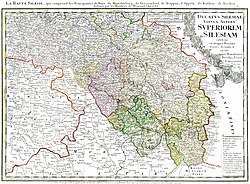
The geopolitical landscape shifted again in 1742 during the First Silesian War, when the Kingdom of Prussia annexed most of Upper Silesia. A small portion remained under Habsburg rule as Austrian Silesia. By 1815, as part of the Prussian Province of Silesia, the region leveraged its vast coal and iron ore deposits to become a primary industrial hub of the German Empire after 1871.
Demographics and the Struggle for Identity
The 19th and early 20th centuries were marked by significant demographic shifts. Census data from 1819 to 1910 show a quadrupling of the total population. While Polish speakers remained a majority for much of this period, the percentage of German speakers increased steadily as industrialization drew more migrants to the region.
| Year | Polish Speakers | German Speakers | Other | Total Population |
|---|---|---|---|---|
| 1819 | 377,100 (67.2%) | 162,600 (29.0%) | 21,503 (3.8%) | 561,203 |
| 1852 | 584,293 (58.6%) | 363,990 (36.5%) | 49,445 (4.9%) | 997,728 |
| 1910 | 1,169,340 (53.0%) | 884,045 (40.0%) | 117,651 (5.8%) | 2,207,981 |
The World Wars and Modern Borders
Following World War I, ethnic tensions peaked. The "Mysłowice massacre" of 1919, where German forces fired on Polish miners, sparked the First Silesian Uprising. Between 1919 and 1921, three uprisings occurred as the Polish-speaking population sought unification with the newly reborn Polish state.
A plebiscite held in March 1921 resulted in 59.4% voting against and 40.6% voting for merging with Poland. This led to a complex division of the territory in 1922, with the Weimar Republic ceding East Upper Silesia to Poland.
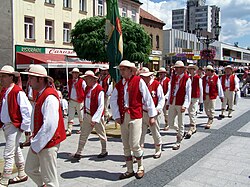
After 1945, the Potsdam Agreement resulted in the majority of Upper Silesia being placed under Polish administration. This period was marked by the expulsion of many German-speaking inhabitants and the settlement of Polish migrants, including those displaced from former Polish eastern territories annexed by the USSR. However, many bilingual Roman Catholics remained, preserving a distinct regional identity.
Major Urban Centers
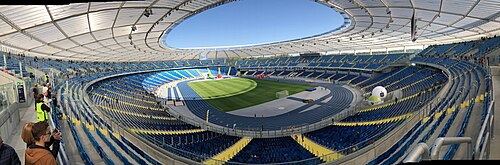
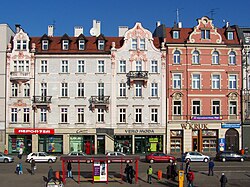
Today, Upper Silesia is one of the most densely urbanized areas in Europe. Key cities include:
- Katowice: The administrative and industrial heart of the region.
- Ostrava: A major industrial center in the Czech Republic.
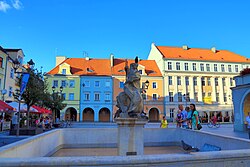
- Gliwice: Known for its historic old town and technical significance.
- Opole: The historical capital with deep ties to the Piast dynasty.
Frequently Asked Questions
Which countries currently share Upper Silesia?
Upper Silesia is currently divided between Poland and the Czech Republic.
What was the significance of the 1921 plebiscite?
The plebiscite was a vote to determine whether the region should belong to Germany or Poland after World War I, resulting in a divided territory based on the voting patterns of the local population.
Why did Upper Silesia become a major industrial center?
The region possesses plentiful deposits of coal and iron ore, which fueled rapid industrialization during the Prussian era in the 19th century.
Who were the Piasts in the context of Upper Silesia?
The Piasts were the first historical ruling dynasty of Poland; various branches of the family ruled the Silesian duchies, including the Duchy of Opole and Racibórz, before the region fell under Bohemian and later Prussian rule.
What is the ethnolinguistic history of the region?
The region has been a melting pot of Polish, German, and Czech influences. While it was historically dominated by Polish and Silesian speakers, German influence grew through the Ostsiedlung and Prussian rule, leading to a significant bilingual population.