Atom Structure and the Evolution of Atomic Theory
The atom is the smallest recognized division of a chemical element, serving as the fundamental building block of all ordinary matter. While the concept of the atom has existed for centuries, our scientific understanding has evolved from simple philosophical spheres to complex quantum probability clouds. These tiny entities, ranging in diameter from 62 picometers (pm) in helium to 520 pm in cesium, dictate the chemical and physical properties of everything in the known universe.
Key Facts
- Composition: Atoms consist of a compact nucleus containing protons and neutrons, surrounded by an electron cloud.
- Mass Range: Atomic masses vary from 1.67 × 10⁻²⁷ kg to 4.52 × 10⁻²⁵ kg.
- Scale: Atoms are so small that a typical human hair is approximately 1 million carbon atoms wide.
- Charge: Atoms are typically neutral, but can become ions if they gain or lose electrons.
- Measurement: Because individual atoms are too light to weigh directly, chemists use the mole (approximately 6.022 × 10²³ atoms) for practical measurement.
The Evolution of Atomic Theory
Early Chemical Philosophy
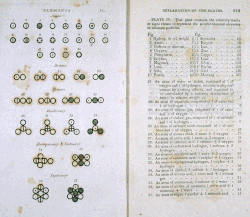
In the early 19th century, John Dalton advanced the law of multiple proportions. By studying tin oxides, Dalton observed that the ratio of oxygen to tin in different compounds followed simple whole-number ratios (1:2). This led to the conclusion that elements combine as discrete atoms rather than continuous masses.
The Discovery of Subatomic Particles
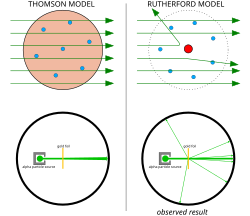
The transition from the "indivisible atom" to a structured particle occurred through a series of landmark discoveries. J.J. Thomson identified the electron, noting that the positive charge of a hydrogen ion equaled the negative charge of an electron. Later, Ernest Rutherford's scattering experiments revealed that atoms are not solid, but contain a concentrated center of positive charge.
From the Bohr Model to Quantum Orbitals
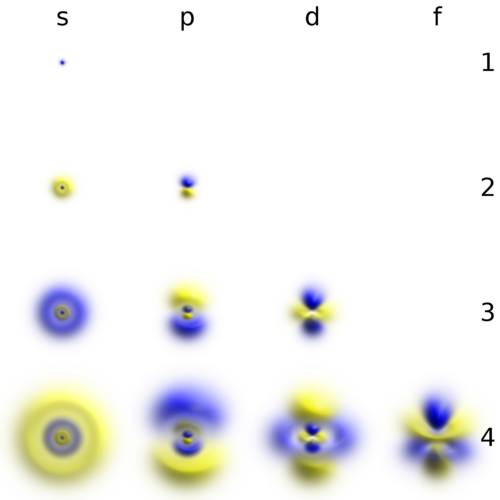
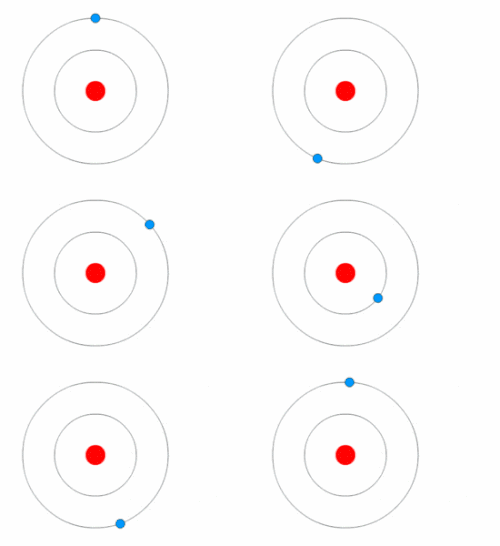
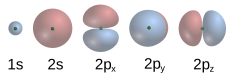
Niels Bohr proposed a model where electrons orbit the nucleus in fixed paths, making "quantum leaps" between energy levels. While this explained some spectral lines, it was eventually superseded by the modern quantum mechanical model. Today, we understand that electrons do not follow set paths but exist in atomic orbitals—zones where there is a high probability of finding an electron at any given moment.
The Modern Consensus Model
The Nucleus and Nucleons
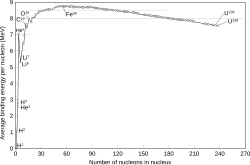
At the center of every atom lies the nucleus, composed of protons (positively charged) and neutrons (neutral). The number of protons, known as the atomic number, defines the identity of the element. Protons have a mass of approximately 1.6726 × 10⁻²⁷ kg. The stability of the nucleus is maintained by binding energy, which is the energy required for a nucleon to escape the nucleus.
The Electron Cloud and Energy Levels
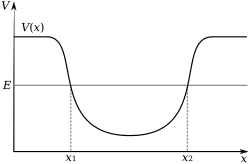
Electrons occupy specific energy levels. When electrons move between these levels, they absorb or emit energy, often resulting in distinct absorption or emission lines in a spectrum. These energy levels are sufficient for the ground states of atoms up to cadmium.


Visualizing the Invisible
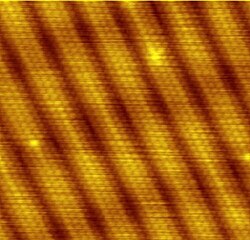
Because atoms are thousands of times smaller than the wavelengths of visible light (400–700 nm), they cannot be seen with optical microscopes. However, technology such as the scanning tunneling microscope allows scientists to image individual atoms on a surface, revealing how they arrange themselves in crystals.
Nuclear Processes and Origins
Radioactive Decay and Stability
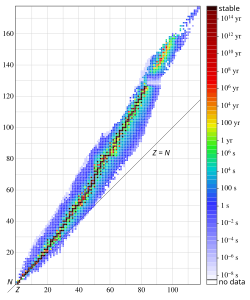
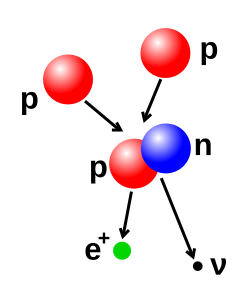
Not all nuclei are stable. Some undergo radioactive decay to reach a more stable state. The time it takes for half of a sample of a radioactive isotope to decay is known as its half-life.
The Cosmic Origin of Elements
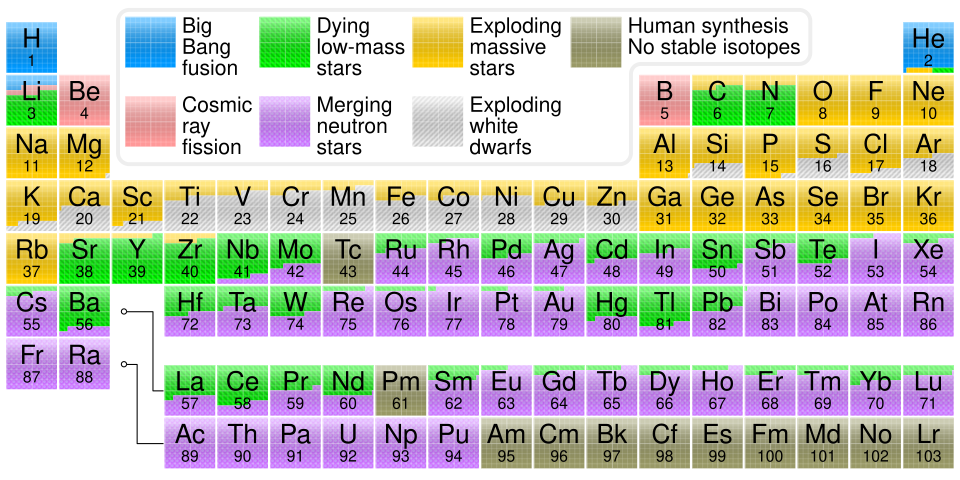
Elements are formed through various stellar processes. Light elements like helium are formed via nuclear fusion. Heavier elements are created in stars through the alpha process or via neutron capture (s-process and r-process) during supernovae or neutron star mergers.
Summary of Atomic Properties
| Component | Charge | Relative Mass | Role/Function |
|---|---|---|---|
| Proton | Positive (+) | ~1 u | Determines Atomic Number |
| Neutron | Neutral (0) | ~1 u | Provides Nuclear Stability |
| Electron | Negative (-) | Negligible | Governs Chemical Bonding |
Frequently Asked Questions
What is the difference between the Bohr model and the modern model?
The Bohr model depicts electrons orbiting the nucleus in fixed, circular paths. The modern model replaces these orbits with orbitals, which are probability zones where an electron is most likely to be located.
How do scientists measure the mass of an atom?
Since individual atoms are too small to weigh, scientists use the mole. One mole contains approximately 6.022 × 10²³ atoms, allowing the atomic mass unit (u) to be converted into grams for laboratory use.
What determines the identity of an element?
The identity of an element is determined solely by its atomic number, which is the number of protons found in the nucleus of the atom.
How are elements heavier than iron created?
Elements heavier than iron are typically formed through neutron capture processes (s-process and r-process) occurring in large stars, supernovae, or the merger of neutron stars.
Can we actually see atoms?
We cannot see atoms with light-based microscopes because they are smaller than the wavelength of light. However, we can visualize them using a scanning tunneling microscope, which senses the surface of the atoms.