Astor House: A Legacy of Statesmen and Literary Giants
For decades, the Astor House stood as the most prestigious hotel in the United States. With an international reputation for excellence, it served as a premier gathering place where the world's most renowned literary figures and influential statesmen converged, making it a central hub of 19th-century social and political life.
The hotel's prestige was reflected in its architecture and its role as a cultural landmark in New York City.
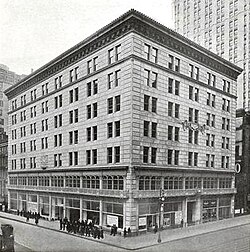
Key Facts
- Prestige: Recognized for decades as the most famous and prestigious hotel in the country.
- Political Hub: Hosted Abraham Lincoln and served as the headquarters for his 1864 re-election campaign.
- Sports History: The birthplace of the United States Soccer Federation in 1913.
- Literary Connection: A frequent meeting spot for figures like Henry Wadsworth Longfellow and William James.
A Sanctuary for Literary and Artistic Figures
The Astor House was more than just a place of lodging; it was a cultural salon. In the 1840s, it was the residence of Mathew Brady, and it is the birthplace of philosopher William James, born there in 1842. The hotel also hosted the newly married Henry Wadsworth Longfellow and his wife in 1843, who used their stay to reconnect with Fanny Kemble and dine with Nathaniel Parker Willis and his wife.
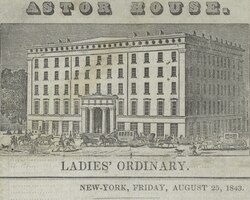
The hotel's appeal extended to international artists as well. Norwegian violinist Ole Bull was a recurring patron, staying at the hotel during his various American tours throughout the 1840s, 1850s, and 1860s.
Political Turmoil and Presidential Visits
The Astor House played a significant role during the American Civil War era. In February 1861, Abraham Lincoln stayed at the hotel while traveling to his inauguration, delivering an impromptu speech during his visit. By 1864, the hotel became a strategic center when Thurlow Weed managed Lincoln's re-election campaign from its rooms.
The hotel also witnessed the tensions of the era. On November 25, 1864, Confederate sympathizers targeted 13 major hotels in New York City, including the Astor House, by setting fires. Fortunately, these blazes were quickly extinguished.
The Tale of Admiral Raphael Semmes
The contrasting fortunes of the war are highlighted by the stays of Confederate Admiral Raphael Semmes. He first visited in March 1861, just before the war began, to search for ships for the new Confederate Navy. He returned on December 27, 1865, but this time as a prisoner of the North, staying one night while being escorted to the Washington Navy Yard to determine if he would face trial.
Civic Milestones and Later Years
Beyond politics and art, the Astor House served the public during crises and witnessed the birth of American sports organizations. It provided a safe haven for citizens during the Great Blizzard of 1888. Later, on April 5, 1913, the hotel hosted the founding of the United States Soccer Federation.
The hotel continued to be a site of political suspense into the 20th century, hosting Charles Evans Hughes in 1916 while the outcome of his presidential bid remained uncertain.
| Person/Organization | Year(s) | Significance |
|---|---|---|
| William James | 1842 | Born at the hotel |
| Abraham Lincoln | 1861, 1864 | Inauguration visit and re-election campaign base |
| Raphael Semmes | 1861, 1865 | Visited as a naval seeker, then as a prisoner |
| U.S. Soccer Federation | 1913 | Founded at the hotel |
| Charles Evans Hughes | 1916 | Stayed during presidential bid |
Frequently Asked Questions
Who was born at the Astor House?
The philosopher William James was born at the Astor House in 1842.
What role did the hotel play in Abraham Lincoln's career?
Lincoln stayed there in February 1861 on his way to his inauguration and gave an impromptu speech. Additionally, Thurlow Weed ran Lincoln's 1864 re-election campaign from the hotel.
Which major sports organization was founded there?
The United States Soccer Federation was founded at the Astor House on April 5, 1913.
Did the Astor House survive any attacks?
Yes, on November 25, 1864, Confederate sympathizers set fires in the Astor House and 12 other major hotels in the city, though the fires were put out quickly.
How was the hotel used during the Great Blizzard of 1888?
The Astor House served as a safe haven for people during the storm.