Asian Americans: Demographics, History, and Cultural Impact
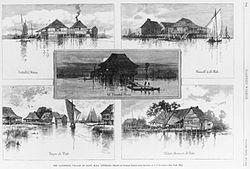
The landscape of the United States is profoundly shaped by the diverse contributions and histories of people of Asian ancestry. From the early settlers in Louisiana to the modern leaders of global technology firms, Asian Americans represent a vast array of ethnicities, languages, and professional achievements. As one of the fastest-growing demographic groups in the country, their influence spans every sector of American society, including government, science, and the arts.
Key Facts
- Total Population: Approximately 25.89 million people identify as Asian alone or in combination (2023 American Community Survey).
- Population Share: Asian Americans make up 7.24% of the total US population.
- Primary Hubs: California, New York, and Texas have the largest Asian American populations.
- Educational Attainment: Several Asian ethnic groups, including Indians and Taiwanese, report bachelor's degree attainment rates significantly higher than the US national average.
- Political Trend: Since 1992, there has been a notable shift toward supporting Democratic presidential candidates.
Population and Geographic Distribution
According to the 2023 American Community Survey, the Asian American population is divided between those who identify as a single race and those who are multiracial. Specifically, 20,052,323 people identify as Asian alone (6.00% of the US population), while 5,835,155 identify in combination with other races (1.24%).
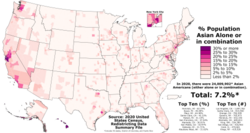
Geographically, the population is concentrated in specific states, though presence is felt nationwide. California leads the nation with over 6 million residents identifying as Asian alone, followed by New York and Texas.
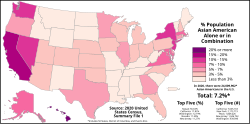
Asian American Population by State (2020 Census)
The 2020 Census highlights the varying density of Asian American communities across the US. While Hawaii has the highest percentage of Asian residents relative to its total population, the largest raw numbers are found on the West Coast and in the Northeast.
| State | Total Population | Asian Alone Population | % Asian Alone | Asian (Alone or Combination) | % Total Asian |
|---|---|---|---|---|---|
| California | 39,538,223 | 6,085,947 | 15.4% | 7,045,163 | 17.8% |
| New York | 20,201,249 | 1,933,127 | 9.6% | 2,173,719 | 10.8% |
| Texas | 29,145,505 | 1,585,480 | 5.4% | 1,849,226 | 6.3% |
| Hawaii | 1,455,271 | 541,902 | 37.2% | 824,143 | 56.6% |
| New Jersey | 9,288,994 | 950,090 | 10.2% | 1,046,732 | 11.3% |
Ancestry and Diversity
The term "Asian American" encompasses a wide variety of ancestral backgrounds. The largest groups by population include those of Indian, Chinese, and Filipino descent. Other significant populations include Vietnamese, Korean, and Japanese Americans.
This diversity extends to language and religion, with English serving as a primary language alongside numerous Asian languages. Faith practices are equally varied, including Christianity, Buddhism, Hinduism, Islam, and those who are unaffiliated.
Notable Contributions and Influence
Asian Americans have reached the highest levels of success across multiple professional fields, breaking barriers in government, technology, and the arts.
Government and Public Service
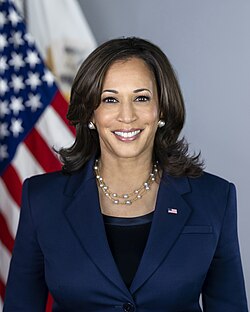
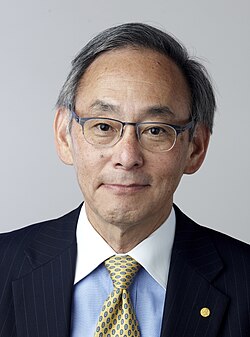
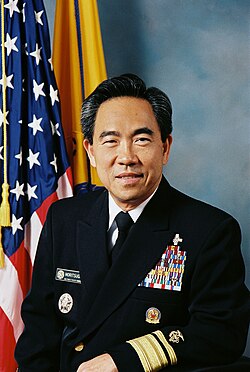
From the executive branch to public health, Asian Americans have held pivotal roles. Kamala Harris served as the Vice President of the United States, and Steven Chu, a Nobel Prize winner in Physics, served as the Secretary of Energy from 2009 to 2013. In the medical field, Kenneth P. Moritsugu became the first Asian American Surgeon General of the US.
Business and Technology
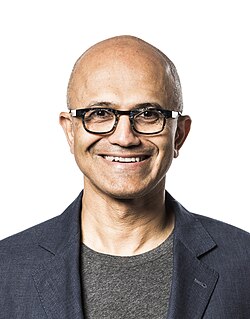
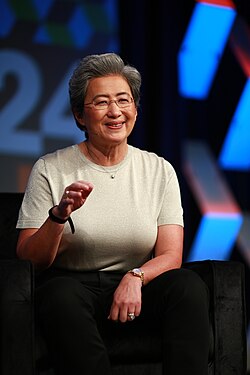
The tech industry has seen immense leadership from Asian Americans. Jensen Huang, founder and CEO of Nvidia, leads one of the world's largest companies as of November 2024. Other influential figures include Satya Nadella (Chairman and CEO of Microsoft), Lisa Su (CEO of AMD), Jerry Yang (co-founder of Yahoo!), and Steve Chen (co-founder of YouTube).



Arts and Entertainment
Cultural influence is evident in cinema and comedy, with figures such as Lucy Liu, Awkwafina, and Ken Jeong bringing Asian American perspectives to global audiences.


Education and Social Dynamics
Educational attainment among Asian Americans is notably high. For example, in 2010, 73.7% of Taiwanese and 70.7% of Indian Americans held a bachelor's degree or higher, compared to the total US population average of 27.9%.
Despite these achievements, the community faces complex social challenges. The model minority myth—a stereotype that suggests all Asians are universally successful—often masks significant economic disparities and mental health struggles. Additionally, the community has dealt with the bamboo ceiling, a metaphorical barrier that prevents Asian Americans from reaching top executive positions despite their qualifications.
Political Trends
Voting patterns among Asian Americans have evolved over the last few decades. While the community showed support for Republican candidates in the early 1990s, there has been a strong shift toward the Democratic Party. This trend peaked in 2012, when 73% of the Asian vote went to Barack Obama.
Frequently Asked Questions
What percentage of the US population is Asian American?
As of the 2023 American Community Survey, Asian Americans (including those who identify as multiracial) make up 7.24% of the total US population.
Which US state has the largest Asian American population?
California has the largest population, with over 6 million people identifying as Asian alone.
What is the "bamboo ceiling"?
The bamboo ceiling refers to the professional barrier that limits the advancement of Asian Americans into senior leadership and executive roles within organizations.
How does education among Asian Americans compare to the US average?
Many Asian ethnic groups have significantly higher rates of higher education. For instance, Indian and Taiwanese Americans reported bachelor's degree rates above 70% in 2010, well above the 27.9% US average.
Who was the first Asian American Surgeon General of the US?
Kenneth P. Moritsugu was the first Asian American to serve as the Surgeon General of the United States.