Archaea: The Third Domain of Life
For decades, biology categorized life into two simple groups: prokaryotes (bacteria) and eukaryotes (complex organisms). However, the discovery of Archaea revealed a third, distinct domain of life. While they look like bacteria under a microscope, their genetic makeup and chemical structures are fundamentally different, often bridging the gap between the simplest cells and the complex cells that make up humans, plants, and fungi.
Archaea are ancient organisms with a temporal range extending from the Paleoarchean era (approximately 3.42 billion years ago) to the present day. Once thought to exist only in the most extreme environments on Earth, we now know they are ubiquitous, inhabiting everything from the deep ocean floor to the human gut.
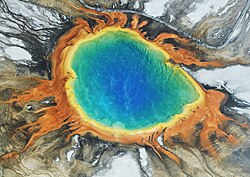
Key Facts
- Distinct Domain: Archaea are separate from Bacteria and Eukarya, forming one of the three primary domains of life.
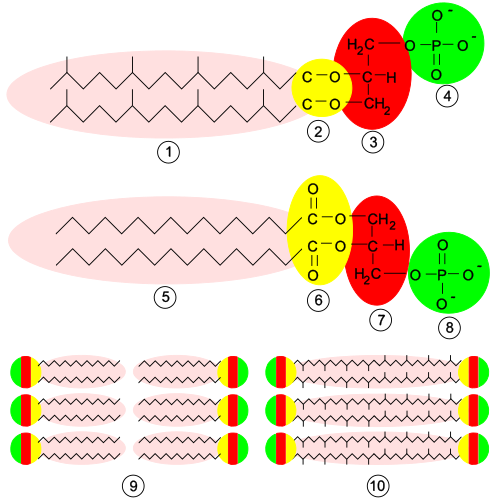
- Unique Membranes: They possess ether-linked phospholipids, which provide greater stability than the ester-linked lipids found in bacteria and eukaryotes.
- Diverse Metabolism: They can be phototrophs (energy from light), lithotrophs (energy from inorganic compounds), or organotrophs (energy from organic compounds).
- Evolutionary Link: The Promethearchaeota (including "Asgard" archaea) are considered closely related to the origin of eukaryotes.
- Extreme Adaptability: Many species are hyperthermophiles, thriving in volcanic springs and hydrothermal vents.
Classification and Phylogeny
The classification of Archaea has evolved significantly since their formal recognition. Originally referred to by synonyms such as "Archaebacteria" or "Neomura," they are now recognized as a standalone domain. Modern phylogeny—the study of evolutionary relationships—places them in a unique position on the tree of life.
![Phylogenetic tree showing the relationship between the Archaea and other domains of life. Eukaryotes are colored red, archaea green and bacteria blue. Adapted from Ciccarelli et al. (2006)[86]](/images/ee/3d/ee3df85b7baeb2e28bd79bb1df7ead134850b9488f7fe1993b09c28abe8c74ac.png)
Valid and Candidate Phyla
Taxonomists have identified several valid phyla, including Methanobacteriota, Microcaldota, Nanobdellota, Promethearchaeota, and Thermoproteota. Beyond these, numerous "candidate phyla" have been identified through genomic sequencing, such as the Aenigmatarchaeota and Hadesarchaeota, which represent lineages that have not yet been fully cultured in laboratories.
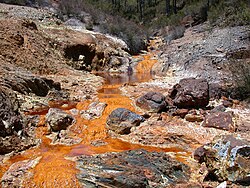
A notable discovery in the early 2000s was the ARMAN group, a collection of archaea found in acid mine drainage, highlighting the domain's ability to survive in highly acidic, toxic environments.
Origin and Evolution
The relationship between Archaea and Eukaryotes is a central topic in evolutionary biology. According to the theory of symbiogenesis, a merger between an aerobic bacterium and a Promethearchaeati (Asgard) archaean created the first eukaryotes. This merger provided the cell with aerobic mitochondria; a subsequent merger with another bacterium added chloroplasts, leading to the evolution of green plants.
![In the theory of symbiogenesis, a merger of an Promethearchaeati / "Asgard" archaean and an aerobic bacterium created the eukaryotes, with aerobic mitochondria; a second merger added chloroplasts, creating the green plants.[99]](/images/e9/cb/e9cb97de8e68d89d1e7e206794ffe6c0406cbffe0cc8b1aa6226645ea032242a.webp)
Cellular Structure and Composition
While Archaea lack a nucleus (making them prokaryotic), their internal chemistry is highly specialized. One of the most striking differences lies in their phospholipids—the molecules that make up the cell membrane.
- Ether Linkages: Unlike bacteria and eukaryotes, which use ester linkages, archaea use ether linkages to connect glycerol to side chains.
- Isoprene Chains: They utilize isoprene chains rather than fatty acids.
- L-Glycerol: They use an L-glycerol moiety instead of the D-glycerol found in other domains.
- Monolayers: Some archaea possess a lipid monolayer, which is significantly more resistant to heat and acid than the standard lipid bilayer.
Genetics and Reproduction
Archaeal genetics are a hybrid of bacterial and eukaryotic traits. They reproduce asexually but engage in horizontal gene transfer, allowing them to exchange genetic material across different species. They are also susceptible to specialized archaeal viruses, which can infect cells like Sulfolobus.
![Sulfolobus infected with the DNA virus STSV1.[165] Bar is 1 micrometer.](/images/09/cf/09cfba319b9f237818ddb3aa2188efb246f763c1aa25997c5df8f6dffd84308d.jpg)
Metabolism and Ecology
Archaea exhibit a wide array of nutritional strategies to survive in diverse habitats. Their metabolic flexibility allows them to play critical roles in global chemical cycling, particularly in the production and consumption of methane.
| Nutritional Type | Energy Source | Carbon Source | Examples |
|---|---|---|---|
| Phototrophs | Sunlight | Organic compounds | Halobacterium |
| Lithotrophs | Inorganic compounds | Organic compounds or carbon fixation | Ferroglobus, Methanobacteria, Pyrolobus |
| Organotrophs | Organic compounds | Organic compounds or carbon fixation | Pyrococcus, Sulfolobus, Methanosarcinales |
Some archaea use bacteriorhodopsin, a protein that allows them to capture light energy without using chlorophyll.
![Bacteriorhodopsin from Halobacterium salinarum. The retinol cofactor and residues involved in proton transfer are shown as ball-and-stick models.[151]](/images/3b/4a/3b4aea3309548304c4b00eaeda6596890cba3d11971b1f88f55fa01236036b11.png)
Environmental Impact and Symbiosis
Archaea are not just solitary extremophiles; they often form complex relationships with other organisms. For example, methanogenic archaea live in a mutualistic symbiosis within the guts of termites, where they assist in the digestion of cellulose.
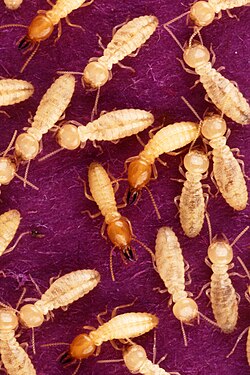
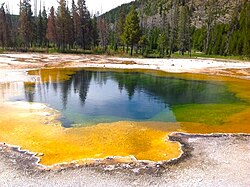
In the wild, they are often found in high concentrations in subseafloor sedimentary biospheres and volcanic hot springs, where they can produce vibrant colors in the water.
Frequently Asked Questions
Are Archaea the same as Bacteria?
No. Although they share a similar cellular shape and lack a nucleus, Archaea have different membrane lipids, different genetic transcription processes, and a distinct evolutionary lineage that makes them more closely related to eukaryotes in some respects than to bacteria.
What are extremophiles?
Extremophiles are organisms that thrive in conditions that would be lethal to most life, such as extreme heat (hyperthermophiles), extreme salinity (halophiles), or extreme acidity (acidophiles). Many Archaea fall into these categories.
How do Archaea contribute to the environment?
Archaea are essential for chemical cycling. Methanogens, for instance, produce methane as a metabolic byproduct, while others are involved in nitrogen fixation and the breakdown of organic matter in deep-sea sediments.
What is the significance of Asgard archaea?
Asgard archaea (Promethearchaeota) are significant because they possess genes previously thought to be exclusive to eukaryotes. This suggests they are the closest living relatives to the ancestors of all complex life.
Can Archaea cause disease in humans?
While Archaea are found on and in the human body as part of the microbiome, there is currently no widely accepted evidence that they act as primary pathogens causing human disease.