Arabic Romanization: Systems, Standards, and Historical Evolution
The romanization of Arabic is the systematic process of rendering written and spoken Arabic using the Latin script. This practice serves a wide array of purposes, from the transcription of names and titles in passports and news reports to the cataloging of library works and the representation of the language in scientific linguistic publications. While native speakers often use informal methods for digital communication, academic and official settings rely on formal systems to ensure accuracy and consistency.
At its core, romanization attempts to bridge the gap between two very different writing systems. Because Arabic contains phonemes (distinct units of sound) that do not exist in English or other European languages, developers of these systems must create specific symbols or combinations of letters to represent them accurately.
Key Facts
- Transliteration focuses on a letter-for-letter mapping that is ideally reversible, while transcription focuses on representing the actual sounds heard.
- Formal systems often use diacritics (marks added to letters, such as dots or macrons) to distinguish between different Arabic consonants.
- The Arabic chat alphabet (Arabizi) is an informal, ASCII-based system used by speakers for convenience on Latin keyboards.
- Historical attempts to fully replace the Arabic script with the Latin script in Lebanon and Egypt were largely rejected due to cultural and nationalistic ties.
- Major international standards include ISO 233, DIN 31635, and the ALA-LC system.
The Challenges of Romanizing Arabic
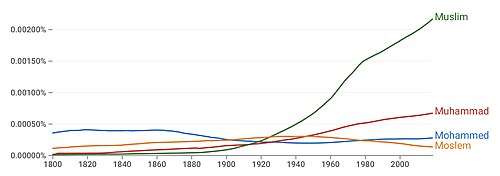
Rendering Arabic in the Latin script presents several inherent linguistic hurdles. One of the primary difficulties is the representation of the Arabic definite article, which is written consistently in Arabic but pronounced differently depending on the context. Another significant challenge involves short vowels, which are often omitted in written Arabic. This leads to common variations in English spelling for the same name, such as Muslim versus Moslem, or Muhammad, Mohammed, and Mohamed.
Transliteration vs. Transcription
In linguistic circles, a critical distinction is made between transliteration and transcription. A transliteration is designed to be fully reversible; a machine or scholar should be able to convert the Latin text back into the original Arabic script without ambiguity. A "loose" transliteration is considered flawed if it uses the same Latin character for different Arabic phonemes or if it creates ambiguity between a single phoneme (represented by a digraph like sh) and two separate consonants.
Conversely, transcription aims to guide the reader toward the correct pronunciation. While a fully accurate transcription is invaluable for non-speakers, some argue that it requires specialized knowledge of diacritics that the average reader does not possess, potentially limiting its practical utility.
Evolution of Romanization Systems
Early Romanization (17th–19th Centuries)
Early efforts to standardize Arabic romanization appeared in bilingual dictionaries. Pedro de Alcalá's 1505 glossary is noted as one of the earliest systematic transcriptions.
![De Alcalá's work has been called the "first Western system of Arabic scientific transcription".[1][2]](/images/e6/21/e621e5bdd59261feca468bc6573a732cd84eea5c03a99cafdd7f7c71fb370903.jpg)
Other influential early works include the Lexicon Arabico-Latinum by Jacobus Golius (1653), which dominated European scholarship for nearly two centuries, and the massive Arabic–English Lexicon by Edward William Lane (1863–1893), which remained highly influential despite being incomplete.
Modern Formal Standards
Modern systems are generally categorized by their approach to characters and diacritics:
- Mixed Digraphic and Diacritical: These systems, such as BGN/PCGN (1956) and UNGEGN (1972), often use combinations of letters (digraphs) and some diacritics. The ALA-LC system, used by the American Library Association and the Library of Congress, is widely adopted in scientific publications.
- Fully Diacritical: These systems prioritize precision. The DMG (1935) and DIN 31635 (1982) standards use extensive diacritics to ensure a one-to-one mapping of characters. ISO 233 provides a strict letter-to-letter transliteration.
- ASCII-based: Designed for computers, these systems avoid special characters. ArabTeX models itself after ISO and DIN standards, while the Buckwalter Transliteration removes the need for diacritics entirely.
The Arabic Chat Alphabet
Distinct from academic standards is the Arabic chat alphabet, an ad hoc solution used by native speakers. This system uses Latin letters and numbers (which visually resemble Arabic letters) to communicate quickly via keyboards that lack Arabic support.
Comparison of Romanization Mappings
The following table illustrates how various systems render key Arabic characters and vocalizations.
| Arabic Letter | Name | IPA | ALA-LC | DIN 31635 | ISO 233 | Arabizi (Chat) |
|---|---|---|---|---|---|---|
| ث | thā | θ | th | ṯ | ṯ | s/th/t |
| ح | ḥā | ħ | ḥ | ḥ | ḥ | 7/h |
| خ | khā | x | kh | ḫ | ẖ | kh/7'/5 |
| ص | ṣād | sˤ | ṣ | ṣ | ṣ | s/9 |
| ع | ʻayn | ʕ | ʻ | ʿ | ʿ | 3 |
| غ | ghayn | ɣ | gh | ġ | ġ | gh/3'/8 |
Nationalism and the Script Debate
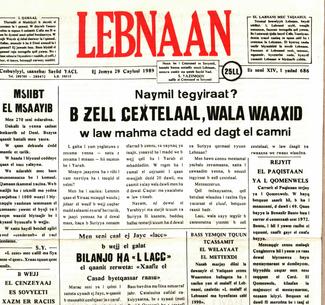
The push to romanize Arabic has occasionally intersected with political and nationalistic movements. In 1922, some in Lebanon, supported by French Orientalist Louis Massignon, advocated for a shift to the Latin script. However, this was viewed by many as a Western attempt at cultural domination and was rejected by the Arabic Language Academy in Damascus.
Similarly, in Egypt, intellectuals like Salama Musa, Ahmad Lutfi As Sayid, and Muhammad Azmi argued that adopting the Latin alphabet would modernize the country, facilitate scientific advancement, and solve the problem of missing written vowels. Despite these arguments, the Egyptian people maintained a profound cultural and emotional connection to the Arabic alphabet, and the movement failed to gain traction.
Frequently Asked Questions
What is the difference between transliteration and transcription?
Transliteration is a technical process that maps each letter of the source script to a letter in the target script, allowing the text to be converted back to the original. Transcription focuses on representing the actual sounds of the spoken language for the reader.
Why are there so many different ways to spell Arabic names in English?
This occurs because there is no single universal romanization system. Different systems handle short vowels and unique Arabic consonants differently, and many people use informal transcriptions based on how the name sounds to them.
What is Arabizi?
Arabizi, or the Arabic chat alphabet, is an informal system used primarily in digital communication. It combines Latin letters with numbers (like 3 for ʿayn or 7 for ḥā) to represent Arabic sounds that don't have direct Latin equivalents.
Why did movements to replace the Arabic script with Latin fail?
In countries like Egypt and Lebanon, these movements were largely seen as threats to cultural identity and national sovereignty, with many viewing the proposals as extensions of Western colonialism.
Which romanization system is the most accurate?
Accuracy depends on the goal. For scientific and academic work, fully diacritical systems like DIN 31635 or ISO 233 are the most accurate because they provide a precise, one-to-one mapping of the Arabic script.