Aquitaine: The History and Culture of Southwestern France
Located in the southwest corner of metropolitan France, Aquitaine is a land of diverse landscapes, stretching from the Atlantic Ocean coast to the rugged peaks of the Pyrenees mountains on the Spanish border. While it served as a distinct administrative region for years, as of January 1, 2016, it became part of the larger Nouvelle-Aquitaine region. From its prehistoric roots to its role as a powerhouse of the wine industry, Aquitaine has remained a vital cultural and economic hub for millennia.
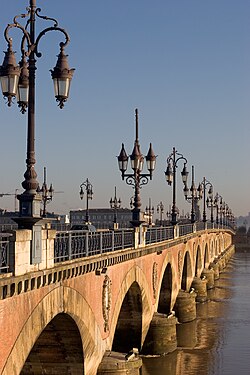
Historically known as Guyenne or Guienne, the region is defined by its strategic geography and its long-standing administrative center, Bordeaux, a world-renowned port city.
Key Facts
- Administrative Status: Former region of France; now part of Nouvelle-Aquitaine.
- Prefecture: Bordeaux.
- Departments: Dordogne, Gironde, Landes, Lot-et-Garonne, and Pyrénées-Atlantiques.
- Population: Approximately 3,285,970 (2012).
- Economic Power: Total GDP of €135.735 billion (2024).
- Geography: Bordered by the Atlantic Ocean to the west and the Pyrenees to the south.
Ancient Roots and the Basque Influence
The earliest human settlements in the region are found in the Périgord. The original inhabitants, the Aquitani, were distinct from the Celtic peoples and were more closely related to the Iberians. Evidence suggests that the prevailing language during the prehistoric and Roman periods was an early form of the Basque language (Proto-Basque). This is significant because Basque remains the last surviving non-Indo-European language in western Europe.
The Romans established the province of Gallia Aquitania. Under Emperor Augustus from 27 BCE, the province expanded north to the Loire River. By 392 CE, the Romans restructured the area into three provinces: Aquitania Prima, Aquitania Secunda, and Aquitania Tertia (also known as Novempopulania).
The Middle Ages: Power Struggles and Dynasties
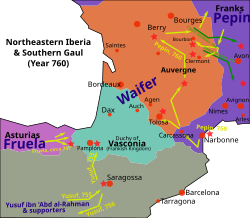
The Early Middle Ages were marked by instability. Following the collapse of Roman rule, the Visigoths established a capital in Toulouse, but they were expelled to Hispania in 507 CE after the Franks defeated them at the Battle of Vouillé. The region then saw the rise of the dukes of Novempopulania, who governed the Basques (Gascons) with varying degrees of independence from Frankish overlords.
A peak of Basque-Aquitanian autonomy occurred under Odo the Great. In 721, Odo successfully defended Toulouse against Umayyad forces, though he was later defeated near Bordeaux in 732 (or 733), leading him to seek aid from the Frankish leader Charles Martel.
Later, Charlemagne appointed his son Louis as King of Aquitaine in 781, ruling over both the Duchy of Aquitaine and the Duchy of Vasconia. This era was characterized by frequent Basque uprisings and power struggles between Carolingian heirs and local lords, such as Pepin II.
The English Era and the Hundred Years' War
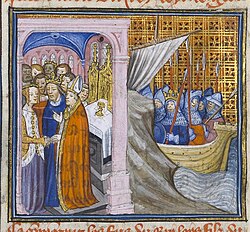
A pivotal shift occurred in 1137 when Eleanor of Aquitaine married Louis VII of France. After their marriage was annulled in 1152, Eleanor married Henry II of England in 1154, transferring the region to English control. Aquitaine became a cornerstone of the Angevin Empire.
For three centuries, the English crown derived significant income from Aquitaine, primarily through the export of wine to ports like London and Southampton. This English possession lasted until 1453, when the region was annexed by France at the conclusion of the Hundred Years' War.
Culture, Language, and Modern Life
While French is the official language, Aquitaine is a linguistic crossroads. Many residents speak Occitan (including Gascon, Limousin, or Languedocien dialects) or the Poitevin-Saintongeais dialect. In the far south, the Basque language remains strong, particularly in Labourd, Lower Navarre, and Soule.
The region is also known for its sporting passion. Rugby union is exceptionally popular, with clubs like Biarritz Olympique and Aviron Bayonnais. In football, FC Girondins de Bordeaux is one of the most successful teams in France. Additionally, the coast is a premier destination for international surfing championships, and bull-fighting remains a traditional draw.
Regional Overview
| Category | Details |
|---|---|
| Total Area | 41,308 km² |
| Population Density | 79.548/km² |
| GDP Per Capita | €37,341 (2024) |
| Major Cities | Bordeaux, Pau, Mérignac, Pessac, Bayonne |
| Time Zone | UTC+1 (CET) / UTC+2 (CEST) |
Frequently Asked Questions
What happened to Aquitaine in 2016?
On January 1, 2016, Aquitaine ceased to be a standalone administrative region and was merged into the larger region of Nouvelle-Aquitaine.
Why was Aquitaine important to the English crown?
Aquitaine was a primary source of annual income for the English Kings for 300 years, largely due to the massive export of southwestern French wine to England.
What is the significance of the Basque language in this region?
Basque is the last surviving non-Indo-European language in western Europe. It was likely the prevailing language of the region during the late prehistoric and Roman periods.
Which city serves as the main hub of the region?
Bordeaux is the largest city, the prefecture of the Gironde department, and is globally famous for its wine industry and port.
Who was Eleanor of Aquitaine?
Eleanor was a powerful duchess whose marriages to Louis VII of France and later Henry II of England shifted the control of the region between the two nations.