Basque Country: Culture, Territory, and History of Euskal Herria
The Basque Country, known in the native tongue as Euskal Herria, is a distinct cultural and linguistic region spanning the western Pyrenees. Straddling the border between Spain and France, it is home to a people with a unique identity, a language unrelated to any other known living tongue, and a complex political history. From the industrial hubs of Bilbao to the serene valleys of the French Basque Country, the region blends ancient traditions with modern European dynamism.
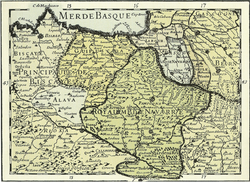
The term "Euskal Herria" appears in early manuscripts from the mid-16th century, including the works of Joan Perez de Lazarraga and Joanes Leizarraga, cementing the historical identity of the region as a cohesive cultural entity.
Key Facts
- Total Area: Approximately 20,947 km².
- Population: Estimated at 3,155,597 (2017).
- Official Languages: Basque, Spanish, and French.
- Largest City: Bilbao.
- Motto: Zazpiak Bat ("The seven are one").
- Currency: Euro (€).
Territorial Organization
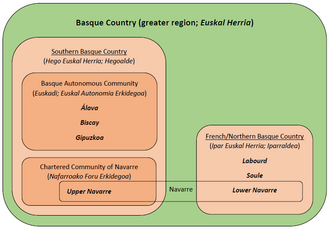
The Basque Country is divided between two sovereign states, creating a geopolitical split between the north and the south.
Northern Basque Country (Iparralde)
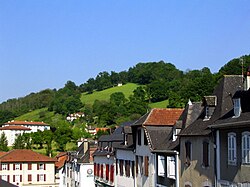
Known as Iparralde (meaning "the northern part"), this region lies entirely within France, specifically in the western part of the Pyrénées-Atlantiques département. It covers approximately 2,995 square kilometres and is traditionally subdivided into three provinces.
Southern Basque Country (Hegoalde)
The southern portion is primarily located in Spain and consists of the Basque Autonomous Community (BAC) and the Chartered Community of Navarre.
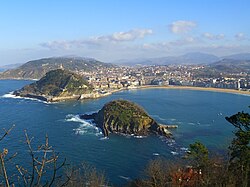
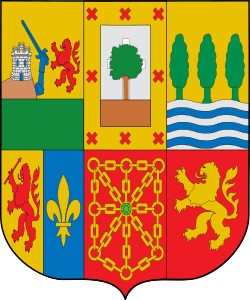
- Basque Autonomous Community: Comprises the provinces of Álava (capital: Vitoria-Gasteiz), Biscay (capital: Bilbao), and Gipuzkoa (capital: San Sebastián).
- Navarre: A single-province autonomous community known for its Fueros (historic charters). Under the Spanish Constitution of 1978, Navarre may join the Basque Autonomous Community if decided by its people and institutions, though this has not been implemented.
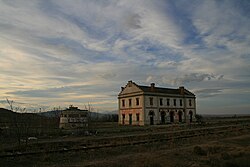
Additionally, the region includes the Treviño enclave, a 280 km² Castilian area located within Álava.
Demographics and Urban Centers
The population is distributed unevenly, with heavy concentrations in urban coastal areas and sparse populations in the interior. About 70% of the population resides in the Basque Autonomous Community, 20% in Navarre, and 10% in the Northern Basque Country.
The Greater Bilbao metropolitan area is the region's primary hub, housing roughly one-third of the total population. Population density peaks in Biscay at about 500/km, while dropping to as low as 20/km in the northern provinces of Soule and Lower Navarre.
Major Cities and Population
| Rank | City | Province | Population |
|---|---|---|---|
| 1 | Bilbao | Biscay | 350,184 |
| 2 | Vitoria-Gasteiz | Álava | 253,996 |
| 3 | Pamplona | Navarre | 203,944 |
| 4 | San Sebastián | Gipuzkoa | 188,240 |
| 5 | Barakaldo | Biscay | 101,486 |
Language and Education
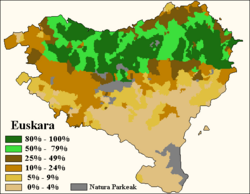
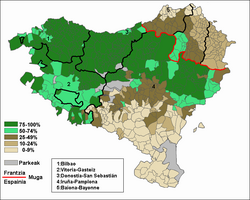
The Basque language (Euskara) is a cornerstone of regional identity. While it is an official language alongside Spanish in the Basque Autonomous Community, its usage varies geographically. It is most prevalent in Gipuzkoa, northern Navarre, and the French Pyrenean valleys, but is less common in southern Navarre and western Biscay.
There are approximately 650,000 Basque speakers, with the vast majority (550,000) living in the Spanish Basque Country. The regional government sponsors policies to generalize the use of the language through education and administration.
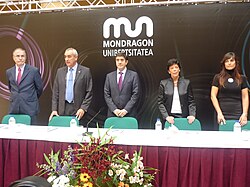
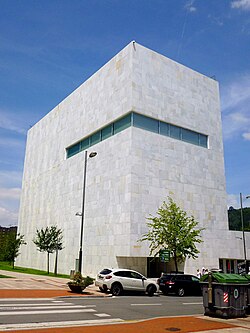
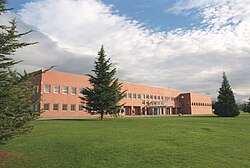
Higher education is well-established in the region, featuring institutions such as the University of the Basque Country (with a prominent auditorium in Bilbao), the University of Navarre (known for its law school), and Mondragon Unibertsitatea.
Politics and Nationalism
Since the 19th century, Basque nationalism (abertzaleak) has advocated for self-determination. Polls indicate that approximately 60% of residents in the Basque Autonomous Community support the right to self-determination, while about 36% support full independence.
The political landscape is diverse, featuring social-democratic parties like the PSOE, conservative parties like the People's Party (PP), and progressive nationalist coalitions such as Geroa Bai in Navarre.
Culture and Sports
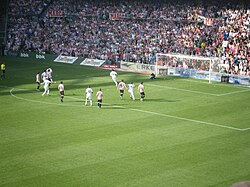
The Basque Country has a storied history in athletics, particularly football. Historically, Basque players were dominant in Spanish national selections prior to the Spanish Civil War. In France, the region produced World Cup winners such as Bixente Lizarazu and Didier Deschamps.
Frequently Asked Questions
What is the meaning of the motto "Zazpiak Bat"?
The motto translates to "The seven are one," referring to the seven traditional provinces of the Basque Country across Spain and France.
Is the Basque language related to Spanish or French?
No, the Basque language is a language isolate, meaning it has no known relationship with any other living language, including the Romance languages like Spanish and French.
What is the difference between Iparralde and Hegoalde?
Iparralde refers to the Northern Basque Country located in France, while Hegoalde refers to the Southern Basque Country located in Spain.
Can Navarre join the Basque Autonomous Community?
Yes, the Spanish Constitution of 1978 allows Navarre to become part of the Basque Autonomous Community if the people and institutions of Navarre so decide, although this has not yet occurred.
Which is the largest city in the Basque Country?
Bilbao is the largest city in the region, serving as a major economic and cultural hub in the province of Biscay.