Aqueducts: The Engineering History of Water Transportation
An aqueduct is a constructed watercourse designed to transport water from a distant source to a specific distribution point. Derived from the Latin words aqua (water) and ductus (led or guided), the term encompasses a wide array of engineering solutions, including pipes, ditches, canals, tunnels, and bridges. While often associated with the iconic arched bridges of antiquity, aqueducts are fundamental components of both ancient survival and modern urban infrastructure.
Historically, agricultural societies developed these systems to irrigate crops and provide drinking water to growing populations. From simple earth-cut ditches to massive concrete pipelines, the evolution of the aqueduct reflects humanity's increasing ability to manipulate the environment to sustain life in arid or densely populated regions.
Key Facts
- Ancient Origins: Used by the Minoans (c. 2000 BC), Egyptians, Harappans, and later by the Aztecs and Incas.
- Roman Legacy: Rome's network exceeded 415 kilometers, setting an engineering standard that lasted over a millennium.
- Diverse Forms: Systems range from qanats (underground tunnels) to inverted siphons (pipes using pressure to cross valleys).
- Modern Scale: The Central Arizona Project is the largest and most expensive aqueduct system in the United States.
- Gravity-Driven: Most traditional aqueducts rely on a precise gradient to move water without pumps.
Ancient Water Systems Across the Globe
The Near East and Mediterranean
Long before the Roman Empire, the Assyrians built an 80 km limestone aqueduct in the 7th century BC to supply their capital, Nineveh. In Crete, the Minoans developed advanced irrigation systems around 2000 BC. In Greece, the Tunnel of Eupalinos on Samos served as an underground aqueduct for nearly a thousand years starting in the 6th century BC.
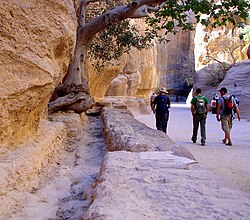
The Nabataeans in Petra, Jordan, mastered water harvesting by channeling winter rains and natural springs through mountains and gorges into the city center using durable retention dams and piping.
Persia and Oman: The Qanat System
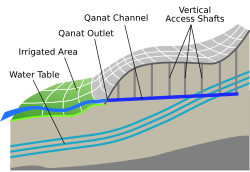
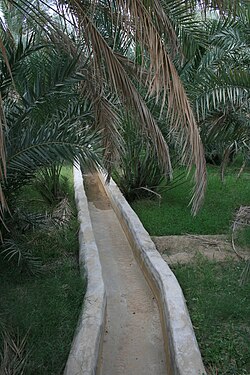
In Persia and Oman, engineers developed the qanat (or falaj in Oman), a sophisticated underground system consisting of vertical shafts connected by gently sloping horizontal tunnels. This design prevents water loss from evaporation and seepage in hot, dry climates, tapping into upland aquifers to deliver water via gravity without the need for pumping.
In Oman, the falaj system is categorized into three types: Daudi (underground aqueducts), Ghaili (requiring a dam), and Aini (sourced from a spring).
The Roman Empire
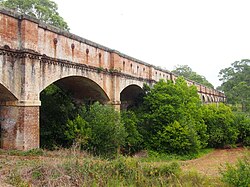
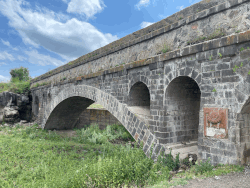
Roman aqueducts are the most famous examples of ancient hydraulic engineering. They supplied public baths and drinking water across Europe, Africa, and Asia. A defining feature was the use of stone bridges with multiple arches to maintain a consistent gradient across valleys.

Asia and the Americas
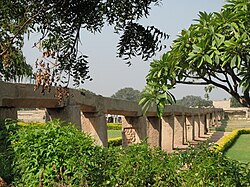
In the Indian subcontinent, massive aqueducts near the Tungabhadra River in Hampi once stretched 15 miles to supply irrigation and royal baths. Sri Lanka's Yoda Ela (Jaya Ganga) is a marvel of precision, spanning 87 kilometers with a gradient of only 10 to 20 cm per kilometer.
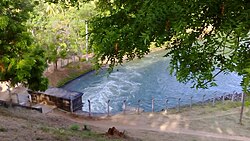
In the Americas, the Nazca culture of Peru built puquios—stone-lined aqueducts used to combat drought. In Costa Rica, the Guayabo National Monument features a complex network of volcanic river stone aqueducts. The Aztecs also utilized this technology, notably the Chapultepec aqueduct which watered the capital of Tenochtitlan.
Modern Aqueduct Infrastructure
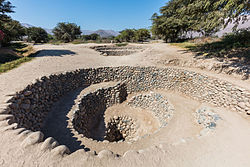
Today, aqueducts are vital for water distribution in large nations. In the United States, the Colorado River Aqueduct and the California Aqueduct transport water over hundreds of miles to support the Los Angeles area. The Central Arizona Project remains one of the most ambitious projects, stretching 336 miles to Phoenix and Tucson.
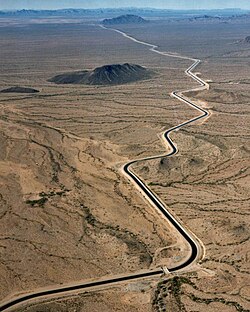
Other global examples include Spain's Tagus-Segura Water Transfer system and China's South–North Water Transfer Project, which aims to connect the Yangtze River basin to Beijing.
Engineering and Design Principles
Open Channels and Rills
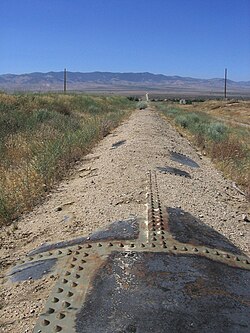
The simplest aqueducts are open ditches. The critical design factor is the gradient (the slope of the channel). A steeper gradient allows for a smaller channel but increases the risk of structural damage from fast-moving water. For example, typical Roman aqueducts maintained a gradient of approximately 1:4800.
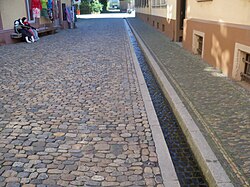
Artificial rills are small, lined canals used for domestic or agricultural purposes. Unlike simple ditches, rills are lined with stone or concrete to reduce absorption. They are also used aesthetically in Persian and Moorish gardens, such as the Alhambra in Granada.
Tunnels and Pipelines
Tunnels are used to protect water from contamination and evaporation. Modern systems rely heavily on pipelines, which are essential for moving water over hills or transporting treated water. Pipelines also mitigate environmental impacts and prevent freezing in cold climates.
Summary of Aqueduct Types
| Type | Primary Characteristic | Key Advantage | Example |
|---|---|---|---|
| Open Channel | Ditches or concrete canals | Simple construction | Central Arizona Project |
| Qanat/Falaj | Underground tunnels with shafts | Low evaporation in deserts | Ancient Persia/Oman |
| Arched Bridge | Elevated stone conduits | Maintains gradient across valleys | Pont du Gard (Rome) |
| Pipeline | Closed pressurized pipes | Crosses hills; prevents pollution | Modern US Aqueducts |
| Rill | Small, lined rectilinear canals | Durability and aesthetic value | Al Ain Oasis |
Frequently Asked Questions
What is the difference between a canal and an aqueduct?
While both carry water, a canal is typically used for navigation or irrigation, whereas an aqueduct is specifically designed to transport water from a source to a distant distribution point, often utilizing bridges or tunnels to maintain a slope.
How did Roman aqueducts work without pumps?
Roman aqueducts relied entirely on gravity. Engineers calculated a precise, slight downward gradient from the water source to the city, ensuring the water flowed steadily without stopping or overflowing.
What is an inverted siphon?
An inverted siphon is a closed pipe system that allows water to travel down into a valley and then back up the other side, exploiting the principle that water will rise to its original height if the pipe is sealed.
Why are some aqueducts built underground?
Underground aqueducts, such as qanats, are built to protect the water from evaporation in hot climates, prevent contamination, and utilize natural subterranean aquifers.
Are ancient aqueducts still in use today?
Yes, some ancient systems remain functional. For example, the puquios of Nazca in Peru and certain Roman aqueducts in Italy still provide water today.