Antiochus IV Epiphanes: The Controversial King of the Seleucid Empire
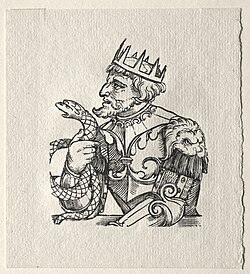
Antiochus IV Epiphanes (c. 215 BC – 164 BC) was a pivotal and polarizing figure who ruled the Seleucid Empire from 175 BC until his death. His reign was marked by ambitious military campaigns, internal political instability, and a religious conflict in Judea that left a lasting imprint on Western religious tradition. Known to some as "God Manifest" (Epiphanes) and to others as "The Mad" (Epimanes), his life reflects the volatility of the Hellenistic world.
Key Facts
- Reign: September 3, 175 BC – November/December 164 BC.
- Dynasty: Seleucid, son of Antiochus III the Great.
- Major Conflicts: Near-conquest of Ptolemaic Egypt and the Maccabean Revolt.
- Legacy: Often viewed as a prototype for the Antichrist in certain Christian traditions.
- Death: Died in Isfahan in 164 BC during an eastern campaign.
The Rise to Power
Born around 215 BC, Antiochus (originally named Mithridates) spent part of his youth as a political hostage of the Roman Republic following the Treaty of Apamea in 188 BC. His path to the throne was fraught with controversy. When his brother, Seleucus IV Philopator, was assassinated in 175 BC, the legitimate heir was Seleucus's young son, Demetrius I. However, Demetrius was also a hostage in Rome.
Seizing the opportunity, Antiochus traveled from Athens to Syria with the support of King Eumenes II of Pergamum. He declared himself king, initially acting as co-regent with an infant nephew also named Antiochus, who died in 170 BC under circumstances that some historians suggest may have been murder. This act of usurpation established a destabilizing precedent of competing claimants that would eventually contribute to the Seleucid Empire's collapse.
Military Ambitions and Foreign Relations
Antiochus IV was a skilled diplomat who initially maintained a strong alliance with the Roman Republic to secure his position. However, his primary focus was the expansion of his territory, specifically targeting Ptolemaic Egypt.
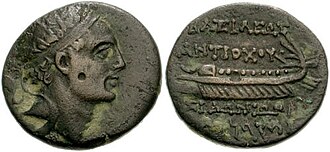
In 170 BC, after the guardians of King Ptolemy VI Philometor demanded the return of Coele-Syria, Antiochus launched a preemptive strike. He defeated the Egyptian forces at Pelusium and advanced deep into Egypt, capturing King Ptolemy and conquering nearly the entire region, with the exception of Alexandria. This success was facilitated by Rome's preoccupation with the Third Macedonian War.
The Persecution of the Jews and the Maccabean Revolt
One of the most enduring aspects of Antiochus IV's reign was his conflict with the people of Judea. The tension began in 171 BC when Antiochus deposed the High Priest Jason, replacing him with Menelaus, who had secured the position through a large bribe.
Following a failed attempt by Jason to retake Jerusalem by force in 168 BC, an enraged Antiochus returned from Egypt and sacked the city. He implemented decrees that suppressed local Jewish laws and religion—a departure from the typical Seleucid policy of religious tolerance. To maintain control, he established the Acra, a Greek military citadel in Jerusalem.
These actions triggered the Maccabean Revolt, a Jewish rebellion led by the Maccabees. This period of turmoil is believed by scholars to have inspired the Book of Daniel, where the "King of the North" is widely interpreted as a reference to Antiochus IV.
Final Years and Death
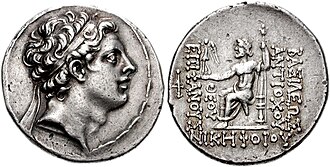
While the revolt in Judea continued, Antiochus turned his attention to the east to confront the Parthians. He achieved early success, reconquering the Kingdom of Armenia and capturing King Artaxias. However, his forces were driven off by the populace during an attack on Persepolis.
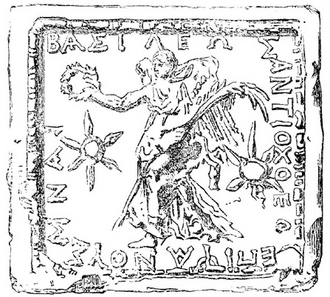
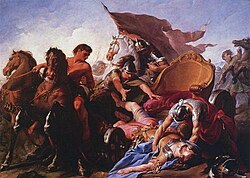
Antiochus died in Isfahan in 164 BC. Ancient accounts of his death vary wildly: some attribute it to a divinely inflicted disease as punishment for his impiety at the Temple of Jerusalem or a temple of the deity Nanaya in Persia. A later rabbinical tradition, the Megillat Antiochus, claims he drowned himself in the sea after fleeing his rebellious subjects, though this is generally considered historically inaccurate.
Historical Legacy and Perspectives
The historical image of Antiochus IV is heavily influenced by the sources available. The historian Polybius, a friend of Antiochus's rival Demetrius I, portrayed him as eccentric and capricious. In contrast, the historian Appian is less critical, and some modern scholars, such as Dov Gera, argue that Antiochus was a talented politician whose reputation was unfairly tarnished by political enemies.
Evidence suggests he may have been well-regarded by some of his subjects; for instance, the later pretender Alexander Balas claimed to be Antiochus's son to gain legitimacy in 152 BC. Even the hostile Book of 1 Maccabees records the king wondering on his deathbed why he suffered such calamity when he had been "well-loved" during his power.
| Category | Details |
|---|---|
| Full Name/Epithets | Antiochus IV Epiphanes ("God Manifest") / Epimanes ("The Mad") |
| Reign Period | 175 BC – 164 BC |
| Key Territories | Seleucid Empire, Coele-Syria, parts of Egypt, Armenia |
| Major Adversaries | Ptolemaic Egypt, Jewish Maccabees, Parthians |
| Successor | Antiochus V Eupator |
Frequently Asked Questions
Why was Antiochus IV called "Epiphanes"?
The epithet "Epiphanes" is Greek for "God Manifest," reflecting the king's desire to be associated with divine status or his role as a bringer of Hellenistic civilization.
How did Antiochus IV contribute to the concept of the Antichrist?
His persecution of the Jews and the desecration of the Temple in Jerusalem led to his portrayal as a villain in the Book of Daniel. This depiction influenced later Christian interpretations of the Antichrist.
Was Antiochus IV a legitimate king?
His legitimacy was contested because he seized the throne while the rightful heir, Demetrius I, was a hostage in Rome, leading many to view him as a usurper.
What was the significance of the Acra in Jerusalem?
The Acra was a Greek military citadel built by Antiochus IV to house a garrison and support Hellenized Jews, serving as a symbol of Seleucid authority over the city.
What caused the Maccabean Revolt?
The revolt was triggered by Antiochus IV's attempts to forcibly Hellenize Judea, including the suppression of Jewish religious practices and the installation of a bribed High Priest.