Anjouan Crisis: The 2008 Conflict and AU Intervention
The political landscape of the Comoros reached a breaking point in 2008, centered on the island of Anjouan. What began as a dispute over electoral legitimacy escalated into a full-scale military standoff involving the Comoran federal government and the African Union (AU). The crisis highlighted the fragile nature of the Comoran union and the complexities of regional diplomacy in East Africa.
The Path to Secession
Tensions spiked when the Comoran federal government delayed elections on Anjouan, citing intimidation and irregularities. Despite these concerns, the local leader, Mohamed Bacar, proceeded with his own election in June, claiming a landslide victory of 90 percent. By July 2007, Bacar took the drastic step of declaring Anjouan independent from the Comoros, effectively challenging the authority of National President Ahmed Abdallah Mohamed Sambi.
Military Mobilization and International Support
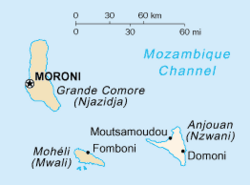
By March 2008, the Comoran government began assembling hundreds of troops on Mohéli, an island strategically closer to Anjouan than the capital on Grande Comore. This operation saw significant international backing to ensure the restoration of federal authority:
- Sudan and Senegal: Provided a combined total of 750 troops.
- Tanzania: Committed 500 troops to the operation.
- Libya: Offered essential logistical support.
- France: The former colonial power assisted by airlifting AU troops into the region.
The AU envoy issued a stern warning to Bacar, suggesting that resistance would lead to his physical end. Bacar, however, remained defiant, citing previous instances in 1997 and May 2007 where he claimed his forces had successfully repelled the army.
Diplomatic Efforts and Pre-Invasion Clashes
South African President Thabo Mbeki attempted to mediate the crisis, supporting a proposal for new elections in May 2008. Despite Mbeki's efforts to stall the military action—including a phone call to AU head and Tanzanian President Jakaya Kikwete on March 14—the AU proceeded with the invasion plan.
The lead-up to the main assault was marked by several volatile incidents. On March 3, 2008, a fuel ship supplying the Comoros Army caught fire in the port of Moroni under unknown circumstances. Later, on March 11, three members of the Anjouan Militia were captured and taken to Mohéli for interrogation.
The Domoni Incursion
On March 14, a reconnaissance team of approximately 10 soldiers (though some sources initially reported 50) landed in southern Anjouan near the town of Domoni. The mission's goal was to capture the local police station and free political prisoners. The operation resulted in a retreat to Mohéli to rescue two wounded federal soldiers. Reports on casualties varied wildly: federal sources claimed about 20 people died during the bombardment of Anjouanais positions, while the Anjouan administration claimed they had ambushed the forces and killed one soldier.
The Role of France and the Mayotte Incident
France's involvement became a point of contention on March 19, 2008, when a French police helicopter from the French-administered island of Mayotte crashed in the sea near Sima, Anjouan. The mission was described as unauthorized and clandestine. While no injuries were reported, the crash sparked allegations that France was attempting to facilitate Bacar's exile or was secretly protecting him.
Simultaneously, France provided tangible military logistics, transporting 30 tons of freight and 300 Tanzanian troops to Grande Comore between March 14 and 16. French diplomats stated they remained open to dialogue, provided Bacar accepted the presence of African troops at Anjouan's port and airport.
Key Facts
- Bacar's Claim: Claimed a 90% victory in a June election before declaring independence in July 2007.
- Coalition Forces: Included troops from Sudan, Senegal, Tanzania, and the Comoran National Army.
- Logistical Support: Provided by Libya (logistics) and France (airlifts).
- Diplomatic Mediator: South African President Thabo Mbeki attempted to delay the invasion in favor of elections.
- Key Location: Mohéli served as the primary staging ground for the military build-up.
| Country/Organization | Role/Contribution | Specific Detail |
|---|---|---|
| African Union (AU) | Lead Intervention Force | Coordinated the invasion to depose Bacar |
| Sudan & Senegal | Troop Contribution | 750 total troops |
| Tanzania | Troop Contribution | 500 troops |
| Libya | Logistics | Provided operational support |
| France | Transport & Logistics | Airlifted AU troops and freight |
| South Africa | Diplomacy | President Mbeki advocated for elections |
Frequently Asked Questions
Why did Mohamed Bacar declare Anjouan independent?
Bacar declared independence in July 2007 after the Comoran federal government delayed elections due to alleged irregularities and intimidation, following Bacar's claim of a 90 percent victory in a June election.
Which countries provided military support to the Comoran government?
Sudan and Senegal provided 750 troops, Tanzania provided 500 troops, and Libya offered logistical support. France assisted by airlifting troops and freight.
What was the purpose of the incursion in Domoni?
The federal government stated the target of the operation in Domoni was the police station, with the intent to free political prisoners.
What was the controversy surrounding the French helicopter crash?
A French police helicopter from Mayotte crashed near Sima on an unauthorized mission. This led to allegations that France was secretly trying to help Bacar escape into exile or was protecting his regime.
Did diplomatic efforts succeed in stopping the invasion?
No. Despite South African President Thabo Mbeki's efforts to stall the operation and his proposal for new elections in May 2008, the African Union disregarded the proposal and proceeded with the invasion.