Animal Products: Environmental Impacts, Ethics, and Global Production
An animal product is any material derived from the body or excretions of a non-human animal. While most people immediately think of meat, dairy, and eggs, the category encompasses a vast array of substances, including honey, blood, fat, and more specialized materials like isinglass (a collagen obtained from fish bladders), rennet (an enzyme used in cheese making), and cochineal (a red dye from insects).
Biologically, this includes all species within the kingdom Animalia, such as tetrapods, arthropods, and mollusks. However, certain materials are typically excluded from this classification: products from decomposed animals (such as petroleum), crops grown in soil fertilized with manure, and products sourced from humans.

Key Facts
- Production Growth: Since 1950, meat production has tripled, dairy has doubled, and egg production has increased nearly fourfold.
- Land Use: Approximately 70% of agricultural land and 30% of the Earth's total land surface is used for animal husbandry.
- Climate Impact: Livestock are responsible for 65% of human-related nitrous oxide emissions and 35-40% of global methane emissions.
- Resource Drain: Animal husbandry utilizes between 20% and 33% of the world's fresh water.
- Caloric Loss: There is a 66% net loss of calories when human-edible crops are fed to livestock instead of consumed directly.
The Environmental Cost of Animal Husbandry
The rapid escalation of animal product consumption over the last 50 years has placed immense pressure on the planet. Animal husbandry is now recognized as a primary driver of the Holocene extinction, contributing significantly to biodiversity loss, desertification, and habitat destruction.
Deforestation and Land Use
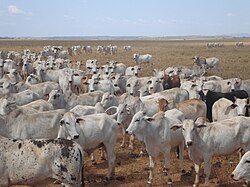
To accommodate grazing and the cultivation of feed crops, vast tracts of forest are cleared. This is most evident in the Amazon region, where animal husbandry is linked to up to 91% of deforestation. This process not only destroys habitats but also leads to the targeting of predators and herbivores that are perceived as threats to livestock profits.
Atmospheric and Oceanic Impact
Livestock production drives climate change and ocean acidification through the release of potent greenhouse gases. For instance, cows produce roughly 570 million cubic meters of methane daily. Combined with high nitrous oxide emissions, these factors accelerate global warming.
Animal Welfare and Ethics
Since the 18th century, the ethical treatment of farm animals has become a central global concern. Welfare is typically measured by factors such as longevity, physiology, reproduction, and freedom from disease or immunosuppression.
Two primary philosophical views dominate the debate:
- Utilitarianism: The belief that using animals is morally acceptable if no unnecessary suffering is caused and the benefits to humans outweigh the costs to the animals.
- Animal Rights: The view that animals should not be regarded as property and should never be used by humans, regardless of the perceived benefit.
These ethical concerns have led to tangible policy changes, such as New Zealand's 2003 ban on the live export of animals, which was driven by objections to long-distance transport.
The Efficiency Gap: Net Animal Losses
A critical issue in food security is the concept of net animal losses. This is the difference between the calories in human-edible crops fed to animals and the calories returned to humans via meat, dairy, and fish. On average, livestock consume far more human-edible food than they provide in return.
Globally, livestock are fed an average of 1,738 kcal per person per day of human-edible food, but only 594 kcal of animal products return to the food supply—a net loss of 66%. Research suggests that if the US shifted from animal-based products to the human-edible plant food used to feed those animals, it could potentially feed an additional 350 million people.
Animal By-products and Additives
Beyond primary food sources, animal derivatives are integrated into countless industrial and consumer products. Some of the most common include:
Food Additives
- Carmine: A red/purple dye made from crushed female cochineal beetles. It is used in candies, juices, and yogurts. It takes approximately 70,000 insects to produce one pound of dye, and the FDA classifies it as an allergen.
- L-cysteine: Derived from pig bristles or human hair, used in bread and dietary supplements.
- Gelatin: Used in marshmallows, ice cream, and candy.
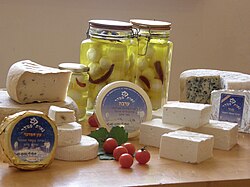
- Rennet: A key component in cheese production.
Non-Food Applications
Animal products are also found in medicine, cosmetics, and textiles. Examples include lanolin (wool grease), casein (used in plastics and adhesives), silk, leather, and limulus amebocyte lysate (a chemical from horseshoe crab blood used to detect bacterial endotoxins).
Summary of Animal Product Categories
| Category | Examples | Common Applications |
|---|---|---|
| Primary Food | Meat, Eggs, Milk, Honey | Direct human consumption |
| Food Additives | Carmine, Gelatin, Rennet | Coloring, thickening, cheese making |
| Industrial/Textile | Silk, Wool, Leather, Casein | Clothing, plastics, adhesives |
| Medical/Cosmetic | Horse oil, Lanolin, Venom | Skincare, antivenin, preservatives |
Frequently Asked Questions
What are net animal losses?
Net animal losses refer to the caloric deficit that occurs when human-edible crops are fed to livestock. Because animals consume more calories than they produce for human consumption, a significant portion of potential food energy is lost.
Is carmine safe for everyone to consume?
While common in many foods, carmine is classified as an allergen by the FDA and can cause reactions in some individuals.
How does animal husbandry contribute to climate change?
It contributes primarily through the emission of greenhouse gases, specifically methane from cattle and nitrous oxide from production processes, as well as the carbon released during the deforestation of lands for grazing and feed.
What is the difference between animal welfare and animal rights?
Animal welfare focuses on the humane treatment of animals and the minimization of suffering while allowing their use by humans. Animal rights is the belief that animals should not be used as property or resources by humans at all.
Which animal products are used in non-food items?
Many non-food items use animal derivatives, such as leather from hides, silk from silkworms, lanolin in skincare, and casein in paints and adhesives.