Donkeys: History, Characteristics, and Global Conservation
The donkey (Equus africanus asinus) is a resilient member of the horse family, long valued for its strength, endurance, and adaptability. From the ancient civilizations of Egypt to the rugged terrains of the American West, these animals have served as essential partners in human transport, agriculture, and warfare.
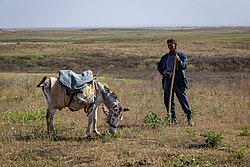
Whether referred to as a donkey or a burro (a term commonly used in the Americas), these equines are distinguished by their ability to thrive in harsh environments where other livestock might struggle.

Key Facts
- Scientific Name: Equus africanus asinus.
- Global Population: Reported at 41 million in 2006, though numbers fluctuate due to trade.
- Lifespan: Varies from 12–15 years in poor working conditions to 30–50 years in prosperous environments.
- Gestation: Typically lasts about 12 months (ranging from 11 to 14 months).
- Breed Diversity: The FAO listed 189 breeds as of June 2011.
History and Migration
Donkeys have a long history of migration alongside human exploration. They were introduced to the Americas during Christopher Columbus's second voyage, landing at Hispaniola in 1495. Their spread into North America continued through the 16th century, with records indicating they reached Mexico in 1528 and crossed the Rio Grande into what is now the United States by April 1598.
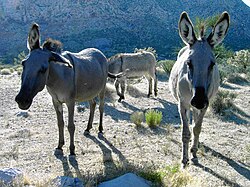
In the United States, donkeys became indispensable to missions and mining operations, with documented presence in Arizona by 1679. During the 19th-century Gold Rush, the burro was the preferred beast of burden for prospectors. Following the placer mining boom, many of these animals were abandoned or escaped, leading to the establishment of feral populations.
Physical Characteristics and Breeding
Donkeys exhibit significant variation in size based on their breed and the environment in which they live. Height at the withers (the highest point of the back, located between the shoulder blades) typically ranges from less than 90 centimeters (35 inches) to approximately 150 centimeters (59 inches).
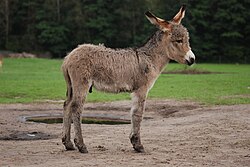
Breeding a donkey, specifically a female known as a jenny, involves a long gestation period of roughly 12 months. While most jennies give birth to a single foal, twins occur in about 1.7% of pregnancies, though the survival rate for both foals in these cases is approximately 14%. Generally, jennies have a lower conception rate than mares (female horses), which typically see rates between 60% and 65%.
Global Population and Conservation
The global donkey population is subject to significant shifts. In 2006, there were approximately 41 million donkeys worldwide, with China holding the largest population at 11 million, followed by Pakistan, Ethiopia, and Mexico. However, by 2017, China's population reportedly dropped to 3 million. This decline, along with pressure on African populations, is attributed to an increased demand for donkey products in China.
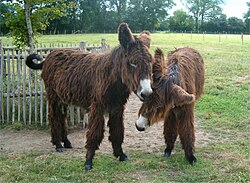
The recognition of distinct breeds has increased rapidly due to efforts by the FAO's Animal Genetic Resources project. For example, in France, only the Baudet du Poitou was recognized until the early 1990s, but by 2005, six additional breeds had received official recognition.
Below is a summary of donkey breed distribution by region as of 2006:
| Region | Number of Breeds | Percentage of World Population |
|---|---|---|
| Africa | 26 | 26.9% |
| Asia and Pacific | 32 | 37.6% |
| Europe and the Caucasus | 51 | 3.7% |
| Latin America and the Caribbean | 24 | 19.9% |
| Near and Middle East | 47 | 11.8% |
| United States and Canada | 5 | 0.1% |
| World Total | 185 | 41 million head |
Uses and Economic Value
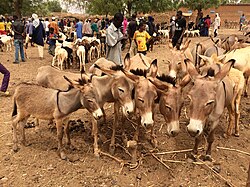
While primarily used for transport and labor, donkeys provide several other economic products. Approximately 3.5 million donkeys and mules are slaughtered annually for meat. Italy is a notable consumer of equine meat, where donkey meat is a key ingredient in several regional dishes.
Donkey milk is another high-value product used in dietary supplements, soaps, and cosmetics. In 2009, the average price for donkey milk in Italy was €15 per litre. Additionally, donkey skins are traded for various products; the UK-based charity The Donkey Sanctuary estimated in 2017 that between 1.8 million and 10 million skins are traded annually.
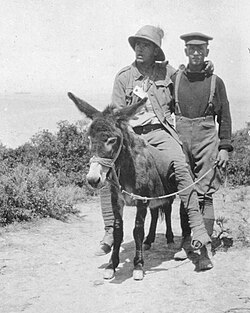
Beyond commercial products, donkeys have played critical roles in history and survival. They are exceptionally well-suited for grazing in dryland environments and have been used in warfare to transport wounded soldiers and supplies.
Frequently Asked Questions
What is the difference between a donkey and a burro?
In a biological sense, they are the same species (Equus africanus asinus). "Burro" is simply the Spanish word for donkey and is the term commonly used in the Americas.
How long do donkeys typically live?
Their lifespan depends heavily on their environment and care. Working donkeys in impoverished regions may live 12 to 15 years, while those in more prosperous conditions can live between 30 and 50 years.
Why is the donkey population declining in some regions?
Populations in China and Africa have faced pressure due to an increase in the trade and demand for donkey products, particularly skins, in the Chinese market.
How long is a donkey's pregnancy?
A jenny is typically pregnant for about 12 months, although the gestation period can range from 11 to 14 months.
Are twins common in donkeys?
No, twins are rare. Only about 1.7% of donkey pregnancies result in twins, and in only 14% of those cases do both foals survive.