Angel Falls: The World's Tallest Uninterrupted Waterfall
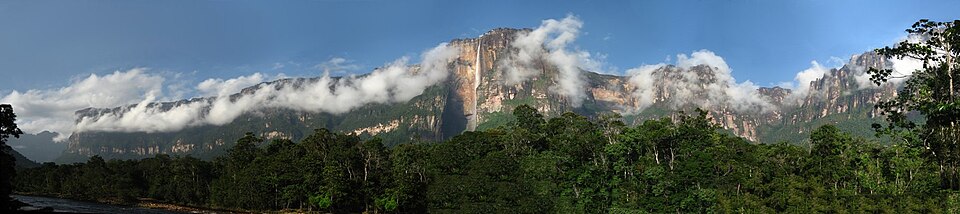
Deep within the heart of Venezuela's Bolívar State lies one of nature's most breathtaking spectacles: Angel Falls. Known in Spanish as Salto Ángel and in the indigenous Pemon language as Kerepakupai Vená, this towering cascade is recognized as the world's tallest uninterrupted waterfall. Dropping from the sheer cliffs of a tepui (a flat-topped table mountain), the falls create a dramatic plunge that attracts adventurers and nature lovers from across the globe.
The waterfall is located within the Canaima National Park, a UNESCO World Heritage Site situated in the Gran Sabana region. The water originates from the Auyán-tepui mountain, cascading down a total height of 979 meters (3,212 ft). This total includes a massive primary plunge of 807 meters (2,648 ft), followed by a series of sloped cascades and rapids, and ending with a final 30-meter (100 ft) drop.
Key Facts
- Total Height: 979 meters (3,212 ft).
- Longest Single Drop: 807 meters (2,648 ft).
- Location: Auyán-tepui, Canaima National Park, Bolívar State, Venezuela.
- Watercourse: Körepakupai Vená River, flowing into the Churún, Carrao, and eventually the Orinoco River.
- World Ranking: Ranked as the tallest uninterrupted waterfall globally.
The History and Exploration of Salto Ángel
The Legacy of Jimmie Angel
While the indigenous Pemon people lived in the region, the falls became known to the wider world through American aviator Jimmie Angel. On November 16, 1933, Angel became the first person to fly over the falls while searching for valuable ore beds. His connection to the site deepened in 1937 when he attempted to land his Flamingo monoplane, El Río Caroní, on top of Auyán-tepui. The plane sank into the marshy ground, forcing Angel and his companions—including his wife, Marie—to spend 11 days trekking back to civilization on foot.
The plane remained atop the mountain for 33 years before being recovered by helicopter. Today, it is preserved at the airport in Ciudad Bolívar. In honor of his adventure, the waterfall was named Angel Falls, a name first appearing on government maps in 1939. Jimmie Angel's ashes were scattered over the falls on July 2, 1960.
Early European Encounters and Later Expeditions
Historical claims regarding the first European to see the falls vary. Some suggest Walter Raleigh may have seen a tepui during his search for El Dorado, while others credit 16th-century Spanish explorer Fernando de Berrío or Fèlix Cardona in 1927. However, the first recorded European to reach the base of the falls was Latvian explorer Aleksandrs Laime in 1946. Laime also cleared the trail from the Churún River to the base, which includes the popular Mirador Laime viewpoint.
The official height of the falls was established on May 13, 1949, during an expedition funded by American journalist Ruth Robertson. The first successful ascent of the cliff face was not achieved until January 13, 1971, by a four-man team led by American mountaineer George Bogel.
Tourism and Modern Activities
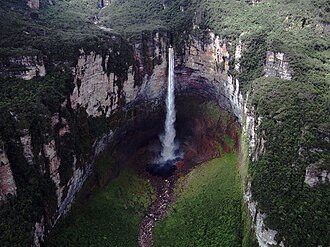
Visiting Angel Falls is a complex journey due to its isolated jungle location. Travelers typically fly from Maiquetia Airport, Puerto Ordaz, or Ciudad Bolívar to Canaima camp. From there, river trips are the primary means of access. These trips are most viable from June to December when water levels are high enough for Pemon guides to navigate. During the dry season (December to March), the water volume decreases significantly.
Extreme Sports and Pop Culture
The falls have become a destination for extreme athletes. In November 1983, Max Botto became the first person to fall from the heights, while American Jerry Bird completed the first successful BASE jump. The sheer scale of the falls has also inspired numerous cinematic works, including Pixar's Up (as the inspiration for Paradise Falls), What Dreams May Come, and the 2015 remake of Point Break.
Summary of Angel Falls Specifications
| Feature | Detail |
|---|---|
| Total Height | 979 m (3,212 ft) |
| Longest Drop | 807 m (2,648 ft) |
| Mountain | Auyán-tepui |
| National Park | Canaima National Park |
| River System | Körepakupai Vená → Churún → Carrao → Orinoco |
Frequently Asked Questions
Is Angel Falls the tallest waterfall in the world?
It is widely recognized as the world's tallest uninterrupted waterfall. However, some uncertainty remains regarding the exact measurements compared to South Africa's Tugela Falls, as both were measured from a distance.
What does the Pemon name Kerepakupai Vená mean?
The name is often translated as "waterfall of the deepest place," reflecting the indigenous heritage of the land.
When is the best time to visit Angel Falls?
The best time for river trips to the base is between June and December, when the rivers are deep enough for navigation. The dry season occurs from December to March.
Who was Jimmie Angel?
Jimmie Angel was a U.S. aviator who first flew over the falls in 1933 and later famously crashed his plane on top of Auyán-tepui in 1937, leading to the waterfall being named in his honor.
How do tourists reach the falls?
Visitors must take a flight to Canaima camp and then proceed via river trips guided by the local Pemon people.