Andrew Murray: A Career in Journalism, Trade Unionism, and Political Activism
Andrew Murray is a prominent figure in British political and labor history, known for his multifaceted career spanning journalism, high-level trade union leadership, and strategic political advisory roles. From his early days as a young reporter to his influence within the Labour Party and the Stop the War Coalition, Murray has remained a consistent advocate for socialist and communist ideals.
Early Life and Education
Born in 1958, Murray is the son of Peter Drummond-Murray, a stockbroker and banker who served as Slains Pursuivant from 1981 to 2009, and The Honourable Barbara Mary Hope. His mother was the daughter of Lord Rankeillour, a former Conservative MP and governor of the Madras Presidency in British India (1940–1946).
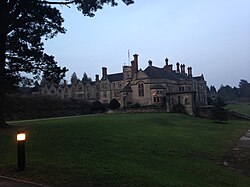
Murray attended Worth School, a Benedictine independent boarding school located in Sussex, where he completed his early education, leaving at age 16 with four 'O' levels.
Journalism and Early Career
Murray's entry into professional communications began with entry-level roles as a messenger at Reader's Digest and a copy boy for the International Herald Tribune. He later received formal journalism training at the Sussex Express.
By the age of 19, Murray had ascended to the role of parliamentary lobby correspondent. His early reporting career was marked by significant global and national events, including marching with a million people in Leningrad for the 60th anniversary of the October Revolution in 1977. He was also reportedly the first journalist on the scene following the 1979 assassination of Airey Neave by the Irish National Liberation Army.
Throughout his career, Murray has contributed to the Morning Star and worked for the Soviet news agency RIA Novosti. He was also an occasional contributor to The Guardian until 2013.
Leadership in Trade Unions
Murray's influence in the labor movement grew significantly through his work with the Transport and General Workers Union (T&G), where he served from 1987 to 1998 and again starting in 2003. He played a key role in the 1997 British Airways cabin crew strike and managed successful general secretary election campaigns for Bill Morris (1991, 1995) and Tony Woodley (2003).
Following the merger of T&G and Amicus to form Unite, Murray supported Len McCluskey's 2010 election and was appointed as Unite's chief of staff in 2011. In this capacity, he managed ten regions and most of the union's central departments. His prominence led to his election to the TUC (Trades Union Congress) General Council in April 2011.
His influence did not go unnoticed by the government; in November 2011, Education Secretary Michael Gove labeled Murray, along with McCluskey and Mark Serwotka, as one of three union "militants" who were "itching for a fight" ahead of public sector pension strikes. Additionally, Murray has served as an official for the Associated Society of Locomotive Engineers and Firemen (ASLEF).
Political Activism and Ideology
Murray's political journey began at age 18 when he joined the Communist Party of Great Britain (CPGB) in 1976, aligning himself with the Straight Left faction. Following the CPGB's dissolution in 1991, he led the Communist Liaison group before joining the Communist Party of Britain (CPB) in 1995.
He served on the CPB executive committee from 2000 to 2004 and again from 2008 to 2011. Despite his history, Murray has noted that while he believes communism represents a society worth working toward, he rejects the failed methods of the 20th century.
Stop the War and Internationalism
As chair of Stop the War, Murray presided over the 2003 rally against the Iraq War, which is cited as the largest political demonstration in British history. He stepped down as chair in June 2011, succeeded by Jeremy Corbyn, though Murray later returned to the chair position in September 2015.
In 2014, he co-founded Solidarity with the Antifascist Resistance in Ukraine, an organization that protested the Ukrainian government outside the embassy in London.
Roles within the Labour Party
Murray joined the Labour Party in November 2016. In May 2017, he was seconded from Unite to Labour headquarters during the general election. This appointment was controversial due to his communist background, leading some critics to compare him to Steve Bannon. However, Jeremy Corbyn defended him as a professional with "special skills," and John McDonnell stated that Murray's transition to the party was an example of converting individuals to democratic socialism.
Murray's tenure as a consultant to the Labour Party continued until February 2020, when he resigned to return to Unite on a full-time basis. His presence in the party was cited by former MPs Angela Smith and Mike Gapes as a factor in their decision to leave and form the centrist Independent Group of MPs.
International Controversy
In 2018, The Times reported that the Ukrainian government banned Murray from entering the country for three years, accusing him of organizing pro-Russian activities. Murray denied these claims, attributing the ban to collusion between the UK "deep state" and Ukrainian security services to undermine the Labour Party. He described the Russian regime as "authoritarian conservative nationalism" and argued the ban stemmed from his protests against ultra-nationalists in the Ukrainian government.
Key Facts
- Education: Attended Worth School, leaving at 16.
- Journalism: Former parliamentary lobby correspondent; contributor to Morning Star and The Guardian.
- Union Leadership: Former Chief of Staff for Unite and member of the TUC General Council.
- Political Affiliations: Former member of the Communist Party of Great Britain and Communist Party of Britain; later joined the Labour Party.
- Activism: Former chair of the Stop the War Coalition.
- Labour Party: Served as a consultant and strategist during the 2017 general election.
| Period | Organization/Role | Key Focus |
|---|---|---|
| 1970s | Various News Outlets | Journalism and Parliamentary Reporting |
| 1987–1998; 2003+ | T&G / Unite | Trade Union Strategy and Staff Leadership |
| 1976–2011 | CPGB / CPB | Communist Political Leadership |
| 2003–2011; 2015+ | Stop the War | Anti-War Activism |
| 2016–2020 | Labour Party | Political Consultancy and Strategy |
Frequently Asked Questions
What was Andrew Murray's role in the Stop the War Coalition?
Murray served as the chair of Stop the War, most notably presiding over the 2003 rally against the Iraq War, which is considered the largest political demonstration in British history.
Why was his appointment to the Labour Party controversial?
The appointment was contentious because of his previous high-level leadership roles within the Communist Party of Britain, leading to friction with centrist members of the party.
What is Murray's connection to the trade union Unite?
Murray served as the chief of staff for Unite starting in 2011, where he was responsible for the union's ten regions and most of its central departments.
Why was Andrew Murray banned from Ukraine?
The Ukrainian government banned him for three years in 2018, accusing him of organizing pro-Russian activities. Murray denied these claims, asserting the ban was a political move to discredit him and the Labour Party.
Which journalists or publications has he worked for?
He has worked for the Morning Star, the Soviet RIA Novosti news agency, and was an occasional contributor to The Guardian until 2013.