Ampère Museum: A Journey Through the History of Electricity
Located in the serene landscape of Poleymieux-au-Mont-d'Or, approximately 15 km from Lyon, the Ampère Museum serves as a sanctuary for the history of electricity. Dedicated to the life and work of the pioneering physicist André-Marie Ampère (1775–1836), the museum is housed in the very home where Ampère spent a portion of his youth. This unique site blends scientific discovery with historical preservation, offering visitors a glimpse into the foundations of modern electrodynamics.
Beyond its scientific exhibits, the museum features a 17th-century family chapel and a garden that provides panoramic views of the surrounding countryside, creating a peaceful environment for learning and reflection.
Key Facts
- Location: Poleymieux-au-Mont-d'Or, Lyon Metropolis, France.
- Established: 1 July 1930 (Inaugurated 1 July 1931).
- Core Focus: The history and applications of electricity and the legacy of André-Marie Ampère.
- Major Artifact: The original apparatus of the Einstein–de Haas experiment.
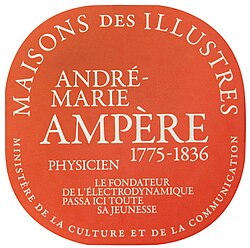
- Distinctions: Recognized as a "Maison des Illustres," an EPS Historic site, and an IEEE Historic Milestone.
The History of the Museum
The preservation of the Ampère property began in 1928 when Hernand and Sosthenes Behn, American businessmen of French descent and co-founders of the multinational company ITT, acquired the estate. Acting as patrons of the arts and following the advice of Paul Janet, the Behn brothers donated the property to the "Société française des électriciens." Two years later, the management was entrusted to the Society of Friends of André-Marie Ampère, leading to the museum's official inauguration on July 1, 1931.
Exhibitions and Scientific Discoveries
The museum is organized into two primary spaces comprising eleven exhibition rooms, with audioguides available in both English and French to assist visitors.
The History of Electricity
The first space is dedicated to the evolution of electrical science. It features original materials related to André-Marie Ampère and a variety of interactive exhibits. Visitors can engage with models that reproduce fundamental experiments in electromagnetism (the study of the interaction between electric currents and magnetic fields) conducted by Ampère and his contemporaries, such as Michael Faraday and Hans Christian Ørsted.
Applications and Renewable Energy
The second space shifts focus toward the practical applications of electricity, exploring its role in telegraphy, lighting, and medical technology. The museum also addresses the future of energy, showcasing photovoltaic systems and wind turbines both within the galleries and in a specialized outdoor garden.
The Einstein–de Haas Experiment
One of the museum's most significant treasures is the original apparatus used in the Einstein–de Haas experiment. Conducted in 1915 by Albert Einstein and Wander Johannes de Haas, this is the only fundamental research experiment conceived, executed, and published by Einstein. The experiment provided critical evidence for Ampère's theory of molecular currents, proving that magnetism originates from electrons.
Family Legacy and Facilities
A dedicated room preserves the personal history of the Ampère family, displaying manuscripts, books, and portraits of André-Marie Ampère, his father Jean-Jacques (1733–1793), and his son Jean-Jacques Ampère (1800–1864). Additionally, the museum provides "L'espace Ampère," a 50-seat room for meetings and colloquiums, and a gift shop selling souvenirs and literature.
Labels and International Recognition
The Ampère Museum has received several prestigious designations that highlight its cultural and scientific importance:
- Maison des Illustres (2013): A label awarded by the French Ministry of Culture to homes of distinguished figures.
- EPS Historic Site (2021): Awarded by the European Physical Society, recognizing it as a historical site of European physics.
- IEEE Historic Milestone (2023): Granted by the IEEE, one of the world's largest professional technical organizations, to mark the bicentenary of Ampère's discoveries.
Furthermore, the Society of Friends of André-Marie Ampère was honored with the Medal of Honor by the Academy of Lyon on December 18, 2018.
Educational Outreach
The museum operates as a "science school," offering half-day and full-day visits designed to support pedagogical projects. These programs are tailored for students ranging from elementary school to high school and beyond, encouraging experiential learning of physics.
| Category | Details |
|---|---|
| Founder/Patrons | Hernand and Sosthenes Behn |
| Management | Society of Friends of André-Marie Ampère |
| Key Scientific Focus | Electromagnetism and Molecular Currents |
| Notable Labels | Maison des Illustres, EPS, IEEE |
| Location | Poleymieux-au-Mont-d'Or, France |
Frequently Asked Questions
Who was André-Marie Ampère?
André-Marie Ampère (1775–1836) was a physicist and mathematician whose discoveries in electricity and magnetism laid the foundations for electrodynamics.
What is the significance of the Einstein–de Haas experiment?
Conducted in 1915, this experiment provided the experimental evidence needed to confirm Ampère's theory of molecular currents, establishing that magnetism is based on the behavior of electrons.
What can visitors do at the museum?
Visitors can explore eleven exhibition rooms, operate interactive models of electromagnetism experiments, visit a 17th-century chapel, and walk through a garden featuring renewable energy displays.
Does the museum offer educational programs?
Yes, the museum provides one-day or half-day visits specifically designed for students from elementary through high school to support science education.
How do I get to the Ampère Museum?
The museum is located in Poleymieux-au-Mont-d'Or, which is approximately 15 km (9.3 mi) from Lyon by road.