American Society of Civil Engineers: Shaping Global Infrastructure Since 1852
The American Society of Civil Engineers (ASCE) stands as a cornerstone of the global engineering community. For over 170 years, it has served as a professional hub for those dedicated to the design, construction, and maintenance of the built environment. From the early days of American railroad expansion to the modern era of sustainable urban planning, ASCE has provided the standards and leadership necessary to advance the science of civil engineering.
Key Facts
- Founded: November 5, 1852
- Headquarters: Reston, Virginia, United States
- Membership: Approximately 164,000 members (2025)
- Global Reach: Serves engineers worldwide through industry standards and publications
- Financials: Reported revenue of US $49.4 million and an endowment of US $29.2 million (2022)
- Leadership: Led by President Feniosky Peña-Mora, Sc.D., P.E. (2025)
The Evolution of a Professional Society
The drive to organize civil engineers in the United States began in the early 19th century. As early as 1828, John Kilbourn of Ohio suggested the creation of an American society, inspired by the Institution of Civil Engineers in Great Britain. By 1834, the American Railroad Journal was similarly advocating for a national organization.
Early attempts to formalize this group included a 1838 petition for a meeting in Baltimore and a proposal to the Franklin Institute of Philadelphia to establish an Institution of American Civil Engineers. This early movement involved notable figures such as William Strickland, John B. Jervis, and Claudius Crozet.
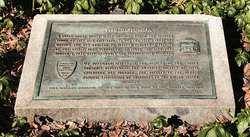
The society finally took shape on November 5, 1852, in Manhattan. Originally named the American Society of Civil Engineers and Architects, the group held its founding meeting at the Rotunda in City Hall Park. James Laurie was elected as the first president. While the society initially included architects and specialists in geological, mining, and mechanical engineering, it eventually streamlined its focus.
Legal Transitions and Growth
The organization's early years were marked by administrative hurdles. Although the name was officially changed to the American Society of Civil Engineers in 1868, the society discovered in 1877 that it had never been properly incorporated. This defect was remedied that year when the society was formally chartered in New York state.
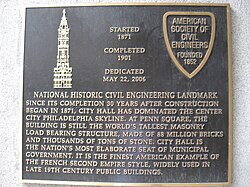
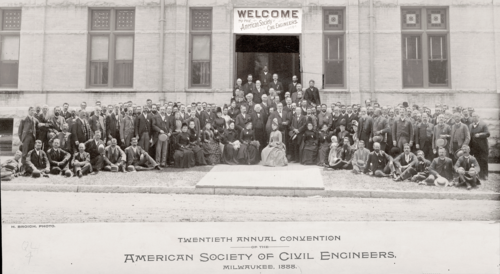
Throughout the late 19th century, the ASCE grew in prominence, moving through several New York City offices before commissioning a dedicated headquarters at 220 West 57th Street in 1895. By the 20th century, the society continued to expand its physical footprint, eventually moving to the United Engineering Center in 1961 and finally relocating to Reston, Virginia, in 1996 to be closer to federal legislative bodies and reduce costs.
Breaking Barriers: Diversity in Engineering
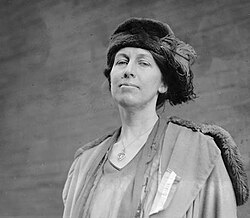
The history of ASCE also reflects the broader social changes in the United States. Nora Stanton Blatch Barney, a 1905 Cornell University graduate, became the first female member of the society. Despite her qualifications and work with the New York City Board of Water Supply, she was denied advancement to associate member in 1916 due to her gender. In a move to recognize her pioneering contributions, ASCE posthumously advanced her to Fellow status in 2015.
Impact on Global Infrastructure
ASCE is recognized for its role in documenting and promoting some of the world's most significant engineering achievements. The society's influence spans various sectors of infrastructure, including:
- Transportation: The Interstate Highway System, the Eurotunnel, and the Panama Canal.
- Water Management: The Hoover Dam, the California State Water Project, and the Chicago wastewater system.
- Urban Development: The Empire State Building and the Kansai International Airport in Japan.
- Environmental Engineering: Advances in sanitary landfills and solid waste disposal.
Professional Development and Academic Contributions
To maintain the highest standards of practice, ASCE provides extensive educational resources. More than 55,000 engineers annually earn continuing education units (CEUs) or professional development hours (PDHs) through the society's seminars and web-based learning.
Publications and Research
The society publishes a wide array of technical journals that serve as primary resources for the industry, including the Journal of Structural Engineering, Journal of Environmental Engineering, and the monthly magazine Civil Engineering.
Awards and Recognition
ASCE honors excellence through prestigious awards, such as the Norman medal (est. 1874), the Wellington prize (est. 1921), and the Outstanding Civil Engineering Achievement (OCEA) award. Specialized honors like the Wesley W. Horner award recognize contributions to hydrology and urban drainage.
| Category | Details |
|---|---|
| Official Language | English |
| Staff Size | 250 Employees |
| Key Programs | AAWRE, AGP, ACOPNE |
| Primary Methods | Industry standards, conferences, publications |
Historical Controversies
Like many large institutions, ASCE has faced scrutiny. Following the devastation of New Orleans, the society was involved in levee investigations. In 2009, an internal probe led to the retraction of a 2007 press release. The review panel found that the original release had conveyed a misleading impression regarding engineering failures and had incorrectly cited surge levels and death estimates.
Frequently Asked Questions
When was the ASCE founded?
The American Society of Civil Engineers was founded on November 5, 1852, in New York City.
Who was the first female member of ASCE?
Nora Stanton Blatch Barney was the first female member, joining as a junior member in 1905.
Where is the ASCE headquarters located today?
The headquarters are currently located in Reston, Virginia, having moved from New York City in 1996.
What are some of the journals published by ASCE?
ASCE publishes several specialized journals, including the Journal of Structural Engineering, Journal of Hydraulic Engineering, and the monthly magazine Civil Engineering.
How does ASCE support continuing education?
ASCE hosts over 15 annual conferences, 200 seminars, and 300 live web seminars, helping over 55,000 engineers earn professional development hours each year.