Amazon Rainforest: Biodiversity, Geography, and the Crisis of Deforestation
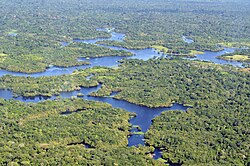
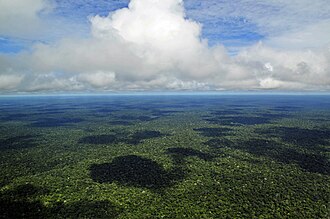
The Amazon rainforest is the world's largest tropical rainforest, a vast biological powerhouse that plays a critical role in regulating the Earth's climate. Spanning approximately 5,500,000 square kilometers, this immense ecosystem is not merely a collection of trees but a complex web of life that supports millions of species and diverse human populations.
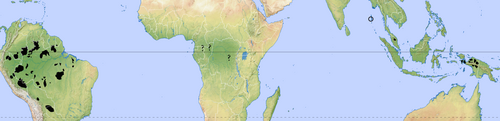
From the towering canopy to the nutrient-rich floor, the Amazon is a marvel of natural engineering. Its existence is supported by surprising global connections, including the transport of dust from the Sahara Desert, which provides essential minerals to fertilize the rainforest's plants.
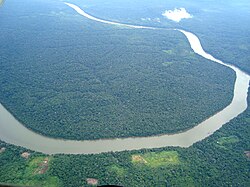
Geography and Location
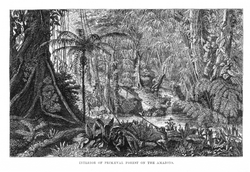
The Amazon is located in South America, primarily within the Amazon drainage basin. It spans nine different nations, creating a transboundary environmental challenge and opportunity. These countries include:
- Brazil
- Peru
- Colombia
- Bolivia
- Ecuador
- Venezuela
- Guyana
- Suriname
- French Guiana (France)
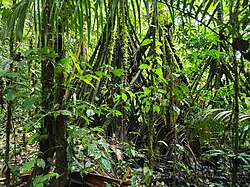
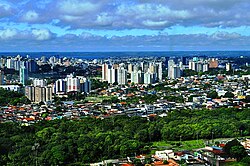
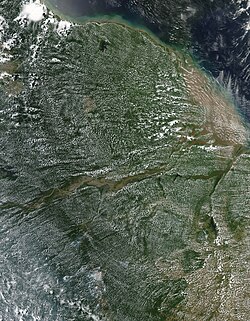
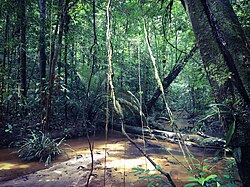
The region is characterized by its dense vegetation and intricate river systems. Manaus, with 2.2 million inhabitants, stands as the largest city within the Amazon basin, serving as a hub for both commerce and research.
Biodiversity and Ecosystems
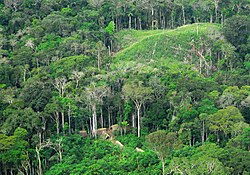
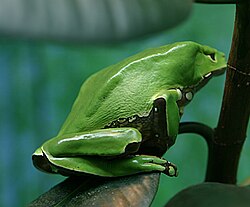
The Amazon is renowned for its staggering biodiversity. The sheer number of species per hectare makes it one of the most biologically diverse places on Earth. This includes a vast array of flora and fauna, from the extremely painful sting of the bullet ant to the diverse parrot species found in places like Yasuni National Park.
| Type of Organism | Number of Species per Hectare |
|---|---|
| Trees | 310 |
| Birds | 160 |
| Epiphytes (plants that grow on other plants) | 96 |
| Fish | 44 |
| Amphibians | 33 |
| Reptiles | 22 |
| Primates | 10 |
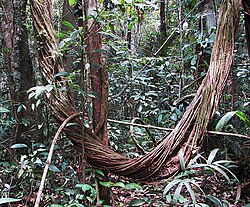
The forest's structure is further defined by lianas (woody climbing vines) and a complex interaction between the forest and the atmosphere, which creates characteristic "popcorn-shaped" cumulus clouds.
Human Presence and Culture
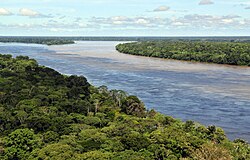
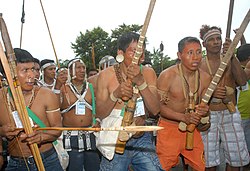
The Amazon is home to a wide variety of human societies. This includes indigenous groups such as the Yanomami, numbering approximately 32,000 people, as well as several uncontacted tribes who remain isolated from the modern world.
![The Yanomami are a group of approximately 32,000 indigenous people who live in the Amazon rainforest[11]](/images/65/e0/65e0fdf7a51a1cbc4f9a626c71391c0588fa09a9d85c2adb6386309462e5ddc0.jpg)
Additionally, the region is inhabited by Ribeirinhos, traditional rural non-indigenous populations who live in dwellings near the riverbanks, adapting their lifestyle to the ebb and flow of the Amazon's waters.
![Ribeirinhos dwellings; Ribeirinhos are a traditional rural non-indigenous[b] population in the Amazon rainforest, who live near rivers.](/images/a9/4f/a94fabcbaa4afa14360cf2b050bd59cc643424f9a36f623493a8ee6be6ef72f4.jpg)
Threats and Environmental Crisis
Deforestation and Fire
The Amazon faces severe threats from human activity. Approximately 20% of the rainforest has been deforested (transformed), and another 6% is highly degraded. Brazil, which holds the largest portion of the forest, has seen significant losses in its tropical primary (old-growth) forests.
![Home to much of the Amazon rainforest, Brazil's tropical primary (old-growth) forest loss greatly exceeds that of other countries.[66]](/images/5e/d7/5ed7c2622bc7699114441b7bb65cf8b3a04db6f12015a2bba513dab08f60fdea.webp)
![Overall, 20% of the Amazon rainforest has been "transformed" (deforested) and another 6% has been "highly degraded", causing Amazon Watch to warn that the Amazonia is in the midst of a tipping point crisis.[67]](/images/ae/a9/aea9cbe36d23acb7ac966ed144441851dc6ed016dbef7a057c092036a65ce590.webp)
Fires have become a recurring crisis. In 2019, Brazil recorded 72,843 fires, with more than half occurring in the Amazon region. During June 2019, deforestation in the Brazilian Amazon rose by more than 88% compared to the previous year.
Climate Change and the Tipping Point
Scientists warn that the Amazon is approaching a tipping point—a threshold beyond which the ecosystem can no longer sustain itself and may transition into a savanna-like state. Potential triggers for this collapse include a global temperature rise of 3–4°C or deforestation levels exceeding 40%.
![Tipping cascades in the Amazon rainforest, according to the 2023 Global Tipping Points report. Potential tipping points for the Amazon include a 3–4°C rise in global temperature and deforestation levels over 40%.[121]](/images/05/53/0553d297b722706db3b52e864783e1413ee5841e1a512f444dbf4453ded492c6.png)
Research indicates that a 3°C rise in global temperatures could kill 75% of the rainforest, while a 4°C rise could result in the loss of 85% of the forest.
Conservation Efforts
Despite the threats, there have been periods of significant progress. Between 2002 and 2006, conserved land in the Amazon nearly tripled, and deforestation rates dropped by up to 60%. Currently, about 1,730,000 square kilometers of land are under some form of conservation.
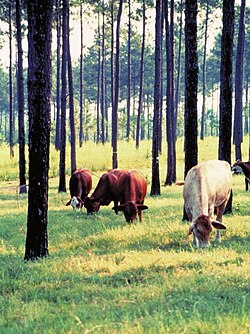
Modern conservation relies heavily on remote sensing (the acquisition of information about an object without making physical contact) and the support of organizations like the Amazon Conservation Association and Global Forest Watch. There is also a growing movement toward a forest-friendly economy, including silvopasture, which integrates livestock and forage with trees to reduce the need for clear-cutting.
Key Facts
- Total Area: Approximately 5,500,000 square kilometers.
- Global Reach: Spans 9 South American nations.
- Biodiversity: Supports an average of 310 tree species per hectare.
- Critical Threshold: A 4°C temperature rise could kill 85% of the rainforest.
- Current Loss: 20% of the forest has been deforested; 6% is highly degraded.
- Conservation: 1,730,000 square kilometers are currently protected.
Frequently Asked Questions
![Peruvian researcher Tatiana Espinosa [es] with a Dipteryx micrantha tree in the Peruvian Amazonia](/images/b7/f3/b7f34057ee4d519f70abe6117fd7f78b7b29e883680c20ac29467cdfc6d735f8.jpg)
Which countries share the Amazon rainforest?
The Amazon spans Bolivia, Brazil, Colombia, Ecuador, French Guiana, Guyana, Peru, Suriname, and Venezuela.
What is the "tipping point" in the Amazon?
The tipping point is a critical threshold where deforestation (over 40%) or temperature rises (3–4°C) could cause the rainforest to collapse and transform into a savanna-like ecosystem.
How does the Sahara Desert affect the Amazon?
Dust from the Sahara Desert is carried across the ocean to the Amazon, where it provides essential nutrients that fertilize the plants.
Who are the Ribeirinhos?
Ribeirinhos are traditional rural, non-indigenous populations who live in the Amazon rainforest, typically in dwellings located near the rivers.
What is silvopasture?
Silvopasture is a land-management system that integrates livestock, forage, and trees, offering a more sustainable alternative to traditional cattle ranching that requires total deforestation.