Altenburg: A Historic Thuringian City of Castles and Culture
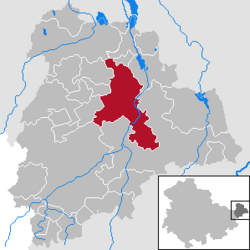
Located in the heart of Thuringia, Germany, Altenburg is a city where medieval heritage meets industrial history. Situated 40 kilometers south of Leipzig and 100 kilometers east of Erfurt, it serves as the capital of the Altenburger Land district. As part of the Central German Metropolitan Region, Altenburg is nestled within a polycentric industrial zone known for its textile and metal production.
From its early mentions in 976 to its role as a ducal residence, the city has evolved through centuries of political shifts. Today, it is recognized as a "Barbarossa town" due to the multiple visits of Emperor Frederick Barbarossa between 1165 and 1188.
Key Facts
- State: Thuringia, Germany.
- Population: 31,093 (as of December 31, 2024).
- Total Area: 45.69 km².
- Notable Invention: The popular German card game Skat was developed here in the 1810s.
- Key Industry: Home to the market-leading Altenburger Spielkartenfabrik (playing card factory).
- Historical Status: Former residence of the Saxe-Altenburg duchy until 1918.
Historical Evolution
Middle Ages and the Wettin Dynasty
Altenburg was one of the first German cities established in former Slavic areas east of the Saale river during the medieval Ostsiedlung (eastward settlement movement). The city's early history was marked by territorial disputes, including its involvement in the anti-Meissen Pleiße-city Union of 1290. By 1485, following the division of Wettin lands in Leipzig, Altenburg became historically linked to the Ernestine Wettins and the state of Thuringia.
The Reformation and Early Modern Period
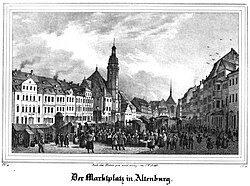
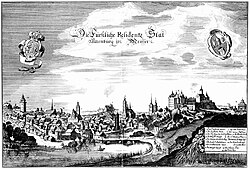
The Reformation arrived early in Altenburg in 1522, led by figures such as George Spalatin. This era was not without conflict; the German Peasants' War of 1525 saw attacks on the local Augustinian monastery and subsequent executions at the marketplace. From the 17th century onward, the city served as the residence for various Ernestine duchies, most notably Saxe-Altenburg.
Industrialization and Modern Transitions
The first half of the 19th century brought a boom in industrialization that flourished until the Great Depression of 1930. Following World War II, Altenburg became part of the Leipzig administrative district in East Germany. After German reunification in 1990, the district council opted to join Thuringia, reuniting with the Schmölln district in 1994 to form the modern Altenburger Land.
Geography and Demographics
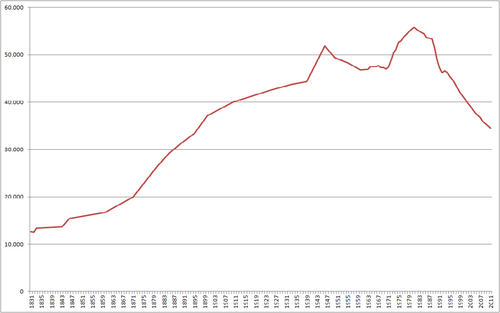
Altenburg's population has seen significant fluctuations. After peaking at approximately 56,000 around 1980, the population declined to 33,000 by 2012, making it one of the more rapidly declining urban areas in Germany. This trend is attributed to a birth deficit and migration toward larger cities like Leipzig, Dresden, and Jena.
Despite these challenges, the city offers some of the lowest rent levels in Germany. The demographic makeup remains predominantly German, with small migrant communities primarily from Russia and Vietnam.
Culture and Cityscape
Architectural Heritage
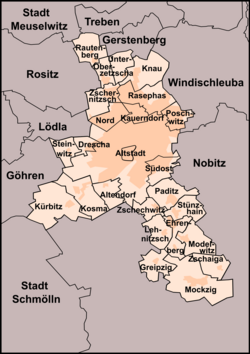
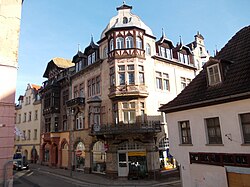
The city center is characterized by early-modern buildings and Gründerzeit architecture (the style prevalent during the late 19th-century industrial expansion). Because the city remained largely unscathed during World War II, much of its historic fabric is preserved.
Major Sights and Museums
Visitors to Altenburg can explore a variety of cultural landmarks:
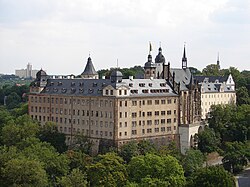
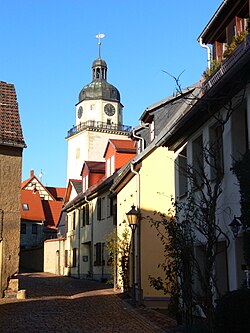
- Altenburg Castle: A complex featuring the 11th-century Flasche tower and the 12th-century Hausmannturm keep.
- Lindenau-Museum: A prominent local museum showcasing regional art and history.
- Religious Sites: Including St. Bartholomew's Church and the Neo-Gothic Fraternity Church.
- Specialized Museums: The Schloss- und Spielkartenmuseum (Castle and Playing Card Museum) and the Mauritianum.
Economy and Infrastructure
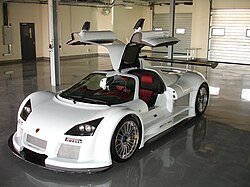
The modern economy of Altenburg focuses on food industries and engineering, specifically car component production. The city gained international attention through the Gumpert Sportwagenmanufaktur, which produced the Gumpert Apollo supercar between 2005 and 2013.
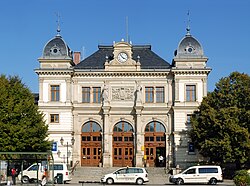
The city is also a hub for playing cards, with the Altenburger Spielkartenfabrik remaining a market leader in Germany. In terms of transport, Altenburg was the first Thuringian city connected to the railway (1842). Today, it is integrated into the S-Bahn Mitteldeutschland, providing frequent connections to Leipzig.
Transport Summary
| Mode | Key Connections / Details |
|---|---|
| Rail | S-Bahn Mitteldeutschland to Leipzig; regional trains to Zwickau and Erfurt. |
| Road | B7, B93, and B180; proximity to Autobahns A4 and A72. |
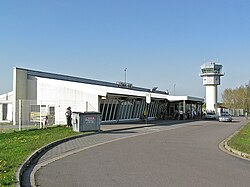
| Air | Leipzig-Altenburg Airport (currently no public flights); Leipzig/Halle Airport (60 km). |
Frequently Asked Questions
What is Altenburg most famous for?
Altenburg is well-known for the development of the card game Skat, its historic castle, and its long-standing tradition of playing card manufacturing via the Altenburger Spielkartenfabrik.
Who was Frederick Barbarossa and why is he linked to the city?
Frederick Barbarossa was the Holy Roman Emperor who visited Altenburg several times between 1165 and 1188, leading the city to be designated as a "Barbarossa town."
What happened to the population of Altenburg after 1990?
Following German reunification, the city experienced a significant population decline due to migration to western Germany and larger eastern cities, as well as a birth deficit.
Is the Leipzig-Altenburg Airport still operational for passengers?
No, while the airport was previously used by Ryanair for flights to cities like London and Barcelona, there are currently no public flights operating from this facility.
Which notable figures are associated with Altenburg?
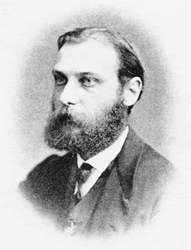
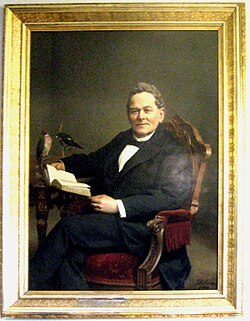
Notable figures include the encyclopedia publisher Friedrich Arnold Brockhaus, biologist Walther Flemming, and the humanist George Spalatin.