Allelopathy: The Chemical Warfare of the Plant Kingdom
In the quiet struggle for survival in the wild, plants do not just compete for sunlight and water; some engage in a sophisticated form of chemical warfare. This biological phenomenon is known as allelopathy, a process where an organism produces biochemicals that influence the growth, survival, and reproduction of other organisms.
These specialized chemicals, called allelochemicals, are a subset of secondary metabolites. Unlike primary metabolites, these substances are not directly required for the organism's basic growth, development, or reproduction. Instead, they serve as strategic tools that can either benefit (positive allelopathy) or harm (negative allelopathy) neighboring species and the surrounding community.
Key Facts
- Definition: Allelopathy is the production of biochemicals by one organism that influence the germination, growth, and survival of others.
- Chemical Basis: It relies on secondary metabolites known as allelochemicals.
- Ecological Role: It is a biotic factor that helps determine species distribution and the success of invasive plants.
- Agricultural Use: Allelochemicals are being researched as natural herbicides and growth regulators for sustainable farming.
- Scope: While primarily associated with plants, the term has been expanded to include algae, bacteria, fungi, and even some invertebrates.
The Evolution of the Concept
The term "allelopathy" is derived from the Greek words allilon and pathy, meaning "mutual harm" or "suffering." It was first coined in 1937 by Austrian professor Hans Molisch to describe how one plant inhibits the growth of its neighbors.
Over the decades, the definition has expanded and contracted. In 1971, researchers Whittaker and Feeny proposed a broader view encompassing all chemical interactions among organisms. By 1996, the International Allelopathy Society (IAS) defined it as any process involving secondary metabolites from plants, algae, bacteria, and fungi that influences biological systems. However, many modern plant researchers have returned to Molisch's original, narrower focus on plant-to-plant inhibition.
Long before the scientific term existed, humans observed these effects. Theophrastus noted the inhibitory impact of pigweed on alfalfa around 300 BCE, and early Chinese agricultural texts described hundreds of plants with pesticidal abilities. In 1832, botanist De Candolle suggested that "soil sickness" in crops was caused by plant exudates.
Scientific Debate and Validation
Allelopathy is not without controversy in the field of ecology. Some scientists argue that these effects are indistinguishable from exploitation competition, where organisms simply compete for the same limited resources.
To resolve this, researchers have developed specialized methods to isolate chemical effects from resource competition. For example, in 1994, D.L. Liu and J.V. Lowett used barley plants to examine allelochemicals directly. Another study by M.C. Nilsson demonstrated that the dwarf shrub Empetrum hermaphroditum reduced the growth of Scots pine seedlings by approximately 40% through allelopathy, while the remaining growth reduction was due to below-ground resource competition.
Examples in Nature
Allelopathy is a powerful tool for invasive species, allowing them to displace native flora. Notable examples of allelopathic plants include:
- Black Walnut (Juglans nigra)
- Tree of Heaven (Ailanthus altissima)
- Garlic Mustard (Alliaria petiolata)
- Spotted Knapweed (Centaurea stoebe)
- Nut Grass (Cyperus rotundus)
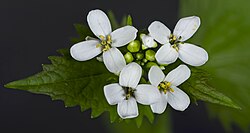
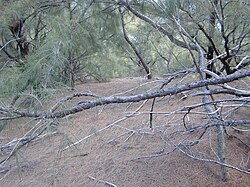
Some plants use these chemicals to create "bare zones" around themselves. While early theories suggested that volatile terpenes from shrubs like Salvia leucophylla caused these zones, later research revealed that in some cases, the absence of grass was actually due to grazing by rodents and birds rather than chemical inhibition.
Applications in Sustainable Agriculture
The ability of certain plants to suppress weeds makes allelochemicals a promising tool for sustainable farming. By integrating allelopathic plants into crop rotations or using them as cover crops, farmers can reduce their reliance on synthetic pesticides and herbicides.
Research is currently focusing on three main interactions: weeds on crops, crops on weeds, and crops on crops. Some plants can reduce the germination rate of competitors by as much as 50%. A practical example is mesotrione (trade name Callisto), a chemical analog of the allelochemical leptospermone found in the lemon bottlebrush (Melaleuca citrina). Mesotrione is used commercially to control crabgrass in lawns and broadleaf weeds in corn.
| Plant Species | Effect | Application/Context |
|---|---|---|
| Melaleuca citrina | Produces leptospermone | Basis for commercial herbicide mesotrione |
| Empetrum hermaphroditum | Inhibits Scots pine | Ecological species distribution |
| Alliaria petiolata | Suppresses native plants | Invasive species success |
| Juglans nigra | Chemical inhibition | Classic example of negative allelopathy |
Mechanisms of Action
Plants deploy allelochemicals through various mechanisms to ensure their dominance. These interactions typically manifest in two primary ways:
- Germination Inhibition: Chemicals released into the soil prevent the seeds of competing species from sprouting.
- Growth and Reproduction Suppression: Toxic emissions can disrupt the physiological processes of established plants, hindering their ability to grow or produce seeds.
Frequently Asked Questions
What is the difference between allelopathy and competition?
Competition occurs when two organisms vie for the same limited resource (like water or light). Allelopathy is a specific type of biotic interaction where one organism actively releases chemicals to inhibit another, regardless of resource availability.
Can allelopathy be beneficial?
Yes. While often discussed as a negative interaction, positive allelopathy occurs when the biochemicals produced by one organism promote the growth or survival of another.
How is allelopathy used in farming?
Farmers can use allelopathic plants as natural herbicides to suppress weeds or develop synthetic analogs of allelochemicals (like mesotrione) to protect crops without using traditional harsh chemicals.
Do only plants exhibit allelopathy?
Although most common in plants, the broader definition includes algae, bacteria, fungi, and even some invertebrates such as corals and sponges.
How do scientists prove a plant is allelopathic?
Researchers use methods to separate chemical effects from resource competition, such as using activated carbon to neutralize chemicals in the soil or using PVC tubes to block root-based resource competition.