Salvia leucophylla: The Aromatic Beauty of Purple and Gray Sage
Native to the rugged landscapes of the southern coastal mountain ranges in California and Baja California, Salvia leucophylla is a standout aromatic shrub. Known commonly as purple sage or gray sage, this evergreen species is a staple of the Mediterranean-style climates found in the American West. Whether admired for its striking floral displays or its ability to thrive in challenging environments, this plant is a cornerstone of regional biodiversity.
Botanical Description and Appearance
Salvia leucophylla is an evergreen shrub characterized by its graceful, arching branches. As the plant matures, these branches may reach the ground and occasionally take root where they touch the soil. The shrub typically reaches a height and width of 1 to 1.5 metres (approximately 3.5 to 5 feet).
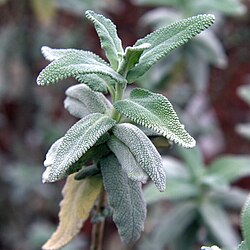
The foliage undergoes a notable transformation throughout the seasons. In the spring, the leaves appear light green, but as they mature, they transition to a distinctive grayish-white hue. This color shift is reflected in the plant's specific epithet, leucophylla, which translates to "light grayish leaves."
Flowers and Inflorescences
During the flowering season, the plant produces beautiful pinkish-purple blossoms. These flowers, measuring roughly 2.5 cm (1 inch) in diameter, are held within a purple-tinged gray calyx (the protective outer layer of a flower bud). The flowers grow in tight whorls along inflorescences—the flower clusters—that can reach lengths of 15 to 20 centimetres (6 to 8 inches) on pinkish-purple stems.
Key Facts
- Common Names: Purple sage, gray sage, or San Luis purple sage.
- Native Range: Southern coastal mountain ranges of California and Baja California.
- Growth Habit: Evergreen shrub growing 1 to 1.5 metres tall and wide.
- Preferred Habitat: Dry hillsides and gravelly soils with full sun and good drainage.
- Scientific Family: Lamiaceae (the mint family).
Taxonomy and History
The scientific classification of Salvia leucophylla places it within the kingdom Plantae, the order Lamiales, and the family Lamiaceae. The species was formally named by Edward Lee Greene in 1892, based on a type specimen collected near Santa Barbara, California, by the renowned Scottish botanist David Douglas.
| Rank | Taxon |
|---|---|
| Kingdom | Plantae |
| Clade | Embryophytes |
| Clade | Tracheophytes |
| Clade | Angiosperms |
| Clade | Eudicots |
| Clade | Asterids |
| Order | Lamiales |
| Family | Lamiaceae |
| Genus | Salvia |
| Species | S. leucophylla |
Cultivation and Ecological Behavior
Because of its drought tolerance, Salvia leucophylla is widely utilized in xeriscape gardening—a style of landscaping designed to reduce or eliminate the need for supplemental water. It thrives best when planted in full sun with well-draining soil.
Gardeners may encounter various cultivars and hybrids, which can sometimes make precise identification difficult. Notable cultivars include:
- Salvia leucophylla 'Pt. Sal'
- Salvia leucophylla 'Figueroa'
- Salvia leucophylla 'Bee's Bliss'
Allelopathic Qualities
One of the most fascinating biological aspects of this sage is its allelopathic nature. Allelopathy refers to a biological phenomenon where an organism produces biochemicals that influence the growth, survival, and reproduction of other organisms. It is believed that Salvia leucophylla releases monoterpenoids (organic compounds) that can inhibit the growth of neighboring seedlings, helping the plant reduce competition for resources.
Frequently Asked Questions
What does the name 'leucophylla' mean?
The specific epithet 'leucophylla' refers to the plant's light, grayish leaves.
Where does Salvia leucophylla grow naturally?
It is native to the southern coastal mountain ranges of California and Baja California, typically inhabiting dry hillsides and gravelly soils.
Is this plant suitable for water-wise gardens?
Yes, it is widely used in xeriscape gardening because it prefers full sun and well-drained soil, making it ideal for low-water landscapes.
What is the effect of the plant's monoterpenoids?
The monoterpenoids released by the plant are thought to have allelopathic effects, potentially inhibiting the growth of nearby seedlings.
How large does purple sage grow?
It is an evergreen shrub that typically grows between 1 and 1.5 metres (3.5 to 5 feet) in both height and width.