Alemanni: The Germanic Confederation of the Upper Rhine
The Alemanni (also known as the Alamanni) were a powerful confederation of Germanic tribes that dominated the Upper Rhine region during the first millennium. Emerging as a significant force on the borders of the Roman Empire, they evolved from a loose collection of communities into a structured political entity known as Alamannia. Their legacy persists today through the linguistic foundations of Old High German and the historical development of southwestern Germany and northern Switzerland.
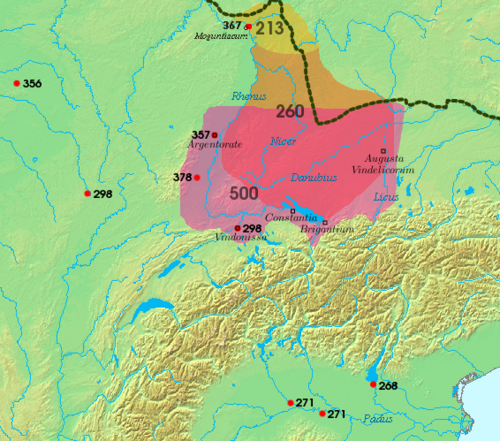
First appearing in historical records during the campaign of Emperor Caracalla in 213 AD, the Alemanni were characterized by their persistent pressure on Roman frontiers. By 260 AD, they had captured the Agri Decumates—a region of the Roman Empire between the Rhine and Danube—and eventually expanded their influence into Alsace and northern Switzerland.
Key Facts
- Origin: A confederation of Germanic tribes, including segments of the Suevi.
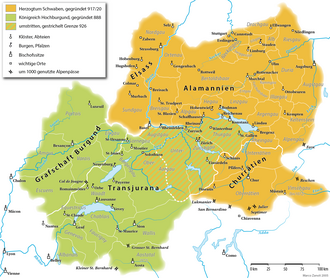
- Territory: Centered on the Upper Rhine, spanning present-day southwestern Germany, Alsace, and northern Switzerland.
- Roman Conflict: Engaged in centuries of warfare with Rome, notably invading Gaul and Italy in the 3rd and 4th centuries.
- Frankish Subjugation: Conquered by Clovis I in 496 AD and later fully integrated into the Frankish dominions.
- Cultural Legacy: Used the Elder Futhark runic alphabet and developed the Lex Alamannorum (customary law).
- Political Evolution: Eventually formed the basis of the Duchy of Swabia within the Holy Roman Empire.
Conflicts with the Roman Empire
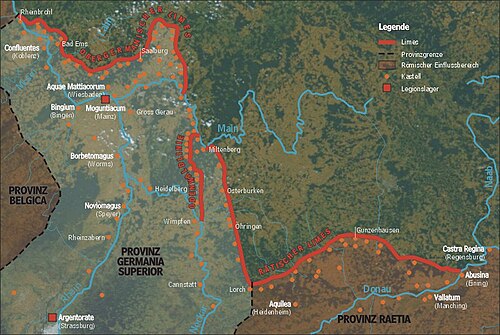
The relationship between the Alemanni and Rome was defined by chronic instability. The Limes Germanicus, the fortified border of the Roman Empire, served as the primary flashpoint for these conflicts.
In 268 AD, taking advantage of Roman troop withdrawals to fight Goths in the east, the Alemanni launched a devastating invasion of Gaul and northern Italy. Historical accounts from Gregory of Tours describe the destructive force of the Alemanni under their king, Chrocus, who is said to have destroyed ancient temples and martyred Christians in Clermont.
Major Roman–Alemannic Battles
The military struggle was a see-saw of victories and defeats spanning two centuries:
| Year | Battle | Outcome |
|---|---|---|
| 259 | Battle of Mediolanum | Emperor Gallienus defeats the Alemanni to rescue Rome. |
| 271 | Battle of Placentia | Emperor Aurelian is defeated by invading Alemannic forces. |
| 271 | Battle of Fano | Aurelian defeats the Alemanni, forcing a retreat from Italy. |
| 298 | Battle of Lingones | Caesar Constantius Chlorus defeats the Alemanni. |
| 356 | Battle of Reims | Caesar Julian is defeated by the Alemanni. |
| 357 | Battle of Strasbourg | Julian expels the Alemanni from the Rhineland. |
| 457 | Battle of Campi Cannini | Majorian defeats an Alemannic invasion near Lake Maggiore. |
Subjugation by the Franks and Political Transition
The independent kingdom of Alamannia, stretching from Strasbourg to Augsburg, came to an end in 496 AD. The Frankish leader Clovis I defeated the Alemanni at the Battle of Tolbiac, marking a pivotal shift in regional power.
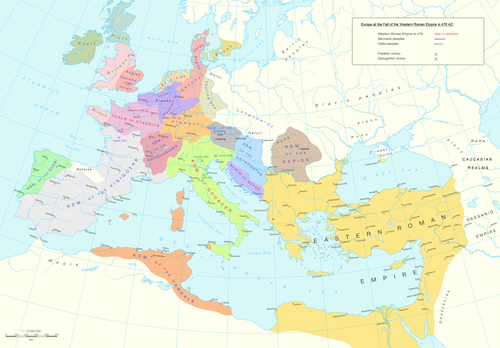
While the Alemanni briefly sought protection from Theodoric the Great of the Ostrogoths, they were definitively subjugated by the Franks under Theudebert I in 536 AD. For several centuries, they were governed by Frankish dukes. A significant turning point occurred in 746 AD when Carloman executed the Alemannic nobility at the blood court of Cannstatt to crush an uprising, ensuring strict Frankish control.
As the Carolingian Empire declined, local Alemannic counts regained autonomy. This eventually led to the establishment of the Duchy of Swabia, recognized by Henry the Fowler in 919 AD, which became a stem duchy of the Holy Roman Empire.
Culture, Religion, and Language
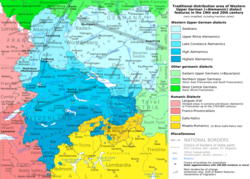
The Alemanni possessed a rich material culture and a distinct linguistic identity. Their language evolved into the Alemannic dialects of Old High German, which are still recognizable in certain regions today.
Runic Literacy and Paganism
Between the 520s and 620s, there was a surge in the use of Elder Futhark (the oldest form of the runic alphabet). Inscriptions have been found on fibulae (decorative brooches), belt buckles, and weapons. These artifacts often reflect a transition from paganism to Christianity.
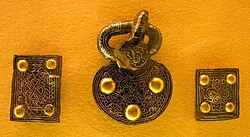
For example, the Nordendorf fibula mentions the deities Wodan and Donar, while later inscriptions, such as one found at Bad Ems (c. 660–690 AD), explicitly invoke the Christian God, signaling the end of native runic literacy.
![The gold bracteate of Pliezhausen (sixth or seventh century) shows typical iconography of the pagan period. The bracteate depicts the "horse-stabber underhoof" scene, a supine warrior stabbing a horse while it runs over him. The scene is adapted from Roman era gravestones of the region.[30]](/images/fd/eb/fdeb6eb270aebb48d379475789310b9cec9eea6a49c37776ab26a503ee7f54ab.jpg)
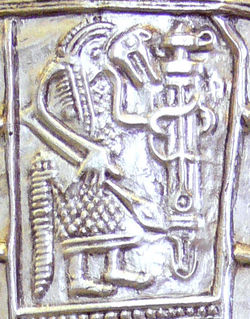
Pagan rituals also involved the veneration of nature, including groves, rivers, and hills, where animals were sometimes sacrificed. Late testimonies of these rituals are seen in artifacts like the Gutenstein scabbard, which depicts a warrior in a ritual wolf costume.
Christianization and Law
The transition to Christianity was gradual throughout the 7th century. The establishment of the Bishopric of Constance (by 635 AD) served as a missionary hub for the newly converted. This institutional shift is mirrored in their legal records: the early Pactus Alamannorum rarely mentions the church, whereas the Lex Alamannorum of 720 AD contains a dedicated chapter on ecclesial matters.
Genetic Origins and Population Turnover
Modern genetic research has provided insight into the biological origins of the Alemanni. A 2018 study of a seventh-century graveyard in Niederstotzingen revealed a complex social structure, with some individuals showing close genetic links to Northern and Eastern Europe (Lithuania and Iceland), while others showed links to Southern Europe (Italy and Spain), possibly indicating the presence of adoptees or slaves.
Further research by Gretzinger et al. (2024) indicates a significant population turnover in southern Germany during the first half of the first millennium AD. The early medieval Alemannic and Bavarian populations showed considerably more steppe-related ancestry and Scandinavian-related ancestry than the preceding Iron Age Hallstatt populations. This suggests a large-scale arrival of Germanic-speaking tribes from northern Germany or Denmark, making them genetically similar to populations from Scandinavia and the Netherlands.
Frequently Asked Questions
Who were the Alemanni?
The Alemanni were a confederation of Germanic tribes located along the Upper Rhine during the 1st millennium, eventually forming the region of Alamannia and contributing to the creation of the Duchy of Swabia.
How did the Alemanni interact with the Roman Empire?
Their relationship was primarily antagonistic, characterized by frequent raids and major invasions of Gaul and Italy, particularly during the 3rd and 4th centuries, which pressured the Roman Limes Germanicus.
When were the Alemanni conquered by the Franks?
They were first defeated by Clovis I in 496 AD at the Battle of Tolbiac, though they remained intermittently rebellious until the 8th century when Carloman executed their nobility to secure Frankish rule.
What was the Elder Futhark?
The Elder Futhark was the runic alphabet used by the Alemanni for inscriptions on jewelry and weapons between the 6th and 7th centuries, often recording both pagan invocations and early Christian sentiments.
What does genetic evidence say about their origins?
Genetic studies indicate that the Alemanni had significant ancestry from Northern Europe and Scandinavia, suggesting a population turnover where Germanic-speaking groups from the north replaced or merged with earlier Iron Age populations in southern Germany.