Al-Walid I: The Architect of Umayyad Expansion and Grandeur
Al-Walid I, ruling from 705 to 715 CE, stands as one of the most influential figures of the Umayyad Caliphate. As the sixth caliph and the eldest son of Abd al-Malik, his reign marked a golden era of territorial growth and architectural ambition. While his predecessors focused on consolidating the state, al-Walid transformed the caliphate into a global empire, stretching from the borders of China to the shores of the Atlantic Ocean.
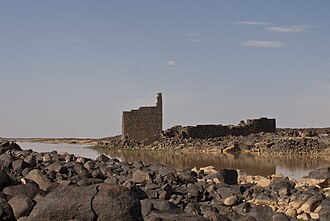
Before ascending to the throne, al-Walid proved his military capabilities as a prince. Between 695 and 698, he led annual raids against the Byzantine Empire and focused on securing the Syrian Desert route to Mecca by building and restoring vital fortifications.
Key Facts
- Reign: October 9, 705 – February 23, 715 CE.
- Dynasty: Umayyad (Marwanid branch).
- Major Conquests: Transoxiana, Sind, the Maghreb, and Hispania.
- Architectural Legacy: Founded the Umayyad Mosque of Damascus and expanded the Prophet's Mosque in Medina.
- Predecessor: His father, Abd al-Malik.
The Zenith of Territorial Expansion
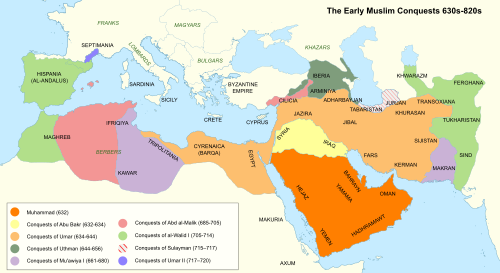
Under the leadership of al-Walid I, the caliphate reached its greatest geographical extent. This expansion was managed by capable generals and governors who pushed the frontiers in three primary directions.
The Eastern Frontiers
In Central Asia, the governor of Khurasan, Qutayba ibn Muslim, penetrated Transoxiana—a region previously impenetrable to Muslim armies. Between 705 and 715, he secured the surrender of Bukhara, Samarkand, Khwarazm, and Farghana, primarily through tributary alliances. Simultaneously, Muhammad ibn al-Qasim extended the empire's reach into Sind, located in the northwestern part of South Asia.
The Western Frontiers
In North Africa, governor Musa ibn Nusayr subjugated various Berber confederations, including the Hawwara, Zenata, and Kutama. By 708 or 709, the Umayyads had conquered Tangier and Sus in modern-day Morocco. This momentum led to the invasion of the Visigothic Kingdom of Hispania (the Iberian Peninsula) in 711, led by Tariq ibn Ziyad and later reinforced by Musa. By 716, most of Hispania had fallen under Umayyad control.
The Byzantine Front
The conflict with the Byzantine Empire remained a priority. By 712, the Arabs had solidified control over Cilicia and areas east of the Euphrates. In 714, after a raid on Ancyra, the Byzantine Emperor Anastasios II attempted to negotiate a truce, fearing al-Walid's reported plans for a massive land and sea assault on Constantinople.
Architectural Patronage and Public Works
Al-Walid I is perhaps best remembered for his lavish patronage of the arts and architecture, using construction to legitimize Umayyad rule and honor the roots of Islam.
The Great Mosques
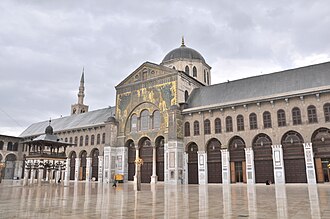
The most enduring symbol of his reign is the Umayyad Mosque of Damascus, which remains largely in its original form. In Medina, al-Walid ordered a massive expansion of the Prophet's Mosque. This project was controversial as it involved demolishing the living quarters of Muhammad's wives to incorporate the graves of the Prophet and the first two caliphs, Abu Bakr and Umar.
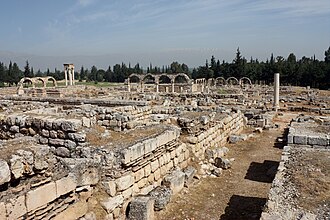
Beyond Medina and Damascus, al-Walid expanded the Masjid Al-Haram in Mecca, the mosque of Ta'if, the mosque of Amr ibn al-As in Fustat (Cairo), and the Great Mosque of Sanaa. He also founded the city of Anjar in modern-day Lebanon.
Administrative and Religious Structures
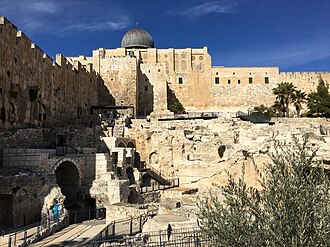
In Jerusalem, al-Walid is credited with the construction of the Qibli Mosque and several unfinished palatial and administrative buildings south of the al-Aqsa Mosque Compound.
Summary of Al-Walid I's Reign
| Category | Details |
|---|---|
| Reign Period | 705 – 715 CE |
| Key Generals | Qutayba ibn Muslim, Muhammad ibn al-Qasim, Musa ibn Nusayr |
| Major Cities Founded/Expanded | Anjar, Damascus, Medina, Mecca, Sanaa |
| Territorial Gains | Central Asia, South Asia, North Africa, Iberian Peninsula |
| Family Line | Marwanid (Umayyad) |
Death and Legacy
Al-Walid I died on February 23, 715, at the age of approximately 41 in Dayr Murran, Syria. He was succeeded by his brother, Sulayman. While his reign was a peak of Umayyad power, the seeds of future instability were sown through the sidelining of his many sons. Decades later, in 744, several of his sons conspired to topple Caliph al-Walid II, contributing to the Third Fitna (civil war). Despite this, some of his descendants survived the Abbasid Revolution of 750, eventually finding prominence in the Umayyad emirate of al-Andalus.
Frequently Asked Questions
Who was Al-Walid I?
Al-Walid I was the sixth caliph of the Umayyad Caliphate, ruling from 705 to 715 CE. He is known for expanding the empire to its greatest extent and for his massive architectural projects.
Which territories were conquered during his reign?
His reign saw the conquest of Transoxiana (Central Asia), Sind (South Asia), the Maghreb (North Africa), and Hispania (the Iberian Peninsula).
What are his most famous architectural contributions?
He is most famous for founding the Umayyad Mosque of Damascus and significantly enlarging the Prophet's Mosque in Medina and the Masjid Al-Haram in Mecca.
How did Al-Walid I differ from his father, Abd al-Malik?
While Abd al-Malik focused on centralization and consolidating the state, Al-Walid I focused on outward territorial expansion and the construction of grand public and religious works.
What happened to his descendants?
Many of his sons were involved in the political turmoil of the Third Fitna. While some were executed during the Abbasid Revolution, others migrated to al-Andalus, where they maintained influence.