Tiles: A Global History of Materials, Art, and Architecture
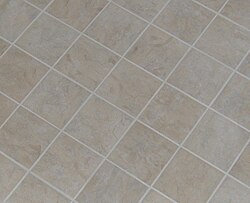
Tiles are thin, typically square or rectangular coverings crafted from hard-wearing materials. From the protective slopes of a roof to the intricate patterns of a palace floor, tiles serve both functional and aesthetic purposes. While most commonly associated with ceramics, tiles can be manufactured from stone, metal, baked clay, glass, and even lightweight materials like mineral wool or perlite for specialized ceiling applications.
The term originates from the French tuile, derived from the Latin tegula, referring specifically to fired clay roof tiles. Today, the industry is a global powerhouse; in 2019, the production of ceramic tiles (excluding roofing) was estimated at 12.7 billion square meters.
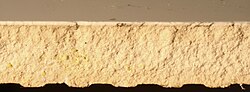
Key Facts
- Earliest Evidence: Some of the oldest surviving tiles date back to approximately 3550 BCE in Ethiopia.
- Material Variety: Common materials include earthenware, stoneware, porcelain, marble, granite, slate, and glass.
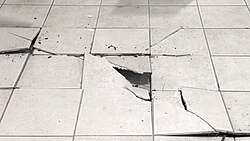
- Functional Grading: Floor tiles require higher durability and impact resistance than wall tiles.
- Porcelain Standard: True porcelain tiles are fully vitrified with a water absorption rate of 0.5% or less.
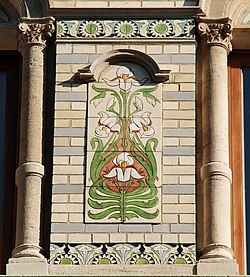
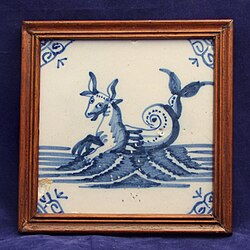
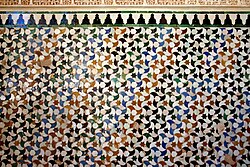
- Global Influence: Tiling traditions range from Moroccan zellige to Portuguese azulejos and Dutch Delftware.
The Evolution of Tiling Materials
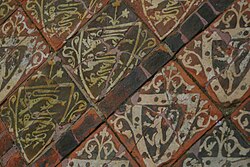
Tiles are categorized primarily by their composition and intended use. Ceramics are the most prevalent, often glazed for interior walls to provide a moisture barrier and unglazed for roofing to ensure durability.
Ceramic and Porcelain
Ceramic tiles generally fall into three categories: earthenware, stoneware, and porcelain. Porcelain is a high-density, fine-grained ceramic produced via dust-pressing. According to ISO 13006 and ANSI standards, porcelain must be fully vitrified with water absorption levels at or below 0.5%, making it exceptionally durable and impervious.
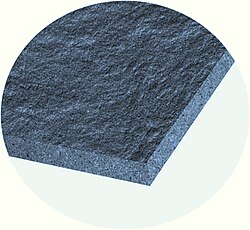
Natural Stone and Composites
Stone tiles—such as marble, onyx, granite, and slate—offer a natural aesthetic but vary in hardness. For instance, limestone is softer and less suitable for high-traffic areas. Unlike glazed ceramics, which may show scratches or pits over time, natural stone wear is often less noticeable. Other modern materials include concrete, cork, and digital-printed ceramics that can withstand kiln temperatures up to 1,200 °C.
A Journey Through Tiling History
Humanity has utilized tiles for millennia, evolving from simple mud-brick protections to complex mathematical art forms.
Ancient Middle East and Asia
In Ancient Mesopotamia, the scarcity of stone led to the development of kiln-fired bricks (heated between 950 °C and 1,150 °C) to protect temples and palaces. A prime example is the Ishtar Gate of Babylon (c. 575 BCE). In ancient Sri Lanka, Sinhalese kings used polished stone for floors and swimming pools as early as the second century, while the Lovamahapaya featured copper and multicolored roof tiles.
The Islamic World: Art and Geometry
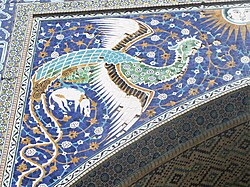
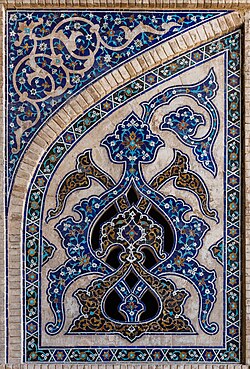
The Islamic world elevated tiling to a high art. In Iran and Central Asia, girih tiling emerged in the 11th and 12th centuries, using intersecting straps to create complex polygons and stars. The Timurid Empire marked a golden age with the mo'araq technique, where single-color tiles were cut into geometric shapes and assembled with liquid plaster.
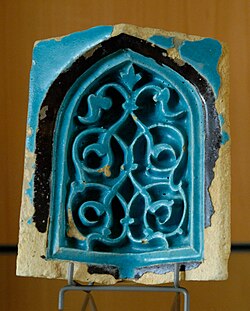
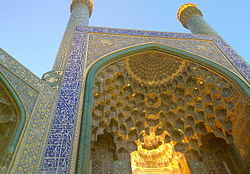
The Safavid era produced the Shah Mosque in Isfahan, renowned for its cuerda seca tiles and Haft Rang (seven-color) patterns. Similarly, the Ottoman Empire in Turkey developed the famous İznik pottery, decorating mosques and palaces with vibrant floral motifs and calligraphy.
European and Global Traditions
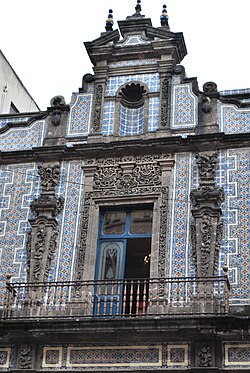
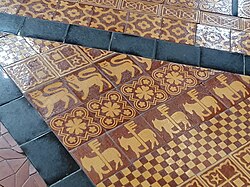
Medieval Europe utilized painted tiles to depict religious and secular narratives. In Portugal, azulejos became a cultural staple, while the Netherlands produced the iconic blue-and-white Delftware tiles. In the Philippines, Spanish colonization introduced Baldozas Mosaicos (cement tiles), later known as Machuca tiles in the 19th century.
Functional Applications of Tiles
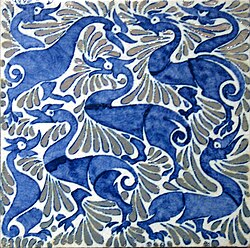
Depending on their placement, tiles are engineered for different stresses and environmental factors.
Roofing and Flooring
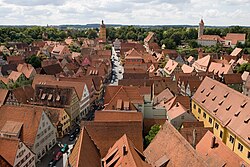
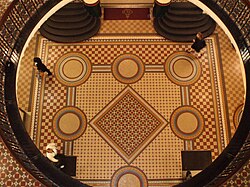
Roof tiles are designed to overlap to shed precipitation. Traditionally made of clay or slate, modern versions use concrete or plastic. Floor tiles must resist impact; while stone is heavy and prone to shipping breakage, it offers a timeless durability that differs from the surface-wear patterns of glazed ceramics.
Ceilings and Walls
Ceiling tiles often feature embossed patterns to improve acoustics. In traditional Mediterranean architecture, terracotta tiles were placed atop wooden beams before being plastered. Modern installations include flush-mounted or dropped ceilings.
Summary of Tile Types and Materials

| Material | Common Use | Key Characteristic | Example Style |
|---|---|---|---|
| Porcelain | Floors, Walls | Low water absorption (≤0.5%) | Modern high-traffic areas |
| Terracotta | Roofs, Ceilings | Baked clay, traditional | Mediterranean roofs |
| Natural Stone | Floors, Patios | High durability, natural variation | Marble, Granite, Slate |
| Glazed Ceramic | Walls, Decor | Water-resistant, colorful | Azulejos, Delftware |
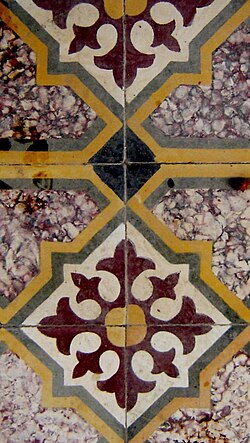
| Cement | Outdoor Paving | Heavy-duty, molded | Barcelona Panot |
Frequently Asked Questions

What is the difference between ceramic and porcelain tiles?
While both are ceramics, porcelain is a denser, fully vitrified material with a water absorption rate of 0.5% or less, making it more durable and less porous than standard ceramic tiles.
What are zellige and azulejos?
Zellige refers to the brightly colored, hand-cut geometric terracotta tiles traditional to Morocco. Azulejos are a form of painted, tin-glazed ceramic tilework characteristic of Portugal and Spain.
Why are some tiles better for floors than walls?
Floor tiles are manufactured to be thicker and harder to resist the impact and weight of foot traffic, whereas wall tiles can be thinner as they only need to support their own weight and resist moisture.
How were ancient Mesopotamian bricks made?
They used river mud to create sun-dried adobe bricks, but for important structures, they developed kiln-fired bricks heated to between 950 °C and 1,150 °C for extreme durability.
What is girih tiling?
Girih is an Islamic tiling technique that uses intersecting straps to create complex, interlacing patterns of stars and polygons, often found in mosques and mausoleums.