Great Mosque of Aleppo
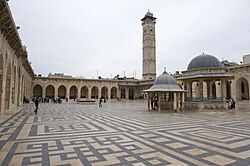
The Great Mosque of Aleppo, also known as the Great Umayyad Mosque of Aleppo, stands as one of the oldest and most significant religious landmarks in Syria. Located in the al-Jalloum district of the Ancient City of Aleppo—a designated UNESCO World Heritage Site—this architectural marvel is situated near the entrance to the Al-Madina Souq. Throughout its long history, the mosque has served not only as a center of worship but as a repository of spiritual heritage, purportedly housing the remains of Zechariah, the father of John the Baptist.
While the foundations of the mosque date back to the early 8th century during the Umayyad Caliphate, the structure seen today is the result of centuries of evolution, with major contributions from the Seljuk and Mamluk periods. Despite suffering catastrophic damage during the Syrian Civil War, the mosque remains a symbol of resilience and cultural identity for the people of Aleppo.
Key Facts
- Location: Al-Jalloum district, Ancient City of Aleppo, Syria.
- Original Construction: Completed circa 715–717 CE during the Umayyad Caliphate.
- Architectural Styles: A blend of Umayyad, Seljuk, and Mamluk influences.
- UNESCO Status: Part of the Ancient City of Aleppo World Heritage Site (inscribed 1986).
- Major Loss: The historic 11th-century minaret was destroyed in April 2013.
- Current Status: Under reconstruction, with limited reopenings for religious observances.
Historical Evolution
Founding and Early Origins
The site of the Great Mosque has a layered history of sacredness. In the Hellenistic period, it served as an agora (a public open space), and during the Roman era, it became the garden for the Cathedral of Saint Helena. The mosque was eventually built on land previously used as the cathedral's cemetery.
Historical accounts vary regarding its founder. Some traditions credit the Umayyad caliph Al-Walid I with starting the project in 715 CE, with his successor Sulayman completing it in 717 CE. Other historians suggest that Maslamah ibn Abd al-Malik, the governor of the province, was the primary patron, as establishing a large congregational mosque in Aleppo would have been strategically necessary for a base operating against the Byzantine Empire.
Renovations and Medieval Influence
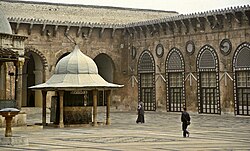
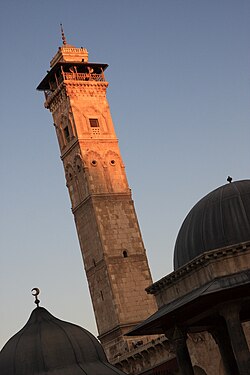
The mosque underwent several transformations over the centuries. In the 11th century, the Mirdasids added a single-domed fountain to the courtyard. Between 1090 and 1094, the architect Hasan ibn Mufarraj al-Sarmini constructed the mosque's iconic 45-meter minaret under the Seljuk governor Aq Sunqur al-Hajib.
The structure faced repeated devastation, including a great fire in 1159 and two separate razings by the Mongols in 1260 and 1281. Following these events, the Mamluks (1260–1516) carried out extensive repairs. Notable additions from this era include a new mihrab (the niche indicating the direction of Mecca) installed by Sultan Qalawun in 1285 and a new minbar (preacher's pulpit) commissioned by Sultan al-Nasir Muhammad.
Architectural Features
The Courtyard and Interior
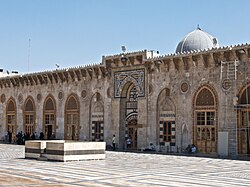
The mosque follows a hypostyle plan—a design featuring a roof supported by many columns—similar to the Great Mosque of Damascus. Its vast marbled courtyard is famous for its intricate geometric patterns of alternating black and white stone. The courtyard also features a sundial, an open prayer estrade, and two roofed ablution fountains.
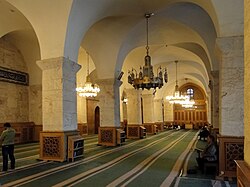
The haram (sanctuary) is the main prayer hall located to the south. It contains three naves supported by 18 quadrangular columns with cross-vaults. Key interior elements include the shrine of Zechariah, a 15th-century minbar, and a deeply carved mihrab. While an inscription attributes the central entrance to Ottoman sultan Murad III, it was actually constructed by the Mamluks.
The Minaret and Maqsurah
The minaret was regarded as a unique piece of Islamic architecture, blending Mediterranean and Gothic elements. Its decoration showed a strong continuity with pre-Islamic Syrian and Roman architectural heritage.
The mosque also featured a maqsurah—a square, domed room raised slightly above the prayer hall floor. This area was adorned with Kashan tiles and housed the tomb of the Prophet Zakariah, decorated with silver embroideries of Quranic verses. An annexed museum held ancient manuscripts and a box purportedly containing a strand of the Prophet Muhammad's hair.
Impact of the Syrian Civil War
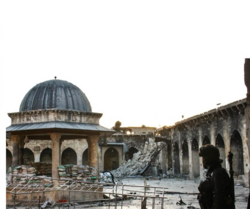
The Great Mosque became a focal point of conflict during the Syrian Civil War. Serious damage began in October 2012 during clashes between the Syrian Army and the Free Syrian Army. The most devastating blow occurred on April 24, 2013, when the historic minaret was reduced to rubble during heavy fighting. Reports on the cause of the destruction varied, with state media blaming explosives and opposition sources citing tank fire.
Between 2012 and 2016, the mosque suffered from burning prayer halls, collapsing walls, and the looting of priceless artifacts. However, some rebels claimed to have salvaged and hidden ancient handwritten Koranic manuscripts to protect them from destruction.
Restoration Efforts
Recovery efforts began around 2017. By 2024, reports indicated the mosque had partially reopened, though repairs continued. In March 2025, the mosque was reopened specifically for the month of Ramadan, and a new phase of comprehensive reconstruction commenced on November 30, 2025.
| Feature | Details |
|---|---|
| Location | Al-Jalloum district, Aleppo, Syria |
| Founded | Early 8th Century (Umayyad period) |
| Key Architect | Hasan ibn Mufarraj al-Sarmini (Minaret) |
| Architectural Styles | Umayyad, Seljuk, Mamluk |
| UNESCO Status | Ancient City of Aleppo (World Heritage Site) |
| Major Damage | Minaret destroyed April 2013 |
| Current Status | Under reconstruction (as of 2025) |
Frequently Asked Questions
Who originally built the Great Mosque of Aleppo?
The mosque was first built during the Umayyad Caliphate in the early 8th century. While some sources credit Caliph Al-Walid I and Sulayman, other historians believe Maslamah ibn Abd al-Malik, the local governor, was the primary patron.
What happened to the mosque's minaret?
The 11th-century minaret, known for its unique blend of Mediterranean and Gothic styles, was destroyed on April 24, 2013, during heavy fighting between government forces and rebel groups during the Syrian Civil War.
What is the religious significance of the mosque?
Beyond being a major congregational mosque, it is historically significant for purportedly housing the remains of Zechariah, the father of John the Baptist, within its maqsurah.
Is the Great Mosque of Aleppo open to the public?
The mosque is currently under reconstruction. It has seen partial reopenings, including a specific opening for the month of Ramadan in March 2025, but full restoration is ongoing.
What architectural styles are present in the mosque?
The mosque exhibits a layering of styles, starting with the Umayyad foundation, followed by Seljuk additions (such as the minaret), and Mamluk restorations and expansions.