Africa: A Comprehensive Overview of Geography, History, and Economy
Africa is the world's second-largest and second-most populous continent, serving as a vital hub of human history and biological diversity. Spanning a vast area of approximately 30.37 million square kilometers, it is home to a diverse array of cultures, languages, and landscapes that range from the arid Sahara to lush tropical rainforests.
From its role as the cradle of humanity to its emergence as a significant global economic player, Africa's trajectory is marked by ancient civilizations, colonial struggles, and a modern drive toward integration through the African Union.
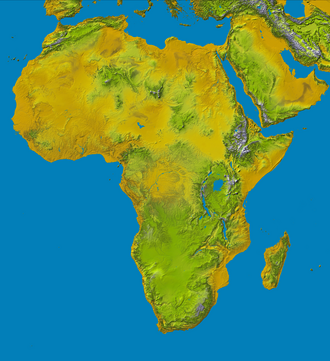
Key Facts
![Democracy in Africa according to 2026 V-Dem Electoral Democracy Index[247]](/images/6a/cb/6acbdbae644b388177b53740f4f28875fb00ad05d9a64757695587af96cafdff.webp)
- Total Area: 30,370,000 km², the second largest continent globally.
- Population: Approximately 1.39 billion people (2021).
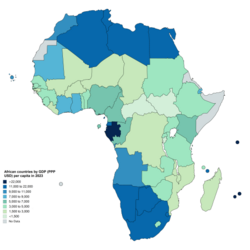
- Economic Scale: Estimated GDP (PPP) of $10.77 trillion by 2025.
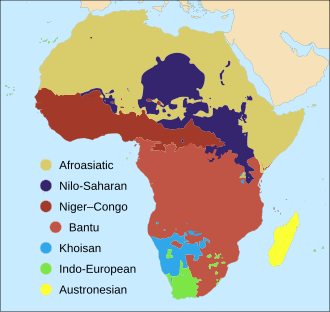
- Linguistic Diversity: Between 1,250 and 3,000 native languages.
- Political Structure: 54 recognized states, 2 partially recognized states, and 4 dependent territories.
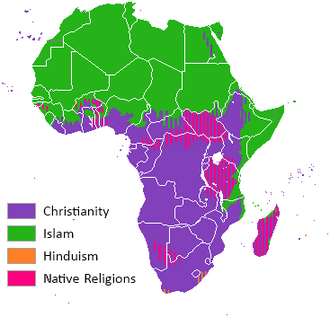
- Religious Landscape: Predominantly Christianity (49%) and Islam (42%).
Geography and Natural Environment

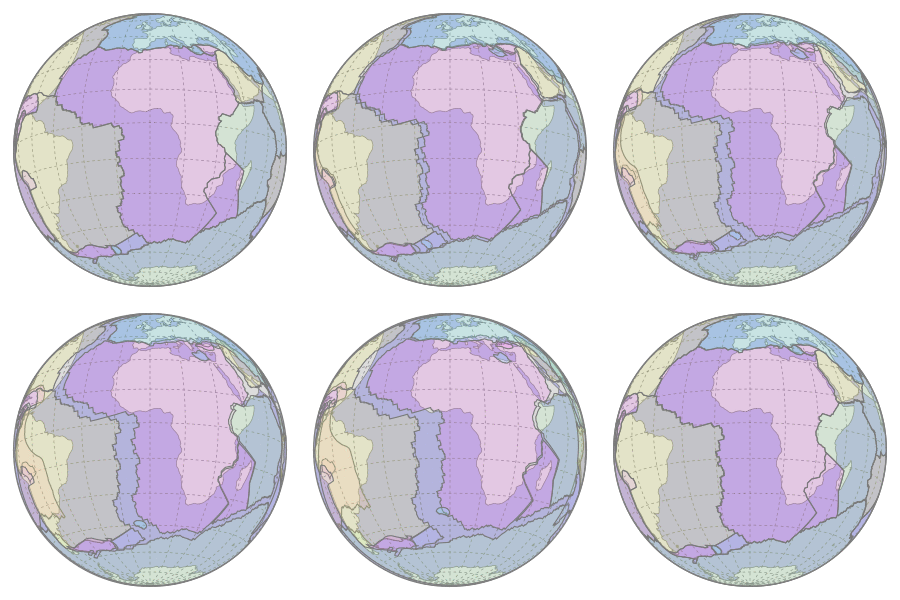
The continent's physical structure is defined by the African Plate, a tectonic plate that continues to move over the Earth's surface at a speed of 0.292° ± 0.007° per million years relative to the average Earth.
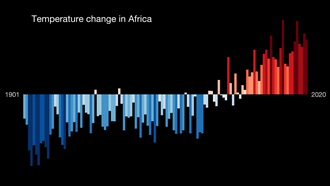
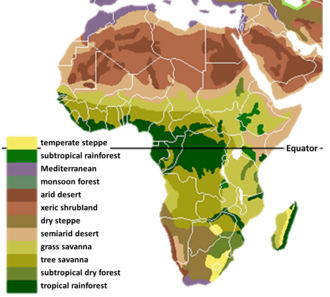
Africa's ecology is characterized by a wide variety of biomes, including the expansive savannas and dense jungles that support some of the world's most unique fauna. However, the continent faces significant environmental challenges, including the impacts of climate change. Temperature data from 1901 to 2021 indicates a warming trend, with recent decades showing temperatures significantly higher than the 1971–2000 reference average.
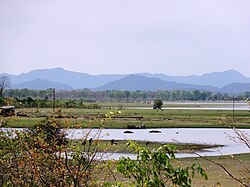
Water resources are critical to the continent's survival, with major landmarks like Lake Kariba playing essential roles in regional infrastructure and energy.
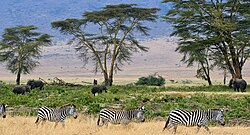
The diverse biomes of Africa provide a rich tapestry of biodiversity, from the Ngorongoro Conservation Area in Tanzania to the vast rainforests of Central Africa.
Historical Evolution
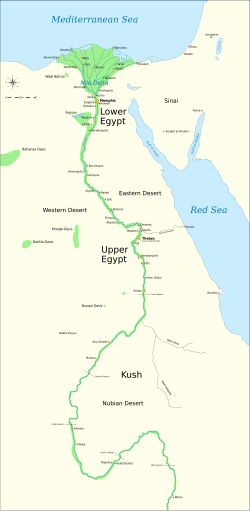
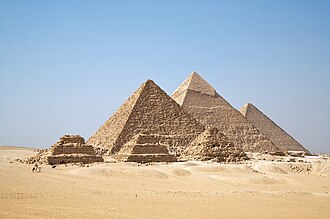
Africa's history is a complex narrative of rise and fall, beginning with prehistory and the emergence of early human civilizations. In Northeast Africa, the civilization of Ancient Egypt flourished from approximately 3150 BC to 30 BC, leaving behind architectural marvels such as the Great Pyramids of Giza.
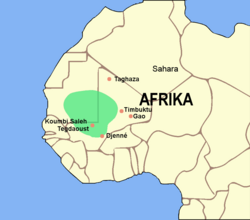
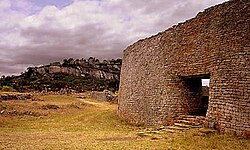
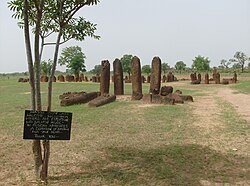
Across the continent, other powerful states emerged, including the Ghana Empire in West Africa and the civilization of Great Zimbabwe, which thrived between the eleventh and fifteenth centuries.
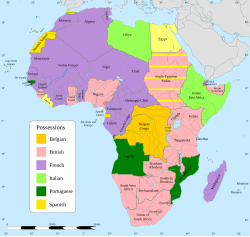
The period between 1800 and 1935 was marked by intense European colonial presence, which fundamentally reshaped the continent's political boundaries and social structures. This era eventually gave way to independence struggles and the birth of post-colonial African states.
Demographics and Culture
Africa is one of the most genetically diverse regions on Earth. Genetic studies indicate that the E haplogroup (specifically E1b1b), the most common paternal haplogroup across the continent, has its roots in East Africa.
![E1b1b is the most common paternal haplogroup across Africa, including Egypt, with modern genetic studies rooting the origin of the E haplogroup in East Africa.[304]](/images/79/3a/793a536b214f9e1a937f9d36c460cd908b383496c1b49a84c1bb94e49f419062.png)
The population is distributed across a vast array of ethnic groups and linguistic families. While Christianity and Islam are the dominant religions, traditional faiths still account for approximately 8% of the population.
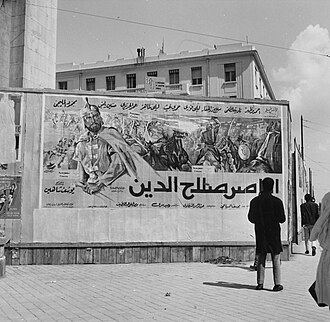
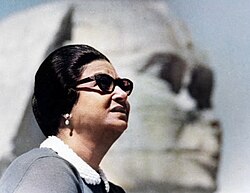
Culturally, Africa has contributed immensely to global art and music. From the ancient Nok figures of Nigeria to the cinematic achievements of directors like Youssef Chahine and the legendary voice of Umm Kulthum, the continent's creative output is profound.
Politics and Economy
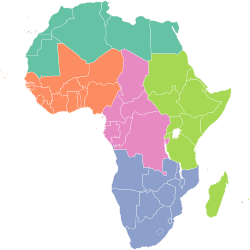
The African Union (AU) serves as the primary continental body, dividing the region into five main regions: Northern, Western, Southern, Eastern, and Central.
Economically, Africa is seeing a shift in GDP distribution. By 2026, South Africa, Egypt, and Nigeria are projected to remain the leading economies by nominal GDP. The African Economic Community continues to work toward greater integration and stability.
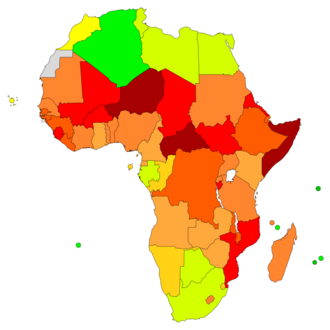
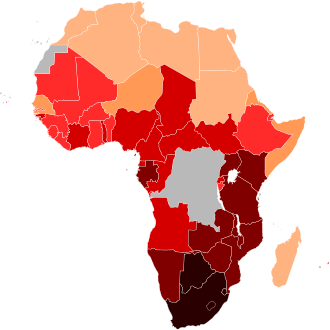
Despite economic growth, challenges remain regarding the Human Development Index (HDI) and public health, particularly the prevalence of HIV/AIDS, which has historically impacted various regions with differing intensities.
Continental Summary Table
| Metric | Value | Global Rank/Note |
|---|---|---|
| Total Area | 30,370,000 km² | 2nd |
| Population (2021) | 1,393,676,444 | 2nd |
| GDP (PPP, 2025 est) | $10.77 trillion | 4th |
| GDP (Nominal, 2025 est) | $2.82 trillion | 5th |
| Native Languages | 1,250–3,000 | Highly Diverse |
Frequently Asked Questions
What is the current population of Africa?
As of 2021, the population of Africa is approximately 1,393,676,444 people, making it the second most populous continent in the world.
Which countries have the largest economies in Africa?
Based on 2026 nominal GDP projections, the largest economies are South Africa, Egypt, and Nigeria.
How many languages are spoken across the continent?
Africa is incredibly linguistically diverse, with estimates ranging from 1,250 to 3,000 native languages spoken across its various regions.
What are the primary religions in Africa?
The primary religions are Christianity, practiced by approximately 49% of the population, and Islam, practiced by about 42%, with traditional faiths making up 8%.
What is the role of the African Union?
The African Union is the continental body that promotes integration and cooperation among the 54 recognized states of Africa, organized into five regional blocs.