Abdollah Javadi Amoli: Perspectives on Art, Politics, and Society
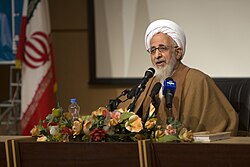
Grand Ayatollah Abdollah Javadi Amoli is a prominent religious figure whose views span a wide array of contemporary social, political, and spiritual issues. His philosophy emphasizes the harmony between theoretical reason—cultivated through theology and philosophy—and practical reason, which governs human action and obedience to divine will.
By integrating traditional Islamic teachings with logical analysis, Javadi Amoli addresses the complexities of modern existence, from the psychological impact of music to the geopolitical tensions of the Middle East.
Key Facts
- Unity: Believes the Quran and Logic are the primary factors for the alliance of all Muslims.
- Art: Distinguishes between "true pleasure" found in poetry (like Hafez and Saadi) and "false pleasure" derived from musical instruments.
- Peace: Argues that true civilization is built on divine revelation and knowledge, not through warfare.
- Economics: Criticizes raw material exports and the presence of usury in banking systems.
- Global Relations: Opposes weapons of mass destruction and criticizes Western double standards regarding terrorism.
Philosophy of Art and Music
Javadi Amoli draws a sharp distinction between different forms of auditory and performing arts based on their effect on the human soul. He argues that while certain songs provide a "false pleasure," the recitation of ghazals (lyrical poems) and qasidas (panegyrics)—specifically those by Hafez and Saadi—offers a "nectar" that results in permanent, true pleasure.
Regarding the permissibility of spiritual music, he posits that true emotional softness is achieved through prayer, supplication, and ritual crying. He warns that musical instruments create a superficial softness, contrasting the genuine grief felt for the oppression of Imam Husayn with the artificial emotion triggered by the beats of mourning plays.
The Role of Drama
His views on theater are similarly binary; he acknowledges that some plays awaken "animalistic temper" in humans, while others revive an "angelic mood," encouraging a detachment from anger and lust.
Political Views and Global Diplomacy
For Javadi Amoli, the unity of the Muslim Ummah (community) is not a matter of simple preaching but requires a logical distinction between differences in core beliefs and differences in personal inclinations. He identifies the Quran and the Ahl ul-Bayt (the family of the Prophet Muhammad) as the core pillars of this unity.
Interfaith Relations and Civil Society
In discussions regarding Abrahamic religions, he asserts that conflict would vanish if followers strictly adhered to their prophets. He views Iran as a model for peaceful coexistence among monotheists. Furthermore, he maintains that a civil society cannot be established through force, stating that the "pen," knowledge, and divine revelation are the only true foundations of an exalted civilization.
Conflict and Geopolitics
Javadi Amoli has been critical of "arrogant powers," specifically the United States and Israel, attributing the rise of Takfiri ideology and proxy wars to their influence. In later reports from 2025 and 2026, his rhetoric shifted toward framing prayer as a tool against the "Zionist regime" and describing retaliation against the U.S. and Israel as a religious duty following regional conflicts.
Social and Ethical Stances
The Ayatollah has expressed strong views on various social and ethical issues, often rooted in his interpretation of Islamic law.
Nuclear Weapons and Terrorism
He has stated that the official message of humanity and religion is the total prohibition of weapons of mass destruction. He also criticizes Western definitions of terrorism, arguing that the West labels groups based on political interest rather than divine justice, citing the classification of Hezbollah as a terrorist organization while viewing some Takfiri groups as freedom fighters.
Homosexuality
In 2012, Javadi Amoli made controversial remarks regarding homosexuality, describing such acts as morally reprehensible and linking them to social issues like disease. He used harsh language, comparing homosexuals and politicians who support decriminalization to animals.
Economic and Cultural Critiques
Beyond theology and politics, Javadi Amoli has critiqued the internal structures of Iran. He argues against an economy dependent on the export of raw crude oil, suggesting that the nation should instead process oil before exporting it.
He has also been a vocal critic of the banking sector, specifically protesting usury (the practice of lending money at unreasonably high interest rates) occurring under the guise of Islamic banking, once stating that the Bank of Iran "sucks the blood of people." Additionally, he has lamented the low rate of per capita book reading in Iran, despite the population's social awareness.
| Category | Core Perspective | Key Influence/Reference |
|---|---|---|
| Art | Poetry is superior to musical instruments | Hafez and Saadi |
| Unity | Based on shared logic and scripture | Quran and Ahl ul-Bayt |
| Diplomacy | Civilization is built by the pen, not the gun | Divine Revelation |
| Economics | Opposed to raw oil exports and usury | Islamic Banking Ethics |
| Security | Opposed to weapons of mass destruction | Humanity and Religion |
Frequently Asked Questions
What is Javadi Amoli's view on music?
He believes that musical instruments produce a "false" softness and pleasure. In contrast, he views the recitation of high-quality poetry and religious supplications as sources of true, permanent pleasure and spiritual growth.
How does he propose achieving unity among Muslims?
He argues that unity requires using the Quran and Logic to distinguish between fundamental belief disagreements and simple differences in inclination, emphasizing the shared asset of jurisprudence.
What is his stance on the use of force in building civilization?
He believes that civil society and exalted civilizations cannot be established at gunpoint, but are instead built through knowledge, divine revelations, and the "pen."
What are his primary economic criticisms?
He criticizes the Iranian economy's reliance on exporting raw crude oil and strongly condemns the practice of usury within the banking system, even when labeled as Islamic banking.
How does he view the West's definition of terrorism?
He claims the West's definitions are based on passion and interest rather than justice, leading to double standards where some terrorists are called freedom fighters and vice versa.