7th (Meerut) Indian Division: A History of Service from 1829 to 1920
The 7th (Meerut) Division was a distinguished infantry division of the Indian Army that played a pivotal role across three continents during the first half of the 20th century. Originally part of the Bengal Army, the division evolved from a regional administrative body into a battle-hardened field formation that saw intense action during World War I.
Key Facts
- Active Period: 1829–1920.
- Allegiance: British Crown and East India Company.
- Primary Role: Infantry division.
- Major Theaters: Western Front (France), Mesopotamia (Iraq), and Palestine.
- Headquarters: Historically based in Meerut, later Mussoorie.
Early History and the 1857 Rebellion
The Meerut Division first appeared in the Indian Army List in 1829 under Sir Jasper Nicolls. In its early years, the division functioned primarily as an administrative organization managing brigades and stations rather than a mobile field force. By 1829, the garrison at Meerut typically included one Indian cavalry and two Indian infantry regiments alongside British troops.
The division became a focal point of history in May 1857. Under the command of Maj-Gen W.H. Hewitt, the troops at Meerut—which included the 6th Dragoon Guards and the 11th and 20th Bengal Native Infantry—were at the center of the outbreak of the Indian Rebellion of 1857 (also known as the First War of Independence), one of the most serious conflicts in the history of British India.
Evolution and Pre-War Structure
Following the rebellion, the division was reconstituted. Throughout the late 19th century, its composition shifted as forces were rotated across various stations including Agra, Delhi, and Dehra Dun. In 1890, under the reforms of Lord Roberts, the divisions were renamed 1st Class Districts. Later, Lord Kitchener introduced a numbering system, and the unit officially became the 7th (Meerut) Division between September and December 1904.
By the start of World War I, the division was headquartered at Mussoorie and commanded the Meerut Cavalry Brigade as well as the Bareilly, Dehra Dun, and Garhwal Infantry Brigades.
World War I: The Western Front
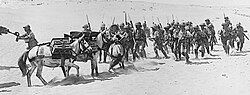
In 1914, the division was deployed as part of Indian Expeditionary Force A to reinforce the British Expeditionary Force (BEF) in France. Due to German naval activity in the Indian Ocean and slow transport, the division did not land at Marseille until mid-October 1914. To avoid confusion with the 7th British Division, they were referred to simply as the Meerut Division.
The division entered combat during the Battles of La Bassee, 1st Messines, and Armentieres. Throughout 1915, they fought in the grueling Battles of Neuve Chapelle, Aubers Ridge, Festubert, and Loos. The harsh winter conditions in France took a heavy toll on the Indian soldiers, leading to significant casualties and a breakdown in the supply of reinforcements.
The Mesopotamian Campaign
In late 1915, the decision was made to withdraw Indian infantry from France to avoid another winter and to reinforce the advance on Baghdad. The 7th (Meerut) Division arrived in Mesopotamia in the spring of 1917, joining the Tigris Corps. They participated in several key engagements, including the battles at Sheikh Sa'ad, Wadi, Hanna, Dujailia, and the Sannaiyat.
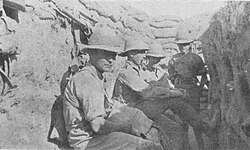
After a period of refitting, the division became part of the I Indian Army Corps within the Mesopotamian Expeditionary Force, contributing to the successful capture of Baghdad in March 1917.
The Palestine Campaign and Final Victory
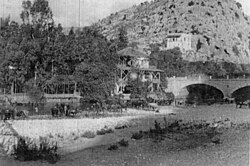
In December 1917, the division was transferred from Mesopotamia to Egypt to reinforce Sir Edmund Allenby's Egyptian Expeditionary Force (EEF). On April 1, 1918, they relieved the 52nd (Lowland) Division. During the summer of 1918, the division captured the 'North Sister' and 'South Sister' Hills and conducted raids on 'Piffer Ridge'.
The division concluded its wartime service as part of Lieutenant-General Bulfin's XXI British Corps, playing a key role in the decisive Battle of Megiddo during the final advance through Palestine.
Division Summary
| Category | Details |
|---|---|
| Active Years | 1829–1920 |
| Key Commanders | Sir Charles Anderson, Claud Jacob, Sir George Younghusband, Sir Vere Fane |
| Major Battles | La Bassee, Neuve Chapelle, Sannaiyat, Megiddo |
| Theaters of War | France, Mesopotamia, Palestine |
| Parent Organization | Bengal Army / Northern Command |
Frequently Asked Questions
Why was the division renamed during World War I in France?
While serving in France, the unit was known as the Meerut Division rather than the 7th (Meerut) Division to avoid confusion with the 7th British Division.
What caused the delay in the division's arrival in France in 1914?
The deployment was delayed by the activities of German raiders, specifically the Emden and Konigsberg, in the Indian Ocean, as well as the slow speed of the transport ships.
Why was the division moved from France to Mesopotamia?
The move was prompted by a need for reinforcements for the advance on Baghdad and a desire by the Secretary of State for India to withdraw Indian troops from France before they faced another severe winter.
Which major battle did the division participate in during the Palestine Campaign?
The division was part of the XXI British Corps during the Battle of Megiddo, which was a critical part of General Allenby's advance through Palestine.
What was the division's role before it became a field formation?
Prior to the late 19th century, the Meerut Division was primarily an administrative organization that controlled various brigades and stations within its assigned area.