63rd Palamcottah Light Infantry
The 63rd Palamcottah Light Infantry was a distinguished infantry regiment of the British Indian Army with a lineage spanning over 160 years. From its origins in the mid-18th century to its final disbandment in 1922, the regiment served as a key component of the Madras Army, participating in numerous conflicts across Asia and Africa.
Established in 1759 as the 4th Battalion Coast Sepoys, the regiment evolved through various designations, reflecting the changing administrative structures of the British colonial military presence in India.
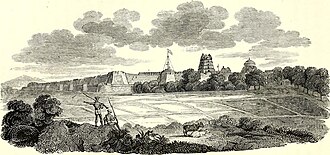
Key Facts
- Active Period: 1759–1922.
- Origin: Raised as the 4th Battalion Coast Sepoys.
- Primary Region: Part of the Madras Army (until 1895) and later the Madras Command.
- Major Conflicts: Carnatic Wars, Third Anglo-Mysore War, Second Anglo-Maratha War, and World War I.
- Final Fate: Disbanded on September 13, 1922, during the restructuring of the Indian Army.
Regimental History and Engagements
As one of the oldest units in the British Indian Army, the Palamcottah Light Infantry saw extensive action during the consolidation of British power in India. The regiment fought in the Carnatic Wars and played roles in significant battles, including the Battle of Mahidpur during the Third Anglo-Mysore War and the Battle of Sholinghur during the Second Anglo-Maratha War.
The regiment's operational reach extended beyond the Indian subcontinent. They participated in the Battle of Ava during the Second Anglo-Burmese War and were deployed to China to assist in suppressing the Boxer Rebellion, although they did not engage in active combat during the Chinese campaign.
Recruitment and Composition
The recruitment strategy of the 63rd Palamcottah Light Infantry was unique. After 1902, many Madras regiments shifted their recruitment toward the "martial races" of the Punjab and northern India. However, the Palamcottah Light Infantry maintained its tradition of recruiting from southern India.
By 1914, the regiment's composition was diverse, consisting of:
- Four companies of Madrasi Muslims.
- Two companies of Tamils.
- Remaining companies composed of Parayans and Christian Madrasis.
The leadership structure included approximately 13 British officers and 17 Indian officers. The regiment operated under a "linked battalions" system, sharing a regimental centre in Trichinopoly with the 61st Pioneers, 64th Pioneers, and 83rd Light Infantry to balance recruit needs.
World War I and the East African Campaign
At the onset of World War I, the regiment was assigned to internal security duties in India as part of the 5th (Mhow) Division. In October 1914, they were deployed to British East Africa as part of the Indian Expeditionary Force B.
The regiment suffered a severe setback at the Battle of Tanga. During the landing, the unit came under heavy fire from the 6th Field Company of German askaris (colonial troops), leading to the disintegration of the regiment. Out of 762 officers and men, the 63rd lost 85 to death, injury, or disappearance. The remainder of the war was spent on lines of communication service in East Africa before the unit returned to India.
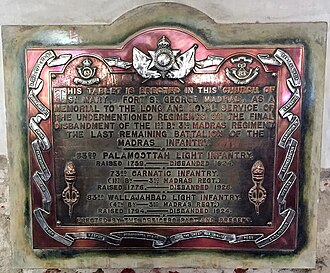
Uniforms and Insignia
The regiment's identity was marked by specific heraldry and dress. Their insignia featured a brass bugle horn—the standard symbol for light infantry—with the number "63" placed in the curl of the bugle and a crown positioned above.
The full dress uniform of 1910 was particularly striking, consisting of a scarlet zouave style tunic (a short, open jacket) with emerald green facings and dark blue breeches. The ensemble was completed with khaki puttees and a khaki turban.
Lineage and Disbandment
The regiment underwent several name changes over its long history, reflecting its evolution from a coastal unit to a light infantry regiment:
| Year | Regimental Designation |
|---|---|
| 1759 | 4th Battalion Coast Sepoys |
| 1769 | 4th Carnatic Battalion |
| 1779 | 3rd Carnatic Battalion |
| 1784 | 3rd Madras Battalion |
| 1796 | 1st Battalion, 3rd Madras Native Infantry |
| 1812 | 3rd Madras Native Infantry (Palamcottah Light Infantry) |
| 1885 | 3rd Madras Native Light Infantry |
| 1901 | 63rd (Palamcottah) Madras Light Infantry |
| 1903 | 63rd Palamcottah Light Infantry |
Following World War I, the Indian Army transitioned from single-battalion regiments to larger, multi-battalion structures. Because the 63rd Palamcottah Light Infantry remained a single-battalion unit, it was among the nine regiments disbanded during this restructuring on September 13, 1922.
Frequently Asked Questions
When was the 63rd Palamcottah Light Infantry formed?
The regiment was originally raised in 1759 as the 4th Battalion Coast Sepoys.
Where did the regiment recruit its soldiers from?
Unlike many other Madras regiments that shifted to northern "martial races" after 1902, the 63rd continued to recruit from southern India, including Tamils, Madrasi Muslims, Parayans, and Christian Madrasis.
What happened to the regiment during the Battle of Tanga?
The regiment disintegrated under heavy fire from German askaris during the landing phase of the battle, resulting in 85 killed, wounded, or missing personnel.
What did the regiment's uniform look like in 1910?
The 1910 full dress featured a scarlet zouave-style tunic with emerald green facings, dark blue breeches, and khaki turbans and puttees.
Why was the regiment disbanded in 1922?
The regiment was disbanded on September 13, 1922, as part of a broader Indian Army restructuring that replaced single-battalion regiments with larger multi-battalion regiments.