Lothar von Trotha and the Herero and Nama Genocide
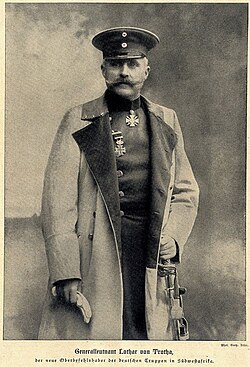
Lothar von Trotha was a high-ranking German military commander whose career spanned the height of the European colonial era. While he served in various global conflicts, he is most remembered for his role as the Governor of German South West Africa and the architect of the genocide against the Herero and Nama peoples. His tenure was marked by a philosophy of extreme brutality and a systematic approach to extermination that remains a dark chapter in colonial history.
Key Facts
- Role: Commander in Chief of colonial forces in German South West Africa.
- Primary Infamy: Orchestrated the genocide of the Herero and Nama Khoekhoe peoples.
- The Extermination Order: Issued the Vernichtungsbefehl, declaring the Herero were no longer German subjects and must be executed or driven out.
- Casualties: The Herero population dropped from an estimated 80,000 to 15,000 by 1911.
- Reparations: In 2021, Germany agreed to pay €1.1 billion to impacted communities in Namibia.
Early Life and Military Ascent
Born on July 3, 1848, in Magdeburg, Prussia, Lothar von Trotha was born into a prominent Saxon noble family. He entered the Prussian Army in 1865, quickly gaining experience in the Austro-Prussian and Franco-Prussian Wars, the latter of which earned him the Iron Cross 2nd Class.
By 1894, Trotha's career shifted toward the colonies. He was appointed commander of colonial forces in German East Africa, where he suppressed the Wahehe Rebellion. His reputation for ruthless efficiency led to his deployment as the Brigade Commander of the East Asian Expedition Corps during the Boxer Rebellion in Qing China, contributing to the Eight-Nation Alliance's efforts.
The Genocide of the Herero and Nama
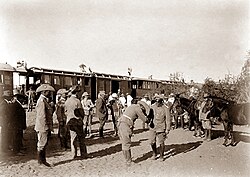
On May 3, 1904, Trotha was appointed Commander in Chief of German South West Africa with the specific mandate to crush the Herero rebellion. Arriving in June 1904, he found the German forces struggling against Herero guerrilla tactics. In response, Trotha shifted from conventional warfare to a strategy of total annihilation.
The Battle of Waterberg and the Desert Drive
In October 1904, during the Battle of Waterberg, Trotha encircled the Herero on three sides, forcing them into the waterless Omaheke-Steppe of the Kalahari Desert. To ensure no one escaped, he ordered his troops to poison water holes and establish a 240-kilometre guard line to shoot any Herero—including women and children—on sight.
The Vernichtungsbefehl (Extermination Order)
To codify his intent, Trotha issued the Vernichtungsbefehl. In this proclamation, he stripped the Herero of their status as German subjects and declared that any Herero found within the German frontier would be executed. While he privately instructed troops to shoot above the heads of women and children to drive them away, the result was a systematic massacre.
Survivors were herded into concentration camps, where they were used as forced labor for German businesses. Many perished due to disease, malnutrition, and overwork.
The Campaign Against the Nama
Following the Herero campaign, Trotha turned his attention to the Nama. In April 1905, he issued a warning that those who did not surrender would be shot until they were exterminated, explicitly citing the fate of the Herero as a warning. Approximately 10,000 Nama died in the fighting, and another 9,000 were imprisoned in concentration camps.
Later Years and Legacy
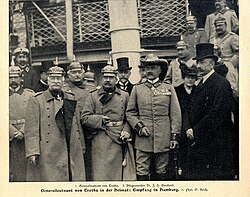
Despite the public outcry and the eventual request by Chancellor Bernhard von Bülow to remove him, Trotha was awarded the Pour le Mérite in November 1905. He retired shortly after and was granted the rank of General of the Infantry in 1910. He died of typhoid fever in Bonn on March 31, 1920.
For decades, Trotha's legacy was viewed through a colonial lens, with streets in Munich and Namibia named in his honor. However, the 21st century has seen a reversal. Munich renamed "von Trotha Straße" to "Herero Straße" in 2006, and a street in Otjiwarongo, Namibia, was renamed "Ohamakari" in 2024.
| Category | Details |
|---|---|
| Service Years | 1865–1906 |
| Key Conflicts | Austro-Prussian, Franco-Prussian, Wahehe Rebellion, Boxer Rebellion, Herero Wars |
| Highest Rank | General der Infanterie (Charakter) |
| Herero Population Loss | Estimated 80,000 reduced to 15,000 (1911 census) |
| Nama Casualties | ~10,000 dead; 9,000 in concentration camps |
Frequently Asked Questions
What was the Vernichtungsbefehl?
The Vernichtungsbefehl, or extermination order, was a proclamation issued by Lothar von Trotha stating that the Herero people were no longer German subjects and that any found within the German frontier would be executed, regardless of age or gender.
How did the German government respond to the genocide in recent years?
In 2004, the German government officially apologized for the genocide. In May 2021, Germany formally recognized the events as genocide and agreed to pay €1.1 billion over 30 years to support projects in the impacted communities of Namibia.
What happened to the survivors of the Herero and Nama campaigns?
Many survivors were placed in concentration camps where they were subjected to forced labor for German companies. A significant number died from disease, malnutrition, and exhaustion.
Did the von Trotha family ever apologize?
Yes. In October 2007, distant relations of Lothar von Trotha traveled to Omaruru, Namibia, where they publicly expressed shame and apologized for the gross abuse of human rights committed by their ancestor.
What was the outcome of the Battle of Waterberg?
The battle resulted in the Herero being encircled and forced into the Omaheke-Steppe (Kalahari Desert). Trotha's forces then blocked their exit and poisoned water holes to ensure the maximum number of refugees perished in the desert.