Paul von Lettow-Vorbeck: The Lion of Africa
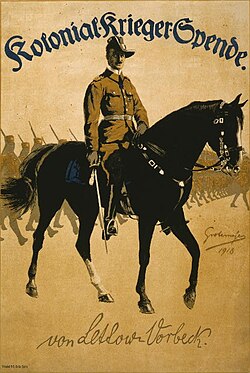
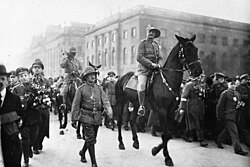
Paul Emil von Lettow-Vorbeck, famously known as the Lion of Africa (Löwe von Afrika), was a distinguished general of the Imperial German Army. He is most renowned for his extraordinary leadership during the East African Campaign of the First World War, where he commanded a vastly outnumbered force with tactical brilliance and tenacity.
For four years, Lettow-Vorbeck led a force of approximately 14,000 personnel—comprising 3,000 Germans and 11,000 Africans—against a combined Allied force of 300,000 British, Indian, Belgian, and Portuguese troops. He earned a place in military history as a commander who was never defeated or captured in battle.
Key Facts
- Full Name: Paul Emil von Lettow-Vorbeck
- Nickname: The Lion of Africa
- Lifespan: March 20, 1870 – March 9, 1964
- Primary Command: Schutztruppe of German East Africa
- Notable Achievement: Held off 300,000 Allied troops with only 14,000 men
- Highest Rank: General of the Infantry (honorary)
- Key Award: Pour le Mérite with Oak Leaves
Early Life and Military Foundations
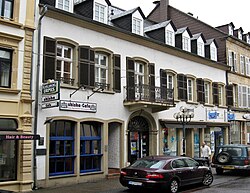
Born in Saarlouis, Rhine Province, in the Kingdom of Prussia, Lettow-Vorbeck was born into the Pomeranian minor nobility. His father was an army officer, and Paul followed a similar path, attending boarding schools in Berlin and joining the cadet corps at Potsdam and Berlin-Lichterfelde. He was commissioned as a Leutnant (Second Lieutenant) in the Imperial German Army in 1890.
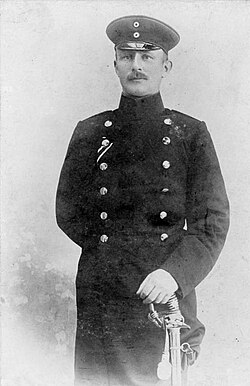
His early career included service in the Boxer Rebellion and the Herero Wars, including the Battle of Waterberg. By 1907, he had reached the rank of Major. Between 1909 and 1913, he commanded the marines of the 2nd Sea Battalion (II. Seebataillon) in Wilhelmshaven. In 1913, he was promoted to Lieutenant Colonel and initially appointed to lead the Schutztruppe (protectorate force) in German Kamerun. However, his orders were changed, and on April 13, 1914, he was posted to German East Africa (modern-day Tanzania).
The East African Campaign of World War I
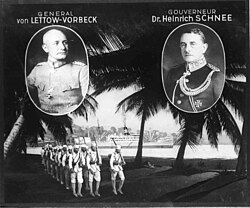
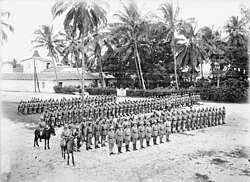
Upon the outbreak of the First World War, Lettow-Vorbeck utilized the challenging terrain of East Africa to wage a highly effective guerrilla war. He relied heavily on Askaris (local African soldiers), whose loyalty and knowledge of the land were critical to his success.
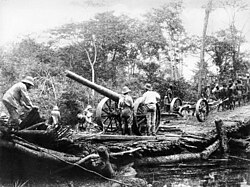
Throughout the conflict, he led his forces through a series of engagements, including the Battle of Tanga, the Battle of Jassin, and the Battle of Mahiwa. His strategy focused on evasion and raiding, which allowed him to tie down massive numbers of Allied troops far from the European theaters of war.
The Final Stand and Surrender
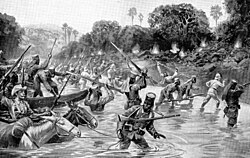
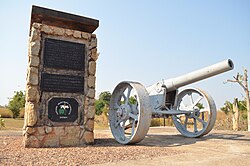
By late 1918, Lettow-Vorbeck had crossed the Ruvuma River and raided Northern Rhodesia to evade British ambushes. Even after the Armistice was signed in Europe on November 11, 1918, his forces continued to move. It was not until November 14, 1918, at the Chambeshi River, that he was officially informed of the ceasefire by British magistrate Hector Croad.
Lettow-Vorbeck eventually surrendered his remaining forces at Abercorn on November 25, 1918. At the time of surrender, his army consisted of 30 German officers, 125 German non-commissioned officers/enlisted men, 1,168 Askaris, and approximately 3,500 porters.
Life After the Great War
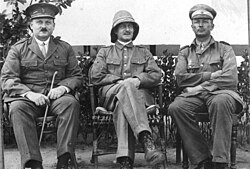
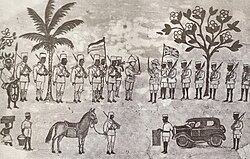
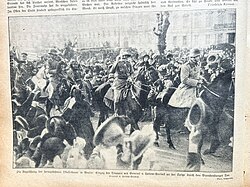
Following his return to Germany in 1919, Lettow-Vorbeck married Martha Wallroth, with whom he had four children. He remained a prominent figure in the colonial veterans' community. Interestingly, he developed a lasting friendship with his former adversary, Jan Smuts, a South African statesman.
Relationship with the Nazi Regime
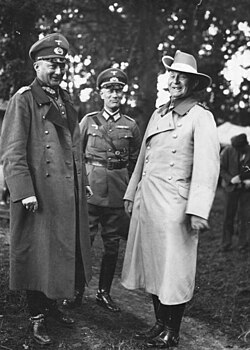
In 1933, Adolf Hitler attempted to recruit Lettow-Vorbeck into the Nazi Party and offered him the position of head of the Reich Colonial Ministry, both of which he declined. He also protested the dismissal of police colonel Walter Caspari to President Paul von Hindenburg. Despite this, he served on the Bremen State Council for colonial affairs and was often used by the regime as a symbol of German military excellence. In 1939, Hitler awarded him the honorary rank of General of the Infantry.
Summary of Military Career
| Category | Details |
|---|---|
| Service Period | 1890–1920 |
| Key Commands | 2nd Sea Battalion; Schutztruppe of German East Africa |
| Major Conflicts | Boxer Rebellion, Herero Wars, World War I |
| Notable Battles | Tanga, Jassin, Mahiwa, Ngomano, Lioma |
| Force Ratio (WWI) | ~14,000 (German/African) vs. ~300,000 (Allied) |
Frequently Asked Questions
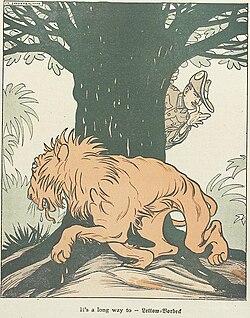
Why was Paul von Lettow-Vorbeck called the "Lion of Africa"?
He earned this nickname due to his fierce and successful leadership of German forces in East Africa, where he managed to evade capture and defeat for the duration of the First World War.
Did Lettow-Vorbeck ever lose a battle in East Africa?
He is historically noted for never being defeated or captured in battle during the East African campaign.
Who were the Askaris?
The Askaris were local African soldiers who served in the Schutztruppe. They were essential to Lettow-Vorbeck's operations due to their endurance and familiarity with the African environment.
When did Lettow-Vorbeck actually surrender?
Although the Armistice in Europe occurred on November 11, 1918, Lettow-Vorbeck did not surrender his forces until November 25, 1918, at Abercorn.
Did he join the Nazi Party?
No. Despite being courted by Adolf Hitler and offered a ministry position in 1933, Lettow-Vorbeck declined to join the Nazi Party.