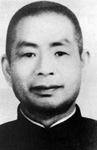
Zeng Shan: Military Commander and Security Minister of the PRC
Zeng Shan (1899–1972) was a prominent figure in the early history of the People's Republic of China, serving as a high-ranking military commander and a key architect of the state's internal security apparatus. His career spanned the foundational years of the Chinese Communist movement, from the early Soviet experiments in the countryside to the establishment of the national government.
Key Facts
- Role: Served as the Minister of Internal Affairs (security) from 1960 to 1969.
- Political Alignment: A staunch supporter of Mao Zedong during the Jiangxi Soviet period.
- Military Service: Commanded guerrilla units on the Guangdong-Guangxi border and served in the Third Field Army.
- Family Legacy: Father of Zeng Qinghong, who served as Vice President of the PRC from 2003 to 2008.
Early Political Rise and the Jiangxi Soviet
Zeng Shan rose to prominence during the era of the Jiangxi Soviet, a rural revolutionary base. During the internal power struggles of the time, Zeng backed Mao Zedong in the confrontation against Li Lisan. His loyalty and effectiveness led him to a position of significant authority, where he eventually served as the Chairman of the Chinese Soviet Republic government.
His tenure was marked by the enforcement of strict ideological purity. Zeng was a key player in the 1931 purge of the Anti-Bolshevik Corps, a violent campaign designed to eliminate perceived enemies and infiltrators within the party ranks.
Military Career and the Civil War
Unlike many of his contemporaries, Zeng Shan did not participate in the Long March—the legendary retreat of the Red Army to avoid encirclement. Instead, he remained behind to maintain the revolutionary presence in the south, commanding a small guerrilla unit stationed on the border of Guangdong and Guangxi.
As the Chinese Civil War reached its conclusion, Zeng served in the 10th Army of the Third Field Army under the leadership of Ye Fei. His contributions to the military effort and the party's consolidation of power earned him seats on both the 8th and 9th Central Committees of the Communist Party.
Governance and Internal Security
In the post-war era, Zeng transitioned from military command to high-level state administration. From 1960 until October 1969, he held the position of Minister of Internal Affairs. In this capacity, he was responsible for the security and internal stability of the nation during a period of intense political volatility.
Family and Personal Life
Zeng's personal life was closely tied to the revolutionary cause. His wife, Deng Liujin, was one of the few women to participate in the Long March. Following the revolution, she dedicated her efforts to education, running a school specifically for the children of high-ranking party cadres.
| Category | Details |
|---|---|
| Lifespan | 1899–1972 |
| Key Government Role | Minister of Internal Affairs (1960–1969) |
| Military Affiliation | Third Field Army, 10th Army |
| Political Influence | Chairman of the Chinese Soviet Republic government |
| Notable Relative | Zeng Qinghong (Son, former Vice President of PRC) |
Frequently Asked Questions
Did Zeng Shan participate in the Long March?
No, Zeng Shan did not participate in the Long March. He stayed behind to lead a small guerrilla unit on the border of Guangdong and Guangxi.
What was Zeng Shan's role in the Chinese Soviet Republic?
Zeng Shan served as the Chairman of the Chinese Soviet Republic government and was a key figure in the 1931 purge of the Anti-Bolshevik Corps.
When did Zeng Shan serve as Minister of Internal Affairs?
He served as the Minister of Internal Affairs, overseeing national security, from 1960 until October 1969.
Who was Deng Liujin?
Deng Liujin was the wife of Zeng Shan. She was one of the few women to take part in the Long March and later managed a school for the children of high-level cadres.
What is the connection between Zeng Shan and Zeng Qinghong?
Zeng Shan was the father of Zeng Qinghong, who later became the Vice President of the People's Republic of China from 2003 to 2008.