Za'atar: The Ancient Herb Blend of the Levant
Za'atar is more than just a seasoning; it is a cornerstone of Middle Eastern culture and a versatile herb blend native to the Levant. The term refers to two distinct but related things: a family of aromatic wild herbs from the Origanum and Thymbra genera and the prepared spice mixture derived from them. With a history spanning millennia, za'atar has served as a culinary staple, a folk remedy, and a powerful cultural symbol.
From the breakfast tables of Jordan and Lebanon to the historic streets of Jerusalem, za'atar provides a unique flavor profile that balances earthy, nutty, and tart notes. Its roots stretch back to classical antiquity and ancient Egypt, evolving into the beloved condiment known today.
Key Facts
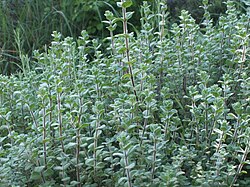
- Primary Ingredients: Traditionally composed of Origanum syriacum, toasted sesame seeds, sumac, and salt.
- Botanical Origin: Primarily derived from the Lamiaceae family, including Bible hyssop and wild marjoram.
- Regional Variations: Lebanese blends often emphasize tart sumac, while Palestinian versions may include caraway.
- Historical Reach: Evidence of use dates back to the 14th century BCE in Ancient Egypt.
- Cultural Role: A symbol of Palestinian heritage and a traditional "brain food" for students.
Botany and Species
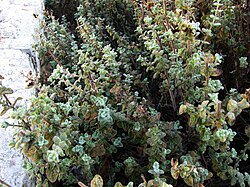
The botanical identity of za'atar is diverse, encompassing several aromatic plants. The most central species is Origanum syriacum, commonly known as Bible hyssop, Arabic oregano, or wild marjoram. This plant is often confused with its relatives, Origanum vulgare (European oregano) and Origanum majorana (sweet marjoram).
Other significant species include Thymbra spicata, a native of the Levant, and Thymus capitatus, which holds deep cultural importance in Palestine. Depending on the region, Origanum vulgare is sometimes referred to as "wild za'atar" (Arabic: za'atar bari), contributing to the distinct local flavors found across Syria, Jordan, and Lebanon.
A Journey Through History
The use of za'atar is documented across multiple ancient civilizations. In the tomb of Tutankhamun (14th century BCE), botanical remains of Thymbra spicata were discovered, indicating its value in Ancient Egypt. Later, the Greek physician Dioscorides noted that Egyptians referred to this species as saem.
In the 1st century CE, Pliny the Elder mentioned maron—which some scholars link to za'atar—as an ingredient in the "Royal Perfume" used by Parthian rulers. Furthermore, za'atar has a strong connection to Jewish tradition. Scholars such as Maimonides and Saadia Gaon identified the ezov mentioned in the Hebrew Bible with the Arabic za'atar, a connection maintained in both Rabbinic and Samaritan traditions.
Preparation and Culinary Uses
While za'atar refers to the plant, the spice blend is created by sun-drying the herbs and grinding them with salt and toasted sesame seeds. The addition of sumac berries provides a characteristic tartness. In areas where Origanum syriacum is unavailable, cooks often substitute thyme, oregano, or marjoram.
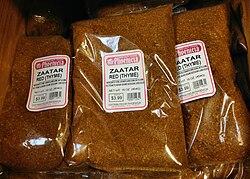
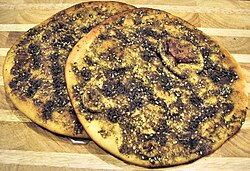
Za'atar is incredibly versatile in the kitchen. Its most iconic application is manakish, a flatbread topped with a paste of za'atar and olive oil. It is also used to flavor labneh and hummus, or mixed with olive oil to create za'atar-wu-zayt, a traditional dip for pita bread. Beyond savory dishes, it is used in stuffed pastries like börek and even brewed as an aromatic herbal tea in Oman.
| Application | Description | Common Region |
|---|---|---|
| Manakish | Flatbread topped with za'atar and olive oil | Levant-wide |
| Za'atar-wu-zayt | Olive oil and za'atar dip for pita | Levant-wide |
| Herbal Tea | Steeped za'atar leaves in hot water | Oman |
| Ka'ak | Sesame bread served with za'atar | Eastern Mediterranean |
Folk Medicine and Health
For centuries, za'atar has been valued for its therapeutic properties. Medieval Arabic medical texts, such as those by al-Turkomani (13th century), highlight its effectiveness in treating gastrointestinal disorders, noting its ability to soothe abdominal pain and improve digestion.
The Jewish philosopher-physician Maimonides also recommended za'atar for its health-promoting benefits. In Palestinian folk tradition, za'atar is often served to children at breakfast, as it is believed to enhance mental alertness and focus before school.
Cultural and Political Significance
Za'atar is a powerful marker of identity, particularly for Palestinians, for whom the herb serves as a tangible link to their ancestral villages. However, this cultural connection has intersected with modern political and environmental challenges.
In 1977, Israel declared Origanum syriacum a protected species to prevent overharvesting. While intended for conservation, these laws have been criticized by some Arab citizens as restrictions on traditional foraging practices. This has led to complex legal situations, including the confiscation of za'atar plants at checkpoints in the West Bank.
Frequently Asked Questions
What exactly is za'atar?
Za'atar refers to both a group of aromatic wild herbs (primarily Origanum syriacum) and a spice blend made from these dried herbs, toasted sesame seeds, sumac, and salt.
What does za'atar taste like?
It has a complex flavor profile that is earthy and herbal, with a nutty undertone from the sesame seeds and a bright, citrusy tartness from the sumac.
Is za'atar the same as hyssop?
While often marketed as "hyssop" or "holy hyssop," the botanical species used in za'atar (like Origanum syriacum) is different from the true Hyssopus officinalis, which does not grow wild in the region.
How is za'atar used in cooking?
It is most commonly used as a topping for manakish (flatbread), mixed with olive oil as a dip, or used to season meats, vegetables, and dips like hummus and labneh.
Are there health benefits associated with za'atar?
Historically, it has been used in folk medicine to treat digestive issues and abdominal pain. In some cultures, it is also believed to improve mental alertness.