Lahmacun: The Ancient Meat-Topped Flatbread of the Levant
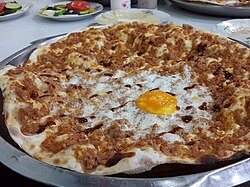
Across the vibrant culinary landscapes of the Middle East, few dishes are as beloved and versatile as lahmacun. Often described as a thin, crispy flatbread topped with a savory mixture of minced meat and vegetables, this dish is a staple of the Levant region. Whether it is enjoyed as a street food snack or a hearty main course, lahmacun represents a centuries-old tradition of baking that blends simplicity with bold, spiced flavors.
While it is frequently referred to in English as "Turkish pizza" or "Armenian pizza" due to its round shape, lahmacun is distinct from Italian pizza. It traditionally contains neither cheese nor tomato sauce and features a significantly thinner crust, designed to be rolled and eaten with fresh accompaniments.
Key Facts
- Meaning: The name derives from the Arabic laḥm bi ʿajīn, which literally translates to "meat with dough."
- Core Ingredients: Wheat flour, minced meat (beef or lamb), onions, garlic, tomatoes, red peppers, parsley, chili pepper, and paprika.
- Serving Style: Served warm, typically wrapped around fresh vegetables, pickled greens, or roasted eggplant.
- Regional Status: The lahmacun of Gaziantep is officially registered as a protected geographical indication by the European Union as of 2025.
History and Origins
The practice of cooking flatbreads in tandoors or on metal pans (tava) has existed in the Middle East for millennia. However, the specific technique of baking the topping and the dough simultaneously became widespread with the adoption of large stone ovens during medieval times.
The earliest known textual reference to the dish appears in a 13th-century Syrian cookbook from Aleppo titled Kitāb al-Wusla ilā al-Ḥabīb (Scents and Flavors). The recipe instructs the cook to spread finely cut meat over a round piece of dough and bake it in a brick oven, known as a furn.
By the 17th century, the Ottoman traveler Evliya Çelebi documented the dish in Damascus, praising it as one of the city's notable foods. While the dish was historically concentrated in Arab countries and southern Turkey—specifically around Urfa and Gaziantep—it did not become widespread in Istanbul until the mid-20th century.
Regional Variations
Depending on the city or country, the ingredients and preparation of lahmacun shift to reflect local tastes. These variations often center on the specific aromatics used in the meat topping.
| Region/Style | Distinguishing Ingredients | Characteristics |
|---|---|---|
| Antep | Garlic | Highly regarded; EU protected status. |
| Urfa | Onion | Traditional southern Turkish style. |
| Aleppo | Garlic, onion, pomegranate molasses | Tangy and aromatic Syrian style. |
| Ush al-bulbul | Meat and dough | An Aleppan variety with thicker dough and smaller size. |
Cultural Significance
Beyond its role as a meal, lahmacun holds cultural weight in various communities. In Assyrian tradition, it is served alongside coffee to those grieving the loss of a loved one. In Mosul, Iraq, lahmajin is a common food enjoyed at any time of the day. In the Netherlands, it has evolved into a popular street food, often rolled with salad, sambal, garlic sauce, and sometimes added cheese or döner meat.
Terminology and Modern Controversy
The terminology of the dish reflects the multicultural history of the region. The word entered English via the Turkish lahmacun and Armenian lahmajo, both of which stem from the original Arabic. In some contexts, it is used interchangeably with sfiha, another type of meat-topped bread.
Because the dish is central to the identities of multiple cultures, it has occasionally become a point of contention. Tensions between Armenia and Turkey have led to public disputes over the "ownership" of the dish, most notably in 2020 when social media debates erupted after the dish was described as "Armenian pizza."
Frequently Asked Questions
Is lahmacun the same as pizza?
No. While it shares a similar round shape and baked dough, lahmacun traditionally lacks the cheese and tomato sauce found on Italian pizza and uses a much thinner crust.
What meat is typically used in lahmacun?
The most common meats used are minced beef or lamb, which are mixed with vegetables and spices before being spread on the dough.
How is lahmacun traditionally eaten?
It is typically served warm and wrapped around fresh ingredients such as lettuce, parsley, onions, tomatoes, peppers, and pickled vegetables.
Where did lahmacun originate?
It originated in the Levant region of West Asia. The earliest written record is found in a 13th-century cookbook from Aleppo, Syria.
What is the difference between Antep and Urfa lahmacun?
The primary difference lies in the aromatics: Antep style typically includes garlic, while Urfa style emphasizes the use of onion.