Kibbeh: The Iconic Meat and Bulgur Dish of the Levant
Kibbeh (also known as kubba) is a cornerstone of Arab and Levantine cuisine, celebrated as a national dish in both Lebanon and Syria. At its core, kibbeh is a savory composition of spiced lean ground meat and bulgur (cracked wheat), though its forms vary wildly across borders—from raw delicacies and deep-fried torpedoes to baked trays and hearty soups.
In the Levant, the traditional preparation involves pounding bulgur and meat into a fine paste, which is then shaped into ovoids and often stuffed with a mixture of toasted pine nuts and aromatic spices. The versatility of the dish is legendary; in the Syrian city of Aleppo alone, there are at least 17 distinct varieties.
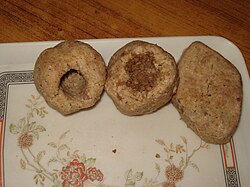
Key Facts
- Primary Ingredients: Finely ground meat, cracked wheat (bulgur), and Levantine spices.
- Regional Reach: Originates in the Levant, Mesopotamia, and the Caucasus, extending to Turkey, Egypt, and Latin America.
- National Status: Regarded as the national dish of Lebanon and Syria.
- Cooking Methods: Can be served raw, deep-fried, grilled, baked, or boiled in sauces.
- Cultural Significance: Often viewed as a benchmark of a cook's skill due to the precision required in preparation.
History and Etymology
The word kibbeh is derived from the Arabic root k-b-b. Some historians suggest the term kubbeh, used for stuffed foods, may have roots in the Akkadian word kubbu. Early culinary records, such as a 10th-century cookbook by Ibn Sayyar al-Warraq, mentioned meatballs as kubab.
The modern version of kibbeh—featuring a filled shell of meat and grains—was first documented in the 18th century in the work Taj al-'Arus min Jawahir al-Qamus, described as a disk of meat and rice flour from the people of "al-Sham" (the Levant). By the mid-19th century, Western travelers like William McClure Thomson noted its immense popularity in Lebanon, describing it as the "national dish of the Arabs."
Regional Variations
The Levant (Lebanon and Syria)
In Lebanon and Syria, kibbeh takes several prestigious forms. Kibbeh nayyeh is a raw version made from very finely minced lamb or beef and bulgur, similar to steak tartare. Because it is uncooked, it requires the highest quality meat and is traditionally served to honor guests as part of a meze (a selection of small appetizers), garnished with olive oil and mint.
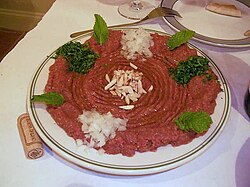
Other popular Levantine styles include:
- Kibbeh labaniyeh: Kibbeh cooked in a creamy yogurt sauce and served over rice.
- Kibbeh bil siniyeh: A baked version where meat stuffing is sandwiched between two layers of kibbeh dough in a tray.
- Kibbeh mishwiyyeh: A grilled alternative to the fried version.
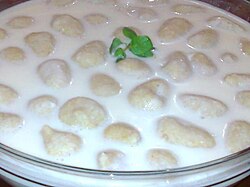
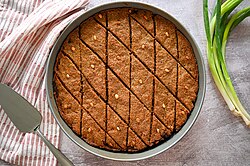
In Lebanon, "poor man's kibbeh" is a meatless version using walnuts and onions. There is also kibbet samak (fish kibbeh) popular in North Lebanon, and potato kibbeh, which layers potato and bulgur around a meat filling, resembling an "oriental shepherd's pie." Syria's Aleppo is the epicenter of variety, producing versions with sumac, quince, pomegranate sauce, and cherry sauce.
Mesopotamia and Turkey
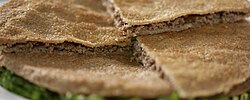
In Iraq, Kubba Mosul is characterized by its flat, disc-like shape. Other Iraqi versions include Kubba Halab (using rice and potato) and Kubbat shorba, a stew with turnips and chard. In Turkey, the dish is known as içli köfte. Some Turkish varieties are legally protected as geographical indications, such as the grilled Adana variety and the boiled Malatya and Polat versions.
Egypt and Latin America
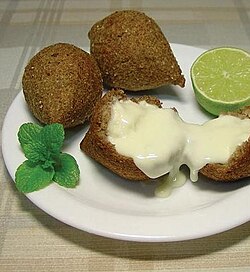
In Egypt, the dish is called kobeba, with seafood variations like shrimp kobeba being popular in Port Said. Due to Levantine immigration in the 19th and 20th centuries, kibbeh is now common in Latin America. In Brazil, quibe de arroz (rice kibbeh) was developed in the Amazon region where wheat was unavailable. In Colombia, beef is often substituted for lamb, and in Mexico, it is sometimes enjoyed with salsa verde.
Kibbeh Summary Table
| Variation | Region | Key Characteristic | Cooking Method |
|---|---|---|---|
| Kibbeh Nayyeh | Lebanon/Syria | Raw minced meat and bulgur | Uncooked |
| Kibbeh Labaniyeh | Lebanon/Syria | Served in yogurt sauce | Simmered |
| Kibbeh bil Siniyeh | Lebanon/Syria | Layered in a tray | Baked |
| Kubba Mosul | Iraq | Flat, disc-shaped | Various |
| İçli Köfte | Turkey | Stuffed bulgur shell | Fried/Boiled/Grilled |
| Quibe de Arroz | Brazil | Rice flour breading | Fried |
Frequently Asked Questions
What is the difference between kibbeh and içli köfte?
They are essentially the same dish; içli köfte is the Turkish name for kibbeh. While the core concept of a stuffed bulgur shell remains, Turkish versions may include tomato paste in the shell and vary by regional cooking methods (boiled vs. fried).
Can kibbeh be made without meat?
Yes. In Lebanon, meatless versions known as "poor man's kibbeh" are made using a stuffing of onions, walnuts, and wheat.
Is kibbeh nayyeh safe to eat?
Kibbeh nayyeh is a raw dish. Because it contains uncooked meat, it requires extremely high-quality, fresh ingredients to be prepared safely and is traditionally used to honor guests.
What is the main grain used in kibbeh?
The primary grain is bulgur, which is cracked wheat. However, in some regions like Iraq or Brazil, rice or rice flour is used as a substitute.
Why is kibbeh considered a test of a cook's skill?
The preparation—particularly the pounding of the meat and bulgur into a perfectly smooth, pliable paste and the shaping of thin, uniform shells—is labor-intensive and requires precision.