Yukjin Korean: The Archaic Language of the Northeast
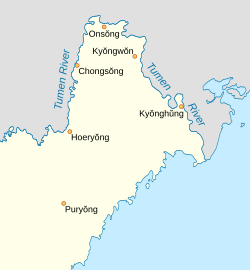
In the rugged landscapes of northeastern Korea, south of the Tumen River, exists a linguistic treasure known as Yukjin (or Ryukjin). Whether classified as a highly conservative dialect of Korean or a distinct Koreanic language, Yukjin serves as a living window into the past. Because it remained isolated from many of the phonological shifts that shaped modern mainland Korean, it preserves features of Middle Korean that have vanished elsewhere.
Today, the Yukjin language is spoken not only in its ancestral homeland in North Korea but also across a vast diaspora in Northeast China and Central Asia. However, this unique variety faces increasing pressure from the prestige Gyeonggi (Seoul) dialect and local national languages.
Key Facts
- Linguistic Status: A highly conservative variety of Korean or a separate Koreanic language.
- Primary Region: The historic Yukjin region (six garrisons) in northeastern Korea.
- Key Feature: Preserves Middle Korean forms, including pitch accent and specific consonant distinctions.
- Distribution: Spoken in North Korea, Northeast China (Jilin), and Central Asia (Uzbekistan and Kazakhstan).
- Diaspora Name: In Central Asia, it is part of the broader Koryo-mar speech community.
History and Global Distribution
Historically, Yukjin has always stood apart from the neighboring Hamgyong dialect. As early as the 17th century, records indicated that the speech of the Yukjin area differed significantly from the rest of the province. The 1693 Bukgwan-ji suggested that the region was settled by people from southern provinces, which explains why early observers found Yukjin easier to understand than other northern dialects.
Over time, however, Yukjin became the most conservative mainland variety of Korean. While other dialects evolved through Early Modern phonological shifts, Yukjin remained a "relic area," maintaining ancient sounds and structures.
The Diaspora and Forced Migration
The distribution of Yukjin speakers expanded globally due to political and economic upheaval:
- Russian Far East: In the 1860s, poor harvests drove speakers to Primorsky Krai.
- Central Asia: In the 1930s, Joseph Stalin ordered the forced resettlement of approximately 250,000 Koreans from the Russian Far East to Uzbekistan and Kazakhstan. About 10% of these Koryo-mar speakers use the Yukjin variety.
- Manchuria: Japanese annexation and forced transfers in the 1930s moved speakers into eastern Jilin, China.
In North Korea, the dialect has declined due to the state's promotion of a standardized North Korean language. Meanwhile, the Jaegaseung—descendants of Jurchen people in the Tumen River valley—also adopted Yukjin Korean despite their isolation from mainstream society.
Phonology and Linguistic Conservatism
The phonology of Yukjin is what fascinates linguists most. It maintains an eight-vowel system similar to Seoul Korean, but with distinct realizations; for example, the vowel wo is more open and u is more backed.
Preservation of Middle Korean
Yukjin retains several features that disappeared from other mainland dialects:
- Pitch Accent: A tonal quality found only in Yukjin, other Hamgyong varieties, and the southern Gyeongsang dialect.
- Consonant Distinctions: It preserves the difference between s- and sy- and avoids the palatalization of t(h)i- into c(h)i-.
- Noun Stems: It keeps alternative noun stems used before vowel-initial suffixes (e.g., namwo for "tree" becomes nangk-ey for "in the tree").
In some instances, Yukjin is even more conservative than 15th-century Middle Korean. It often retains original stop consonants (k, s, p) where Middle Korean had shifted to voiced fricatives.
| English | Middle Korean | Seoul Korean | Yukjin |
|---|---|---|---|
| To inform | alGwoy- | alwoy- | alkwuy- |
| Autumn | kozol | kaul | kasul |
| Silkworm | *nwuWey | nwuey | nupey |
Grammar and Lexicon
The grammar of Yukjin exhibits unique markers and structures. Notably, it lacks the nominative allomorph -ka used after vowels in other Koreanic varieties, relying instead on -i.
Verb Suffixes and Speech Levels
Yukjin employs a distinct set of sentence-final suffixes to denote mood and formality. For example, -(su)kkwuma is used for formal declarative, interrogative, and imperative statements, while -(su)mtwung is a formal interrogative marker unique to Yukjin.
Lexical Archaisms
The vocabulary of Yukjin is remarkably archaic. One striking cultural difference is the lack of distinction between maternal and paternal relatives. Unlike most Korean dialects, which use different terms for maternal and paternal uncles or grandparents, Yukjin uses the same terms for both. This suggests a historical influence—or lack thereof—from the strict patriarchal norms of the Neo-Confucian Joseon state.
Frequently Asked Questions
Is Yukjin a dialect or a separate language?
This is a subject of linguistic debate. While often called a dialect, some linguists, such as Alexander Vovin, classify it as a distinct language due to its extreme conservatism and divergence from modern mainland Korean.
Where can you find Yukjin speakers today?
Speakers are found in the Tumen River region of North Korea, the easternmost part of Jilin in China, and within the Koryo-saram communities of Central Asian states like Uzbekistan and Kazakhstan.
Why is Yukjin considered "conservative"?
In linguistics, "conservative" means the language has changed very little over time. Yukjin is conservative because it preserved sounds, pitch accents, and grammatical forms from Middle Korean that were lost in the Seoul and other mainland dialects.
How does Yukjin differ from the standard Seoul dialect?
Beyond phonology, Yukjin differs in its case markers (lacking -ka), its unique formal verb endings, and a lexicon that does not distinguish between maternal and paternal kinship terms.