York County History: From Native American Empires to the Revolutionary War
The land now known as York County possesses a rich, layered history that spans millennia. From the ancient hunter-gatherer societies of the Woodland Period to its pivotal role in the birth of the United States, this region of Virginia has served as a crossroads for diverse cultures, empires, and political movements.
The First Inhabitants: Native American Cultures
Long before European arrival, York County was inhabited by various Native American cultures. During the late Woodland Period (1000 BCE to 1000 CE), the area was home to hunter-gatherer groups. By the late 16th century, the coastal plain draining into the Chesapeake Bay was known as Tenakomakah, an Algonquian term meaning "densely inhabited land."
The region was dominated by the Powhatan Confederacy, a powerful empire of eastern-Algonquian speaking peoples established by the weroance (chief) Wahunsunacock (1547–1618). Chief Powhatan allied with or conquered approximately 30 tribes. He initially ruled from a village near the James River fall line before establishing a second capital, Werowocomoco, on the north bank of the York River in present-day Gloucester County.
Within York County, the Chiskiack tribe resided along the York River until the 1630s. Due to escalating conflicts with the English colony at Jamestown, the Chiskiack moved westward. The English subsequently established a settlement near the original site and adopted the name Chiskiack (sometimes spelled Kiskiack). Today, this area is part of the Naval Weapons Station Yorktown, where names like Cheesecake Road and Cheesecake Cemetery are believed to be derivatives of the Chiskiack people.
The site of Werowocomoco was lost to history after the capital moved in 1609, but it was rediscovered in the early 21st century. Ongoing archaeological research led by the College of William and Mary continues to provide new insights into the lives of the area's early inhabitants.
Early European Contact and the Ajacán Mission
Before the English established a permanent presence, Spanish Jesuits attempted to colonize the region. In 1570, they founded the Ajacán Mission, guided by Don Luis, a local Native American who had been captured by a previous expedition, taken to Spain and Mexico, and educated in the Jesuit system.
The mission ended in tragedy. In February 1571, Don Luis abandoned the Spanish and led an attack that killed all members of the party except for one young boy, Alonso. While a Spanish force returned the following year to reclaim the boy and punish the attackers, Spain made no further attempts to establish missions in this part of North America.
The Formation of the Virginia Colony
English colonization began in earnest with the founding of Jamestown in 1607. By 1619, the land that would become York County was divided between two "citties" of the Virginia Company of London: Elizabeth Cittie and James Cittie.
In 1634, the area was formally organized as Charles River Shire, one of Virginia's eight original shires, named for King Charles I. This makes it one of the oldest counties in the United States. In 1643, the shire and the river were renamed York County and York River. While some believe the name honors the city of York in Yorkshire, others point to the fact that Charles was the Duke of York, as was his son James II.
The Rise and Significance of Yorktown
Yorktown began as a port for shipping tobacco to Europe, known by various names including the Port of York and Borough of York. In 1691, the House of Burgesses required counties to designate a port of entry and build warehousing, leading to the formal establishment of Yorktown. Although it serves as the county seat, Yorktown was never formally incorporated as a town.
The area is most renowned for its role in the American Revolutionary War, serving as the site where General Cornwallis surrendered to General George Washington in 1781. It also played a significant role in the 1862 Peninsula Campaign during the American Civil War.
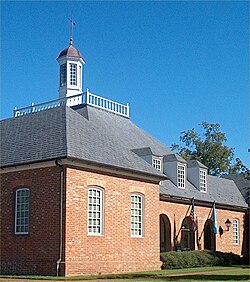
Other Notable Landmarks and Communities
- Porto Bello: The hunting lodge of Lord Dunmore, the last royal governor of Virginia, located on the grounds of Camp Peary and listed on the National Register of Historic Places.
- Poquoson: The only town ever incorporated within the county (1952), which later became an independent city in 1975.
Boundary Changes and Modern Development
The 20th century brought significant shifts in land use and boundaries. During World War I, the U.S. Navy took over the town of Lackey and "the Reservation," displacing African American landowners who relocated to Grove. During World War II, the towns of Penniman, Magruder, and Bigler's Mill were absorbed into government reservations, including Cheatham Annex and Camp Peary.
Territorial changes continued into the late 20th century. In 1949, York County gained 4 square miles from Warwick County. Conversely, in 1975, it lost 15.5 square miles when Poquoson became an independent city. The county also lost land to the growing city of Williamsburg through annexation.
Since the 1980s, York County has transitioned from a rural landscape to a bedroom community for Hampton and Newport News. Today, it is a key part of the Historic Triangle of Colonial Virginia, alongside Jamestown and Williamsburg, linked by the National Park Service's Colonial Parkway. The 2005 completion of Riverwalk Landing has further revitalized the Yorktown waterfront.
Key Facts
- Oldest Roots: Formed in 1634 as Charles River Shire, making it one of the oldest counties in the U.S.
- Indigenous Heritage: Once part of the Powhatan Confederacy and home to the Chiskiack tribe.
- Military Significance: Site of the 1781 surrender of General Cornwallis, ending the Revolutionary War.
- Spanish Attempt: The short-lived Ajacán Mission (1570–1571) predated English settlement.
- Historic Triangle: Part of a major tourism circuit including Yorktown, Jamestown, and Williamsburg.
| Era/Period | Key Entity/Event | Significance |
|---|---|---|
| Woodland Period | Hunter-Gatherers | Earliest known inhabitants (1000 BCE - 1000 CE). |
| Late 16th Century | Powhatan Confederacy | Empire of 30 tribes under Chief Wahunsunacock. |
| 1570-1571 | Ajacán Mission | Failed Spanish Jesuit mission. |
| 1634 | Charles River Shire | Formation of one of Virginia's original eight shires. |
| 1781 | Surrender at Yorktown | End of the American Revolutionary War. |
| Modern Era | Historic Triangle | Integration into a major colonial heritage tourism area. |
Frequently Asked Questions
What was the Powhatan Confederacy?
The Powhatan Confederacy was a powerful alliance of approximately 30 eastern-Algonquian speaking tribes created by Chief Wahunsunacock (known as Powhatan) in the Virginia region.
Why is Yorktown historically significant?
Yorktown is most famous as the site of General Cornwallis's surrender to General George Washington in 1781, which effectively ended the American Revolutionary War.
What happened to the Ajacán Mission?
Founded by Spanish Jesuits in 1570, the mission ended in 1571 when Don Luis, a Native American interpreter, led an attack that killed nearly all the Jesuits.
How did York County get its name?
Originally called Charles River Shire in 1634, it was renamed York County in 1643. The name is believed to refer to either the city of York in England or the title of the Duke of York.
What is the Historic Triangle?
The Historic Triangle is a collection of three major colonial attractions—Yorktown, Jamestown, and Williamsburg—connected by the Colonial Parkway.