Yatsushiro: A Blend of History and Nature in Kumamoto
Nestled in the geographic center of Kyushu, Yatsushiro is a city in the Kumamoto Prefecture of Japan that offers a captivating mix of rugged mountains, coastal plains, and deep historical roots. From its ancient mentions in early Japanese chronicles to its modern role as an agricultural and industrial hub, Yatsushiro serves as a gateway to the diverse landscapes of southern Japan.
Geography and Climate
The landscape of Yatsushiro is defined by its contrasting terrain. To the west lies a fertile plain facing the Shiranui Sea (also known as the Yatsushiro Sea), much of which was created through land reclamation efforts starting in the Edo period. In contrast, the eastern and southern regions are dominated by the dense, towering peaks of the Kyushu Mountains.
The city experiences a humid subtropical climate (classified as Cfa under the Köppen system), characterized by hot, humid summers and cool winters. Precipitation is frequent throughout the year, peaking in June and July. With an average annual temperature of 17.0°C (62.6°F) and significant annual rainfall of 2,033.4 mm, the environment is well-suited for the region's lush greenery and agriculture.
A Journey Through History
Yatsushiro's history is ancient, with its name appearing in the Nihon Shoki and other documents from the Nara period. Legend suggests the name originates from a mountain shrine believed to be the tomb of the sun goddess, Amaterasu. During the Nara and Heian periods, the city flourished as a vital center for trade with Song China and the Korean kingdom of Baekje.
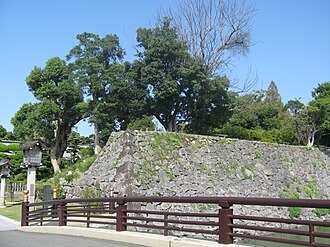
The Sengoku period brought conflict as various warlords, including the Nawa, Sagara, and Shimazu, vied for control. Eventually, under Toyotomi Hideyoshi, Konishi Yukinaga established Mugishima Castle in 1588. Following the Battle of Sekigahara in 1600, control shifted to Kato Kiyomasa. While Mugishima Castle was destroyed by an earthquake in 1619, it was replaced by the construction of Yatsushiro Castle.
During the Edo period, the castle became the stronghold of the Matsue clan, who served as high-ranking officials (karō) for the Hosokawa clan. The modern city began to take shape on April 1, 1889, and officially achieved city status on September 1, 1940. A major expansion occurred on August 1, 2005, when Yatsushiro absorbed several neighboring towns and villages, including Kagami and Senchō.
Local Economy and Culinary Specialties
Agriculture remains a cornerstone of the local economy. The Yatsushiro Plain is renowned for producing rice and igusa—the rush grass used as the raw material for traditional tatami mats. The region also produces the banpeiyu, a fruit resembling an oversized grapefruit.
Yatsushiro is also famous for its unique delicacies:
- Karashi Renkon: Lotus root stuffed with a spicy mustard-like sauce (karashi) and coated in egg.
- Basashi: Raw horse meat, a prized delicacy often served with ginger and onion. Some local restaurants even offer basashi burgers.
Beyond farming, the city has a strong industrial history. Yatsushiro Port was modernized during the Meiji era, and in 1890, the city became home to Kyushu's first cement factory. Today, the economy is supported by brewing, food processing, and the pulp and paper industries.
Government and Infrastructure
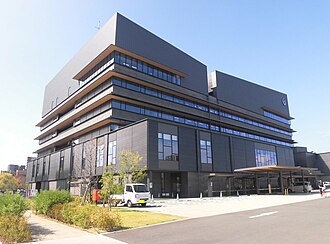
Yatsushiro operates under a mayor-council form of government, led by Mayor Taisuke Ono and a 32-member unicameral city council. Politically, it is part of the Kumamoto 4th district of the lower house of the Diet of Japan.
Transportation is highly accessible via several rail networks:
- Kyushu Shinkansen: Served by the Shin-Yatsushiro station.
- JR Kyushu: The Kagoshima Main Line and the Hisatsu Line provide critical regional connectivity.
- Hisatsu Orange Railway: Connects Yatsushiro to areas such as Higo Kouda and Higo Futami.
Culture, Tourism, and Festivals
Visitors to Yatsushiro can explore several sites of historical and artistic significance, including the Yatsushiro Castle ruins (a National Historic Site), the Yatsushiro-gū shrine, and traditional Yatsushiro ware ceramics.
Annual Celebrations
The city is vibrant with seasonal events:
- Kumagawa Festival (August): A celebration of the Kumagawa River featuring street dances, costumes, and food stalls.
- Kyushu International Three Day March (May): An event where locals and foreigners participate in walks ranging from 5 to 40 km.
- Myokensai Festival (November 23): A traditional event featuring a parade of horses through the city streets.
- Yatsushiro Fireworks Festival: One of the largest displays in Kyushu, where firework companies compete to showcase their best designs.
City Overview
The following table provides a quick reference to the key statistics and symbols of Yatsushiro.
| Category | Details |
|---|---|
| Population | 120,389 (as of August 31, 2024) |
| Total Area | 681.29 km² |
| Mayor | Taisuke Ono |
| City Bird | Common kingfisher |
| City Flower | Prunus serrulata (Cherry Blossom) |
| City Tree | Banpeiyu |