Kumamoto Prefecture: The Heart of Kyushu
Located in the center of Kyushu, one of Japan's four main islands, Kumamoto Prefecture is a region where breathtaking natural wonders meet deep historical roots and cutting-edge industry. From the towering peaks of active volcanoes to the architectural grandeur of its namesake castle, Kumamoto offers a diverse landscape that captures the essence of Japanese heritage and modernity.
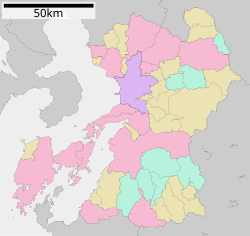
Geography and Natural Wonders
Kumamoto is defined by its dramatic geography. To the west, the prefecture meets the Ariake Sea and the Amakusa Archipelago, a chain of islands that separates the mainland from the East China Sea. To the north, east, and south, it shares borders with Fukuoka, Ōita, Miyazaki, and Kagoshima prefectures, respectively.
The crown jewel of the region's landscape is Mount Aso, which stands 1,592 meters (5,223 ft) above sea level. It is one of the largest active volcanoes in the world and is situated at the center of the Aso caldera—a large, cauldron-like hollow that forms shortly after the emptying of a magma chamber in a volcano eruption.
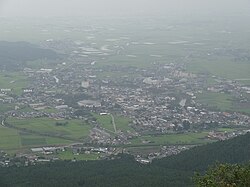
Nature conservation is a priority in the region. As of March 2019, approximately 21% of the prefecture's land is designated as natural parks. These include the Aso Kujū and Unzen-Amakusa National Parks, as well as several Quasi-National and Prefectural Natural Parks, such as the Ashikita Kaigan and Okukuma areas.
History and Cultural Identity
Historically known as Higo Province, the region was renamed Kumamoto during the Meiji Restoration, a 19th-century political revolution that abolished the feudal system and returned imperial rule to Japan. The name "Kumamoto" literally translates to "bear root" or "origin of the bear."
The region's cultural identity is further reflected in its landmarks. Kumamoto Castle remains one of the most iconic symbols of the prefecture's strength and history.
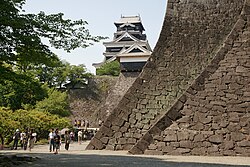
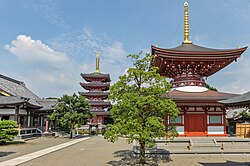
Other significant cultural sites include the serene Suizen-ji Jōju-en garden and the Renge-in Tanjō-ji temple.
Administrative Structure and Demographics
Kumamoto is organized into 9 districts and 45 municipalities, including 14 cities. The capital, Kumamoto City, serves as the primary administrative and economic hub.
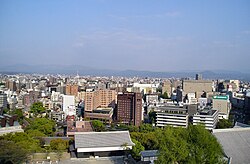
The prefecture's population is approximately 1,683,115 (as of October 1, 2025), ranking it 23rd in Japan. The total land area covers 7,409.48 square kilometers, making it the 15th largest prefecture by area.
| Category | Detail |
|---|---|
| Capital | Kumamoto |
| Total Area | 7,409.48 km² |
| Population | 1,683,115 (2025) |
| GDP (2022) | JP¥ 6,565 billion (US$ 48.5 billion) |
| Regional Symbols | Eurasian skylark (Bird), Gentian (Flower), Camphor tree (Tree) |
Major Cities and Localities
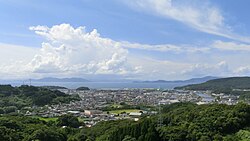
Beyond the capital, other major cities include Yatsushiro, Amakusa, and Tamana. The prefecture also contains unique smaller localities, such as the town of Hitoyoshi and the quiet Itsuki Village.
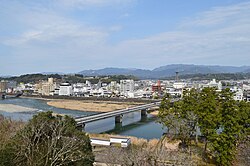
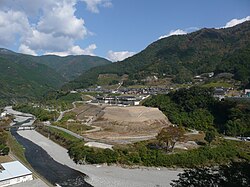
In the city of Minamata, the region continues to balance its urban development with its environmental surroundings.
Economy and Innovation
Kumamoto is a powerhouse of Japanese manufacturing. It is home to the world's largest motorcycle production facility. The region is also becoming a critical hub for the global tech industry; in 2023, Mitsubishi Electric announced a 100 billion yen investment to build a new semiconductor factory, with production targeted to begin in April 2026.
Tourism and Landmarks
Visitors to Kumamoto are often drawn to the region's unique engineering and natural beauty. The Tsūjun Bridge in Yamato is particularly notable as the largest stone aqueduct in Japan.
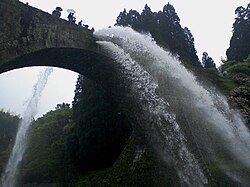
To boost tourism, especially following the opening of the Kyushu Shinkansen (high-speed rail), the prefecture created Kumamon. This black bear mascot with red cheeks has become a global symbol of the region.
Infrastructure and Education
Transportation
The prefecture is well-connected via a comprehensive transport network:
- Rail: Services include the Kyushu Shinkansen, JR Kyushu lines (such as the Kagoshima and Hohi lines), and local operators like the Kumamoto Electric Railway and Minami Aso Railway.
- Roads: Major expressways include the Kyushu and South Kyushu Expressways, supported by a network of national highways.
- Air and Sea: The region is served by Kumamoto and Amakusa airports, as well as various ferry routes connecting to Shimabara, Nagasaki, and other coastal points.
Education
Kumamoto is a center for higher learning, featuring Kumamoto University as its primary national institution, alongside the Prefectural University of Kumamoto and various private colleges specializing in music, health science, and nursing.
Sports and Global Relations
The prefecture is active in professional sports, most notably with Roasso Kumamoto, a men's football team competing in the J League Second Division.
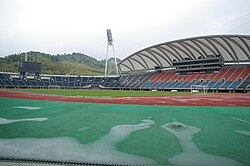
Other teams include Blaze Kumamoto (men's association football) and Mashiki Renaissance Kumamoto (women's association football). The region has also demonstrated its capacity for large-scale events by hosting the World Women's Handball Championship in 2019 and the World Men's Handball Championship in 1997.
International Ties
Kumamoto maintains strong international bonds, serving as the sister state to Montana in the United States. Additionally, Kumamoto City is a sister city to San Antonio, Texas, where the mascot Kumamon has served as an honorary ambassador.
Notable Figures
The prefecture has produced many influential individuals across various fields, including:
- Arts and Literature: Eiichiro Oda (creator of One Piece) and Yuki Midorikawa (creator of Natsume's Book of Friends).
- Entertainment: Actors Jun Kunimura and Tetsu Komai, and pop artists like Kimeru and Tomiko Van.
- Sports: Sumo wrestler Shodai Naoya and baseball player Munetaka Murakami.