Xingu Indigenous Peoples: Culture, History, and Environmental Struggle
The Xingu are a diverse cultural group of Indigenous peoples residing near the Xingu River in Brazil. While they comprise fifteen different tribes and represent all four of Brazil's major Indigenous language groups, they are united by a shared system of beliefs, rituals, and ceremonies. This cultural cohesion allows various ethnic groups to maintain a peaceful and interconnected society despite their linguistic differences.
Key Facts
- Population: Currently over 3,000 inhabitants across 32 settlements.
- Composition: Includes the Aweti, Kalapalo, Kamaiurá, Kayapó, Kuikuro, Matipu, Mehinako, Nahukuá, Suyá, Trumai, Wauja, and Yawalapiti.
- Protected Area: The Parque Indígena do Xingu was established in 1961.
- Social Structure: Known as a peaceful society that utilizes trade and intermarriage to maintain harmony.
- Key Ritual: The Kuarup is a major funeral ceremony honoring the cycle of life.
Precolumbian and Post-Contact History
Long before European arrival, the Upper Xingu region was a hub of dense population. Between 1200 and 1600 CE, pre-planned settlements featuring circular plazas, moats, and a network of ancient roads and bridges flourished. To date, archaeologists have identified 19 such villages.
The arrival of Portuguese slavers around 1750 marked a devastating turning point. Once numbering in the tens of thousands, the population plummeted due to slavery and foreign epidemic diseases such as smallpox, measles, malaria, and flu. By the 1950s, it is estimated that only 500 Xingu people remained.
Recovery began in 1946 when the Villas-Bôas brothers visited the region, eventually leading to the creation of the Parque Indígena do Xingu in 1961. This protected status allowed the population to rebound to over 3,000 people, with half of the current population under the age of 15.
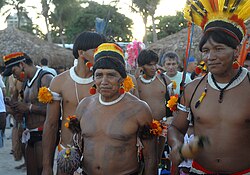
Intertribal Relations and Social Harmony
Ethnographers describe the Xingu as a peaceful society. While they do not engage in intertribal warfare, they manage conflict through wrestling matches—used to release anger—and the rare occurrence of killings related to witchcraft. According to Wauja myth, the Xingu are inherently peaceful, contrasting themselves with other indigenous groups and white people, whom they perceive as violent.
Trade and Specialization
Economic stability and peace are maintained through a system of tribal specialization. Different groups produce specific goods for trade:
- Wauja: Pottery
- Kamayurá: Wooden bowls
- Kalapalo and Kuikuru: Accessories
- Yawalapití: Shell decorations
- Trumaí and Mehinaku: Salt
Intermarriage
Intermarriage is a key tool for social cohesion. For example, 30% of Kuikuru and 35% of Mehinaku marriages occur between different tribes. The Yawalapití specifically seek partners from the Kamayurá, Kuikuru, Kalapalo, and Mehinaku groups.
Community Life and Spiritual Practices
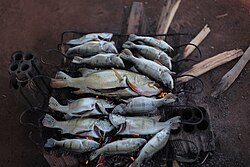
Daily life and spirituality are deeply intertwined with the environment. Fishing is a vital protein source, and shamans use herbal smoke to protect fishermen from alligators. Community meals often feature fish cooked over open fires and beiju (cassava pancakes) prepared by the women.
The Kuarup Ritual
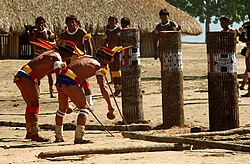
The Kuarup is a significant funeral ceremony used to honor deceased chiefs and the cycle of life. This ritual involves feasts, ritual dances, and combat competitions where warriors from various tribes engage in wrestling matches. Participants paint their bodies red using urucum seeds and black using the fruit of the jenipapo tree, accompanied by the sound of bamboo trumpets.
The importance of this ritual was highlighted in 2020 following the death of Yawalapiti Chief Aritana and eleven others due to COVID-19. The community commemorated the victims by placing four painted tree trunks in the village center, believing these trunks contain the spirits as they transition to the underworld.
Environmental Challenges and Activism
The Xingu have long used oral traditions and nature to guide their lives, such as using the emergence of the Pleiades star cluster to predict the rainy season. However, climate change has disrupted these patterns. Elders have reported hotter temperatures, erratic rain, and rising river levels—notably in 2005, when early river rises prevented turtles from hatching.
Land degradation has also accelerated. Between July and August 2019, the Xingu lost 147 square kilometers of land to forest fires, illegal activity, and invasions—a 172% increase over the same period in 2018. This loss has directly impacted the availability of medicinal plants.
In response, Xingu women have become prominent activists. In May 2019, 200 women gathered on Ilha Grande to discuss deforestation and the Brazilian government's treatment of indigenous peoples. Later that year, led by Watatakalu Yawalapiti, they joined the First Brazilian Indigenous Women's March in Brasilia to defend their ancestral lands.
Summary of Xingu Tribal Specializations
| Tribe | Specialized Product |
|---|---|
| Wauja | Pottery |
| Kamayurá | Wooden Bowls |
| Kalapalo & Kuikuru | Accessories |
| Yawalapití | Shell Decorations |
| Trumaí & Mehinaku | Salt |
Frequently Asked Questions
What is the Kuarup?
The Kuarup is a traditional funeral ceremony performed by the Xingu peoples to honor deceased chiefs and the cycle of life, featuring ritual dances, wrestling matches, and feasts.
How did the Xingu population recover in the 20th century?
After falling to an estimated 500 people in the 1950s due to disease and slavery, the population grew to over 3,000 following the establishment of the Parque Indígena do Xingu in 1961.
How do the Xingu maintain peace between different tribes?
They maintain harmony through a complex system of intertribal trade, intermarriage, and shared ceremonies, as well as using wrestling matches to resolve personal anger.
What environmental changes are the Xingu currently facing?
The Xingu are experiencing higher temperatures, changing rainfall patterns, and rising river levels, which have made traditional astronomical predictions (like the Pleiades) less reliable and affected wildlife hatching.
What is the significance of the 2019 Women's March?
Led by figures like Watatakalu Yawalapiti, the march aimed to defend indigenous lands and increase the visibility and participation of indigenous women in political spaces outside their tribes.