Wyckoff-Bennett Homestead: A Rare Piece of Dutch Colonial History in Brooklyn
Nestled in the Flatlands section of Brooklyn, New York, the Wyckoff-Bennett Homestead stands as a rare architectural survivor. Built around 1766, this residence is one of the last privately owned Dutch Colonial farmhouses remaining in New York City. Its walls hold centuries of history, spanning from the early Dutch settlements of Kings County through the turmoil of the American Revolution and into the modern era of urban development.
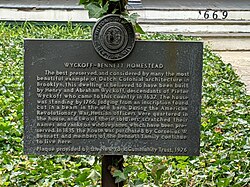
The homestead is not only a local treasure but is recognized on a national scale as both a U.S. National Register of Historic Places site and a U.S. National Historic Landmark. It also serves as a key stop on the New York State Revolutionary War Heritage Trail.
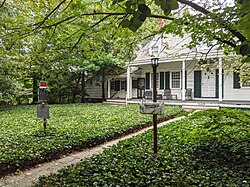
Key Facts
- Location: 1669 East 22nd Street, Brooklyn, New York.
- Construction Date: Approximately 1766.
- Architectural Style: Dutch Colonial.
- Designations: National Historic Landmark (1976) and National Register of Historic Places (1974).
- Revolutionary War Link: Once housed Hessian soldiers during the British invasion of 1776.
A Legacy of Ownership
The home was originally constructed by Hendrick H. Wyckoff around 1766. For nearly 70 years, the Wyckoff family occupied the residence until 1835, when Cornelius W. Bennett purchased the house and its surrounding 100-acre farm. The Bennett family maintained ownership for four generations, with the lineage continuing until the death of Gertrude Ryder Bennett Williams in 1982.
Following her passing, her widower, Rev. Frank Curtis Williams, sold the property to Annette and Stuart Mont. The Monts spent decades attempting to ensure the home's preservation, including a complex and ultimately unsuccessful negotiation with New York City in the late 1990s and early 2000s that would have seen the property become parkland.
The Revolutionary War and the Battle of Brooklyn
The homestead provides a tangible link to the Battle of Brooklyn, one of the largest conflicts of the American Revolutionary War. At the time, Kings County was primarily agricultural land inhabited by fewer than 4,000 people, many of whom were enslaved individuals working for descendants of 17th-century Dutch immigrants.
Following the British invasion in 1776, the house was used to quarter Hessian soldiers (German troops hired by the British). The presence of these soldiers is physically documented in the home; Captain Toepfer of the Ditfourth regiment and Lieutenant M. Bach of the Hessen-Hanau Artillerie etched their names and ranks into the windowpanes. These men may have participated in the attack on the Battle Pass—now part of Prospect Park—which nearly destroyed George Washington's army.
Property Summary
| Category | Details |
|---|---|
| Address | 1669 East 22nd Street, Brooklyn, NY |
| Style | Dutch Colonial |
| NRHP Reference No. | 74001253 |
| NRHP Listing Date | December 24, 1974 |
| NHL Designation Date | December 8, 1976 |
| Recent Sale (2021/2022) | $2.4 million to 22nd Street Investors LLC |
| Current Owner (2024) | Congregation Chabad Lubavitch of Flatbush |
Frequently Asked Questions
Who originally built the Wyckoff-Bennett Homestead?
The house was built by Hendrick H. Wyckoff around 1766 on land located along the Kings Highway, which was the primary east-west artery of the county at the time.
What is the significance of the windowpanes in the house?
The windowpanes contain etchings from Hessian soldiers, specifically Captain Toepfer and Lieutenant M. Bach, who were quartered in the home during the British invasion of 1776.
Why is the architectural style important?
The home is a rare surviving example of a Dutch Colonial farmhouse in New York City, reflecting the early European settlement patterns of the region.
Who currently owns the property?
As of December 2024, the property was sold to the Congregation Chabad Lubavitch of Flatbush.
Was the property ever almost owned by the city?
Yes. In 1999, a deal was proposed for the city to purchase the home for $2 million to turn it into parkland, but the agreement fell through after the price was reconfigured to $1.3 million, which the owners declined.