World Music: Origins, Evolution, and Global Influence
Music has always been a universal language, but the specific term world music describes a complex intersection of cultural heritage, academic study, and commercial marketing. From the indigenous sounds of remote villages to the high-energy fusion of modern urban centers, this genre encompasses a vast array of non-Western musical traditions and their contemporary evolutions.
Key Facts
- The term was coined in the early 1960s by ethnomusicologist Robert E. Brown.
- It became a widespread marketing and classification tool in the 1980s.
- The genre includes diverse forms such as world fusion, worldbeat, and ethno jazz.
- Immigration and multiculturalism, particularly the Punjabi diaspora, have significantly shaped the genre's mainstream integration.
- Major international recognition is provided through events like WOMEX and various global festivals.
The Origins and Etymology of World Music
The phrase "world music" is credited to Robert E. Brown, an ethnomusicologist—a scholar who studies music within its cultural context. Brown coined the term in the early 1960s while at Wesleyan University in Connecticut. To support his academic programs, Brown invited visiting performers from Asia and Africa to participate in a concert series, effectively bringing these sounds to a North American audience.
While it began as an academic descriptor for non-European and non-North American music, the term shifted in the 1980s. During this decade, the music industry and media adopted "world music" as a marketing and classificatory device to organize diverse international sounds for Western consumers.
The Evolution of Hybrid Forms and Fusion
Before the term became a commercial category, various artists were already bridging the gap between regional traditions and global popularity. In 1964, Millie Small achieved international success with "My Boy Lollipop," reaching the top charts in both the UK and US. Other pioneers included Miriam Makeba and Hugh Masekela, who found popularity in the USA during the 1960s, and Ravi Shankar, who brought the sitar to a massive audience at the 1969 Woodstock festival.
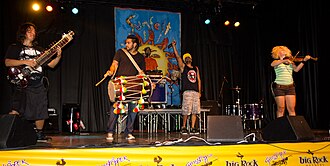
The 1970s saw a surge in funky and rhythmic innovations. Manu Dibango's "Soul Makossa" (1972) and Osibisa's "Sunshine Day" (1976) became hits, while Fela Kuti pioneered Afrobeat, a genre later carried forward by Femi Kuti, Seun Kuti, and Tony Allen. Simultaneously, Latin music was expanded by a wave of salsa musicians, including the Fania All-Stars, Rubén Blades, and Willie Colón.
World Fusion and Specialized Ensembles
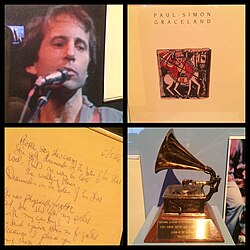
The genre has branched into several subgenres, including world fusion, ethnic fusion, and global fusion. A notable example of dedicated cultural representation is the American ensemble Libana, founded by Susan Robbins in 1979. Libana focuses on world folk traditions through storytelling, dance, and chants. Their repertoire spans the Mediterranean, Balkans, Middle East, Africa, Asia, and South America, utilizing a wide array of instruments such as the oud, bağlama, djembe, and hammered dulcimer.

Commercialization and Mainstream Integration
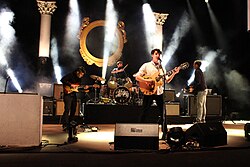
A pivotal moment for the industry occurred on June 29, 1987, when industry stakeholders met to capitalize on the marketing of non-Western folk music. This move was spurred by the success of Paul Simon's 1986 album Graceland, which blended Simon's sensibilities with Southern African sounds, featuring artists like Ladysmith Black Mambazo and Savuka. Along with the work of Peter Gabriel and Johnny Clegg, these projects introduced non-Western music to a massive global audience.
The Role of Immigration and Diaspora
Immigration has played a critical role in the evolution of world music. In the 1970s, the growing Punjabi diaspora in the UK led to a surge in the popularity of Punjabi music. Similarly, Bhangra music gained traction in US cities like New York and Chicago. The integration of these sounds into the mainstream often occurred through collaborations; for example, Panjabi MC's remix "Beware of the Boys" featuring Jay Z successfully merged traditional Punjabi elements with modern rap.
Global Recognition: Awards and Festivals
To honor excellence in the field, several prestigious awards were established. The BBC Radio 3 Awards for World Music (active 2002–2008) recognized artists across categories such as Africa, Asia/Pacific, and Culture Crossing. Another significant honor is the WOMEX Awards, introduced in 1999. These awards recognize musical excellence and social impact, presenting winners with a figurine of a Neolithic mother goddess.
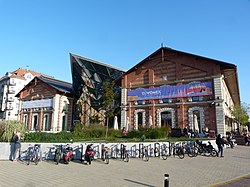
World music is also celebrated through numerous international festivals. These range from the Udaipur World Music Festival in India and the Canang World Music Festival in Indonesia to Spain's Etnosur and Fira Mediterrània. In Mali, the Festival au Désert achieved international fame between 2001 and 2012 despite its remote location.
| Period/Year | Event/Development | Significance |
|---|---|---|
| Early 1960s | Robert E. Brown coins "world music" | Established as an academic term for non-Western music. |
| 1969 | Ravi Shankar at Woodstock | Introduced Indian classical instruments to the US counterculture. |
| 1986 | Release of Graceland | Mainstreamed Southern African sounds in the West. |
| 1987 | Industry Meeting | Formalized "world music" as a commercial marketing category. |
| 1999 | WOMEX Awards launched | International recognition of musical and social excellence. |
Frequently Asked Questions
Who first used the term "world music"?
The term was coined in the early 1960s by Robert E. Brown, an ethnomusicologist at Wesleyan University, to describe music that was not from Europe or North America.
How did the term "world music" change over time?
It began as an academic term used in ethnomusicology but evolved into a marketing and classification tool used by the music industry and media in the 1980s.
What is the difference between world music and world fusion?
While world music is a broad umbrella term for non-Western music, world fusion refers to hybrid genres that blend traditional ethnic sounds with other styles, such as jazz or electronic music.
How has immigration influenced the genre?
Immigration creates diasporas that bring traditional music to new regions. For example, the Punjabi diaspora in the UK and US helped popularize Bhangra and Punjabi music, eventually leading to mainstream collaborations with artists like Jay Z.
What are some of the most prominent world music awards?
The WOMEX Awards and the now-defunct BBC Radio 3 Awards for World Music are two of the most significant honors in the industry.