Women Political Leaders in Muslim-Majority Countries
Throughout the twentieth and twenty-first centuries, women have increasingly broken barriers to lead Muslim-majority nations. From serving as heads of state to pioneering roles in diplomacy and parliament, these leaders have shaped the political landscapes of their respective countries. Notably, the three most populous Muslim-majority nations—Indonesia, Pakistan, and Bangladesh—have all been led by women.
Despite these achievements, the path to power has often been fraught with challenges. As of 2007, women in these leadership roles continued to face significant pressures, including imprisonment, arrests, and assassination attempts.
Key Facts
- Benazir Bhutto was the first woman to lead a Muslim-majority country (Pakistan).
- Bangladesh has been led by female prime ministers for 32 years as of 2023.
- Tansu Çiller became Turkey's first and only female prime minister in 1993.
- Najla Bouden became the first female prime minister in the Arab world in 2021.
- Megawati Sukarnoputri was the first female president of Indonesia.
Pioneering Leaders in South Asia
Pakistan
Pakistan has a storied history of female political influence. Fatima Jinnah, sister of the nation's founder, was a fierce advocate for independence and women's empowerment, later running a presidential campaign against a military dictator. Following her, Benazir Bhutto made history in 1988 as the first woman to lead a Muslim-majority country, serving two terms as Prime Minister (1988–1990 and 1993–1996) before her assassination during the 2008 election campaign.
Bangladesh
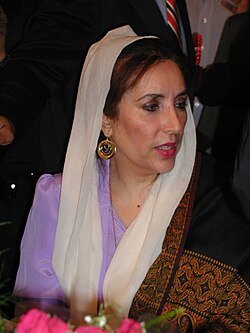
Bangladesh stands out for its sustained female leadership. For 32 years leading up to 2023, the country has been governed by women. Khaleda Zia became the first female Prime Minister in 1991 and the second woman to lead a democratic government in the Muslim world. Sheikh Hasina has also served as Prime Minister across multiple terms, from 1996 to 2001 and again from 2009 to 2024.
Leadership in the Middle East and North Africa
Turkey
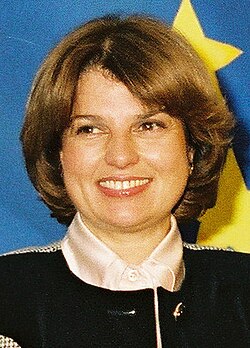
In 1993, Tansu Çiller became the Prime Minister of Turkey. Unlike some leaders who ascended through family succession, Çiller earned her position through her own political trajectory, starting as an economics professor and Minister of Economy. While her tenure was marked by modernization efforts, it ended in 1996 following parliamentary investigations into her decisions.
Egypt
Egypt has seen significant female representation, with women making up nearly one-third of its Parliament. Rawya Ateya was a trailblazer, becoming the first female officer in the Liberation Army (1956) and the first female parliamentarian in the Arab world (1957). Other notable figures include Nadia Ahmed Abdou Saleh, Egypt's first female governor (2017), and Eva Habil, the first female mayor of Kom Buha (2008).
Tunisia and Saudi Arabia
In 2021, Najla Bouden broke new ground as the first female prime minister in the Arab world. Meanwhile, Saudi Arabia appointed Reema bint Bandar bin Sultan bin Abdulaziz Al Saud as its first female ambassador to the United States in 2019.
Political Progress in Afghanistan
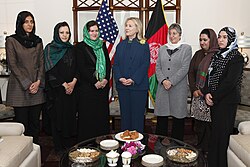
Afghanistan's journey with female leadership has been volatile. Early progress began with the 1964 Constitution, which granted women the right to vote. Kubra Noorzai became the first female minister (Public Health) in 1965. Later, Massouda Jalal became the first woman to run for president in 2002, eventually serving as Women's Affairs Minister.
Other key figures include Azra Jafari, the first female mayor in Afghanistan (Nili, 2008–2014), and Fawzia Koofi, who served as the first female Second Deputy Speaker of Parliament. Sima Samar also played a critical role, chairing the Afghanistan Independent Human Rights Commission from 2004 to 2019.
Leadership in Other Muslim-Majority Regions
Southeast Asia and Central Asia
Indonesia, the world's most populous Muslim-majority nation, elected Megawati Sukarnoputri as its first female president from 2001 to 2004. In Kyrgyzstan, Roza Otunbayeva served as President starting in 2010. Kosovo has also seen strong female leadership with Atifete Jahjaga (elected 2011) and Vjosa Osmani (elected 2021).
Azerbaijan and West Africa
Azerbaijan has seen women in high-ranking roles, such as Lala Shevket, the world's first female Secretary of State (1993–1994), and Mehriban Aliyeva, who serves as Vice President. In Senegal, Mame Madior Boye became the first female prime minister from 2001 to 2002.
Summary of Notable Female Leaders
| Leader | Country | Key Role | Significance |
|---|---|---|---|
| Benazir Bhutto | Pakistan | Prime Minister | First woman to lead a Muslim-majority country |
| Megawati Sukarnoputri | Indonesia | President | First female president of Indonesia |
| Tansu Çiller | Turkey | Prime Minister | First and only female PM of Turkey |
| Najla Bouden | Tunisia | Prime Minister | First female PM in the Arab world |
| Khaleda Zia | Bangladesh | Prime Minister | First female PM of Bangladesh |
Frequently Asked Questions
Who was the first woman to lead a Muslim-majority country?
Benazir Bhutto of Pakistan was the first woman to lead a Muslim-majority country, first taking office as Prime Minister in 1988.
Which Muslim-majority country has had the most consistent female leadership?
Bangladesh has shown remarkable consistency, having been led by female prime ministers (Khaleda Zia and Sheikh Hasina) for 32 years as of 2023.
Who was the first female prime minister in the Arab world?
Najla Bouden of Tunisia became the first female prime minister in the Arab world when she was appointed on October 11, 2021.
What challenges have women political leaders in these regions faced?
Many have faced severe pressures, including political imprisonment, death threats, and assassination attempts. For example, Fawzia Koofi survived an assassination attempt, and Sima Samar received death threats for her human rights work.
Was Tansu Çiller's rise to power based on family succession?
No, Tansu Çiller won her position as Prime Minister of Turkey entirely on her own merit, following a career in economics and a rise through the True Path Party.