Isabel Perón: The First Female President of Argentina
Isabel Perón (born María Estela Martínez Cartas) holds a unique place in global political history as the first woman to serve as the president of a country. Her tenure as the 41st President of Argentina from 1974 to 1976 was marked by extreme political volatility, economic crisis, and the rise of paramilitary violence, ultimately ending in a military coup.
A central figure in the Peronist movement, Isabel's rise to power was inextricably linked to her husband, Juan Perón. Her presidency represents a turbulent chapter of Orthodox Peronism, characterized by a shift toward right-wing policies and a struggle to maintain national stability amidst escalating internal conflict.
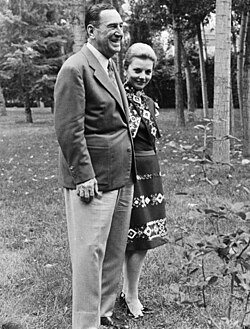
Key Facts
- First Female President: The first woman in history to hold the title of "President" of a nation.
- Term of Office: Served as President from July 1, 1974, to March 24, 1976.
- Political Affiliation: Member and second President of the Justicialist Party.
- Rise to Power: Ascended to the presidency following the death of her husband, Juan Perón.
- End of Tenure: Removed from office by a military coup in March 1976.
Early Life and Relationship with Juan Perón
Born in La Rioja, Argentina, in 1931, María Estela Martínez Cartas met Juan Domingo Perón while he was in exile in Panama. Perón, who was 35 years her senior, sought companionship following the death of his second wife, the iconic Eva Perón, in 1952. The couple moved to Madrid, Spain, in 1960.
Due to the strict social and legal norms in Spain at the time, which disapproved of cohabitation without marriage, the couple married on November 15, 1961. This marriage positioned Isabel as a key figure in Perón's inner circle during his years of exile.
The Influence of José López Rega
During a visit to Argentina in 1965, Isabel met José López Rega, a former policeman with a deep interest in occultism and fortune-telling. Sharing these interests, Isabel formed a close bond with him, and under her influence, Juan Perón appointed López Rega as his personal secretary.
López Rega's influence extended far beyond administrative duties. He founded the Argentine Anticommunist Alliance (Triple A), a right-wing paramilitary death squad. The Triple A was responsible for hundreds of murders targeting left-wing activists, intellectuals, and public servants throughout the 1970s.
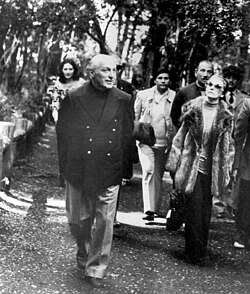
Ascension to the Presidency
The transition of power occurred rapidly in 1974. On June 28, Juan Perón suffered a series of heart attacks. Isabel was recalled from a European trade mission and sworn in as acting president on June 29. Upon Juan Perón's death on July 1, 1974, Isabel formally ascended to the presidency as the sitting vice president.
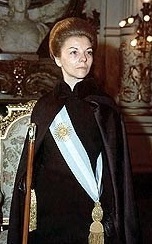
Known popularly as La Presidente, her administration initially attempted to maintain the "Social Pact"—an economic agreement inherited from her husband. While she implemented payroll taxes to strengthen the Public Retirement System, she struggled with labor pressures, leading to a price-wage spiral that saw inflation jump from 12% in May 1974 to 80% a year later.
Political Violence and Economic Collapse
Isabel's presidency was overshadowed by escalating political violence. The Triple A, under López Rega's guidance, carried out nearly 300 murders between 1973 and 1974. By 1975, the conflict expanded to include "soft targets," with clashes between the Trotskyist ERP and the fascist Triple A resulting in hundreds of civilian deaths.
Economically, the country spiraled into a sharp recession. GDP growth plummeted, and the "Rodrigazo" crisis led to massive devaluation of the peso. By early 1976, inflation reached a record high of over 700% following the "Mondelazo"—a series of shock therapy measures including steep utility rate hikes.
The 1976 Coup and Exile
Political support for Isabel evaporated following allegations that she had embezzled funds from the Cruzada de Solidaridad (Solidarity Crusade), a government charity. Internal party divisions and the resignation of key ministers left her vulnerable.
On March 24, 1976, the military seized power in a coup. Isabel was placed under house arrest for five years before being exiled to Spain in 1981. She remained the nominal head of the Justicialist Party until 1985.
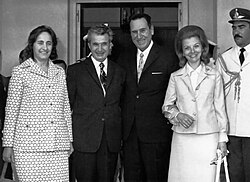
Later Years and Legal Battles
Following the restoration of democracy in 1983, Isabel was pardoned of corruption charges and returned to Argentina as a guest of honor for President Raúl Alfonsín's inauguration. However, her later years were marked by legal challenges regarding human rights abuses.
In 2007, she was arrested in Madrid on charges related to the disappearance of Héctor Aldo Fagetti Gallego and a 1975 decree ordering the military to "annihilate subversive elements." Spain ultimately refused her extradition in 2008, ruling that the charges did not constitute crimes against humanity and that the statute of limitations had expired.
| Role | Period | Preceded By | Succeeded By |
|---|---|---|---|
| First Lady of Argentina | 1973–1974 | Norma Beatriz López Rega | Alicia Raquel Hartridge |
| Vice President of Argentina | 1973–1974 | Vicente Solano Lima | Víctor Hipólito Martínez |
| President of Argentina | 1974–1976 | Juan Perón | Jorge Rafael Videla |
| President of Justicialist Party | 1974–1985 | Juan Perón | Antonio Cafiero |
Frequently Asked Questions
Was Isabel Perón the first woman to lead a country?
While she was not the first woman to lead a country, she was the first woman in the world to hold the official title of "President."
What was the Triple A?
The Argentine Anticommunist Alliance (Triple A) was a right-wing paramilitary death squad founded by José López Rega. It targeted left-wing activists and public figures, committing hundreds of murders during the 1970s.
Why was Isabel Perón removed from office?
Her removal was the result of a military coup in March 1976, driven by extreme economic instability (hyperinflation), widespread political violence, and a loss of political support within her own party and Congress.
Did Isabel Perón face trial for human rights abuses?
She was arrested in Spain in 2007 regarding forced disappearances and a decree to "annihilate" subversives. However, the Spanish National Court refused her extradition to Argentina, citing that the charges did not meet the criteria for crimes against humanity and were past the statute of limitations.
What happened to her after the 1976 coup?
She was held under house arrest for five years before being exiled to Spain in 1981. She later returned to Argentina in 1983 after being pardoned of corruption charges.