Winter Operations 1914–1915: The Struggle for Flanders
The Winter Operations 1914–1915 represent a pivotal transition in the First World War. Occurring between November 23, 1914, and February 6, 1915, these military engagements took place across Belgian and French Flanders. This period marked the end of mobile warfare and the grim descent into the static, grueling reality of trench warfare on the Western Front.
Following the "Race to the Sea"—a series of reciprocal attempts by both the Allied and German forces to outflank one another to the north—the front lines stabilized. What followed was a series of inconclusive but bloody clashes as the British Expeditionary Force (BEF), French, and Belgian armies fought the German Empire for small parcels of waterlogged ground.
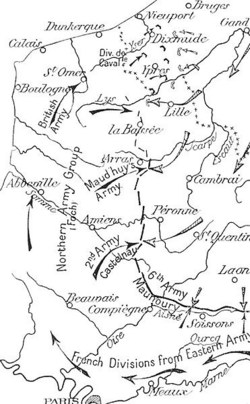
Key Facts
- Timeline: 23 November 1914 to 6 February 1915.
- Location: French and Belgian Flanders.
- Primary Belligerents: The British Empire (including Canada and India) and the German Empire.
- Key Commanders: Douglas Haig (British) and Crown Prince Rupprecht (German).
- Outcome: Inconclusive, resulting in a costly stalemate.
- Strategic Shift: Transition from a strategy of annihilation to a strategy of attrition.
The Road to Stalemate: The Race to the Sea
Between September 17 and October 17, 1914, both sides attempted to turn the northern flank of their opponent. The French Second Army moved north, while the German 6th Army shifted toward the northern flank. However, instead of finding an open flank, both armies repeatedly collided.
By early October, the French required British reinforcements to hold the line around Lille. The BEF moved from the Aisne to Flanders, forming the left flank of the Tenth Army. This movement effectively closed the "open" flank, forcing both sides to dig in and improvise field defenses.
Tactical and Technological Evolutions
As the conflict shifted from movement to static positions, new tactics emerged. British and French artillery commanders collaborated to develop the moving barrage—a technique where artillery fire advances in timed increments just ahead of attacking infantry. This was a hybrid of the British practice of silent artillery until targets were identified and the French rafale (a burst of fire that ceased before the assault).
Communication also became a critical vulnerability. Armies relied heavily on wireless communication, but lacked adequate cryptographic systems (methods for encrypting messages). Consequently, many vital orders were sent in plain language. Between September and November 1914, the British and French intercepted approximately 50 German messages, providing warnings of the timing and strength of eight major German attacks.
The First Battle of Flanders
The period leading into winter was defined by the First Battle of Flanders, including the Battle of the Yser and the First Battle of Ypres. German General Erich von Falkenhayn attempted to capture Ypres and Mount Kemmel, but by November 8, he accepted that these goals were unattainable.
| Month | Losses |
|---|---|
| August | 14,409 |
| September | 15,189 |
| October | 30,192 |
| November | 24,785 |
| December | 11,079 |
| Total | 95,654 |
The failure to achieve a decisive victory led Falkenhayn to abandon the Vernichtungsstrategie (strategy of annihilation) in favor of Ermattungsstrategie (strategy of attrition). The goal shifted to making the war too costly for the Allies to bear, hoping to force a negotiated peace.
Winter Clashes: Festubert, Givenchy, and Cuinchy
The Defence of Festubert and Wytschaete
In late November, the BEF held a 21-mile front from Givenchy to Wytschaete. The Indian Corps held the right flank. On November 23, German forces captured a section of trench east of Festubert, which was subsequently recaptured by the Meerut Division at the cost of 919 casualties.
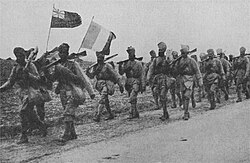
Attempts to attack Wytschaete in December failed due to uncut barbed wire and deep mud, which rendered captured ground untenable. These failures led the French command to halt most attacks in the north.
The Struggle for Givenchy
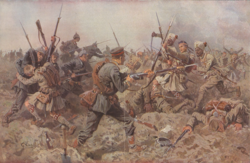
On December 20, German forces launched a heavy bombardment and exploded ten 110 lb mines under British lines at Givenchy. While the Germans initially captured several trenches, the 1st Division and French Territorial troops eventually retook the village. However, the fighting left the troops exhausted, necessitating a relief of the Indian Corps by I Corps.
The Affairs of Cuinchy
January 1915 brought extreme environmental hardships. The basin of the Lys river became a swamp of clay and water. The river rose by 7 feet, flooding trenches and forcing soldiers to stand knee-deep in water. Sickness in the First Army averaged 2,144 men per day.
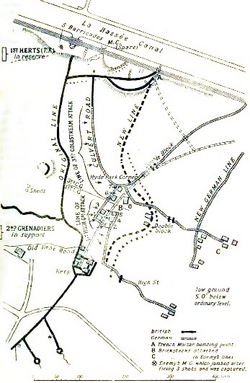
Combat centered on railway embankments and brick stacks near the La Bassée Canal. After a series of seesaw attacks and counter-attacks throughout January, the 4th (Guards) Brigade finally improved the Allied line on February 6, capturing the brick stacks and securing the junction with French forces.
Aftermath and Analysis
By February 1915, the operations had resulted in a costly stalemate. German historians later noted that while the Allies conducted several attacks between Arras and Armentières, they were largely contained. The lack of resources and the brutal winter weather prevented either side from breaking the deadlock.
This period of attrition set the stage for subsequent operations, such as the attack on Neuve Chapelle in March 1915, where the British employed a concentrated artillery bombardment to demolish German fortifications before an infantry assault.
Frequently Asked Questions
What was the primary result of the Winter Operations 1914–1915?
The operations were inconclusive. Neither the British Empire nor the German Empire achieved a decisive breakthrough, resulting in a stalemate and the solidification of trench warfare on the Western Front.
How did the environment affect the soldiers at Cuinchy?
The low-lying meadow land and clay sub-soil caused severe flooding. Soldiers often stood knee-deep in water, and the harsh conditions led to an average of 2,144 sick men per day in the First Army during January.
What was the "strategy of attrition" adopted by Germany?
Known as Ermattungsstrategie, this strategy was adopted by Erich von Falkenhayn after the failure of the strategy of annihilation. It aimed to wear down the Allied forces until the cost of war became unbearable, forcing them to negotiate peace.
What role did signals intelligence play during this period?
Because armies used wireless communication without adequate encryption, the British and French intercepted numerous German messages in plain language. This provided critical warnings about the timing and strength of several German attacks.
Who were the main combatants in the Flanders sector during this time?
The main forces included the British Expeditionary Force (with contributions from Canada and India), the French Army, and the Belgian Army, opposing the German Empire's 4th and 6th Armies.