Whangamarino Wetland Ecosystems and Biodiversity
The Whangamarino Wetland is a vital sanctuary of biological diversity, characterized by a rich tapestry of interconnected environments. Its ecological significance is recognized globally, contributing to its designation under the Ramsar Convention, an international treaty for the conservation and sustainable use of wetlands. From deep peat bogs to flowing river systems, this landscape supports a vast array of life forms, many of which are found nowhere else on Earth.
Diverse Wetland Ecosystems
The wetland is composed of several distinct ecosystems, including peat bogs, swamps, open water, river systems, and mesotrophic lags (nutrient-rich fringes between bogs and other water bodies). These varied habitats allow for a high density of flora and fauna to coexist.
Botanical diversity is a hallmark of the region, with 239 species of wetland plants identified. Approximately 60 percent of these are indigenous. While the peat bogs are dominated by wire rush (Empodisma minus), mānuka (Leptospermum scoparium), and Baumea spp., the mineralised swamp zones exhibit even greater species diversity. However, these areas also host introduced species, such as the crack willow (Salix × fragilis) and grey willow (Salix cinerea). Mosses and lichens are also prominently represented across the site.
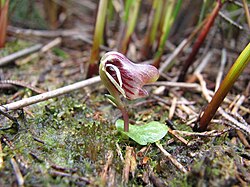
Among the flora are several rare and endangered species. These include the clubmoss (Lycopodium serpentinum) and the water milfoil (Myriophyllum robustum). Most notably, the wetland is the sole remaining habitat for the critically endangered swamp helmet orchid (Corybas carsei).
Avian Life and Rare Bird Species
The complex structure of the Whangamarino ecosystems provides essential nesting and foraging grounds for native wetland birds. One of the most significant residents is the Australasian bittern/matuku (Botaurus poiciloptilus), with the wetland supporting roughly 20 percent of New Zealand's total breeding population of this species.
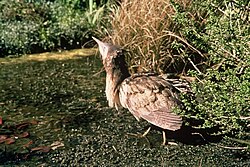
Beyond the bittern, the area is a critical site for other threatened birds, including:
- North Island fernbird/mātātā (Bowdleria punctata vealeae)
- Spotless crake/pūweto (Porzana tabuensis)
- Marsh crake/koitareke (Porzana pusilla)
- New Zealand dabchick/weweia (Poliocephalus rufopectus)
The site also attracts occasional visitors that draw the attention of amateur ornithologists, such as the Japanese snipe (Gallinago hardwickii) and the royal spoonbill/kōtuku-ngutupapa (Platalea regia).
Freshwater Fish and Invasive Challenges
Beneath the water's surface, the wetland supports a diverse community of native fish. This includes galaxiid species and both longfin and shortfin eel/tuna. A particularly significant population of the threatened black mudfish/waikaka (Neochanna diversus) also calls the wetland home.
Despite this native richness, invasive fish species pose a serious threat. The brown bullhead catfish (Ameiurus nebulosus) and koi carp (Cyprinus carpio) are especially problematic. Their aggressive feeding habits stir up bottom sediments, which destabilizes banks and damages aquatic plant life. Research conducted by Jennifer Blair, an MSc student at the University of Waikato, utilized otoliths (ear stones used to determine fish age and growth) to discover that koi carp recruits likely move into the Waikato River and Lake Waahi from the Pungarehu Stream and Lake Waikare.
Key Facts
- Global Status: Designated under the Ramsar Convention for its representative wetland ecosystems.
- Plant Diversity: 239 wetland plant species, 60% of which are indigenous.
- Exclusive Species: The critically endangered swamp helmet orchid is found here and nowhere else in the world.
- Avian Importance: Hosts approximately 20% of New Zealand's breeding Australasian bittern population.
- Threats: Invasive koi carp and brown bullhead catfish disrupt the ecosystem by stirring up sediments.
| Category | Notable Native/Rare Species | Introduced/Invasive Species |
|---|---|---|
| Plants | Swamp helmet orchid, Water milfoil, Clubmoss | Grey willow, Crack willow |
| Birds | Australasian bittern, North Island fernbird, Spotless crake | N/A |
| Fish | Black mudfish, Longfin/Shortfin eel, Galaxiids | Koi carp, Brown bullhead catfish |
Frequently Asked Questions
Why is the Whangamarino Wetland internationally recognized?
It is designated under the Ramsar Convention because it contains a rich and representative variety of wetland ecosystems, including peat bogs, swamps, and river systems.
Which plant species is unique to this location?
The critically endangered swamp helmet orchid (Corybas carsei) is found only in the Whangamarino Wetland and nowhere else in the world.
How important is the wetland for the Australasian bittern?
The wetland is highly critical, as it provides habitat for approximately 20 percent of the entire breeding population of Australasian bitterns in New Zealand.
What impact do koi carp have on the environment?
Koi carp exhibit aggressive feeding behavior that stirs up bottom sediments, which negatively affects aquatic plant life and the stabilization of the banks.
Where do the invasive koi carp in the wetland originate from?
According to a study of otoliths by Jennifer Blair, recruits appear to move from Lake Waikare and the Pungarehu Stream into the Waikato River and Lake Waahi.