West Virginia Civilians and Prisoner Exchanges during the Civil War
During the American Civil War, the region that would become West Virginia became a volatile frontier where the lines between military combatants and private citizens blurred. For many residents, the conflict was not fought on a distant battlefield but in their own backyards, leading to a cycle of arrests, forced relocations, and systemic instability.
Central to this experience was the complex system of prisoner exchange—the process by which captured soldiers and political prisoners were traded between the Union and Confederate governments to reduce the burden of maintaining overcrowded prison camps.
Key Facts
- Camp Chase in Columbus, Ohio, served as a primary detention center for West Virginia citizens.
- The "double oath" required civilians to swear loyalty to both the Federal government and the Pierpont government in Wheeling.
- Union forces employed a policy of "hard war," which included the systematic destruction of property in counties like Webster.
- Confederate authorities utilized Castle Thunder in Richmond to hold hundreds of suspected Unionists from western Virginia.
- Guerrilla warfare persisted in the region until 1869, long after the formal surrender at Appomattox.
The Politics of Imprisonment and Exchange
The Confederate government frequently intervened with the U.S. government to secure the release of West Virginia citizens. In October 1861, Jonathan M. Bennett, the auditor of Virginia, urged Confederate Secretary of War Judah P. Benjamin to prioritize these exchanges. While a program was established, it was often hampered by the political volatility of the region.
A prominent example was Judge George W. Thompson. Despite being viewed as a loyal judge by Francis H. Pierpont—who helped organize the Unionist state government in Wheeling—Thompson refused to take the "double oath" of loyalty to both the Federal and Wheeling governments. This refusal led to his arrest in May 1862 and subsequent imprisonment at Camp Chase.
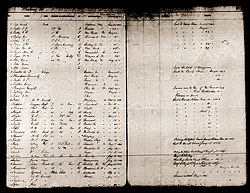
The scale of civilian arrests under the Pierpont administration was so vast that U.S. judge-advocate Levi C. Turner compared the operation to a "land-office business." Even high-ranking officials expressed concern; Joseph Holt, the U.S. Judge-Advocate General, warned Secretary of War Edwin Stanton that these extensive arrests were disrupting the prisoner exchange program.
Abuses of Power and Presidential Intervention
Investigations into Camp Chase revealed that many civilians were held on frivolous charges. Captain H.M. Lazelle reported that Major Darr, the provost-marshall in Wheeling, was "too hasty and arbitrary," noting that some prisoners were officially charged with "doing nothing."
In May 1862, the reach of these arrests nearly extended to the Catholic Bishop of Wheeling, Bishop Whelan. However, President Abraham Lincoln intervened, ordering Secretary Stanton to ensure that no action was taken against the Bishop without a direct presidential order.
Military Raids and Civilian Hardship
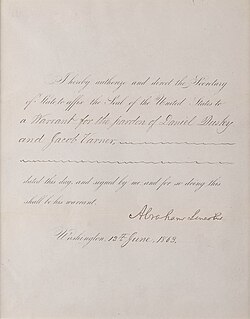
Civilians often became pawns in the struggle between rival authorities. In December 1862, Confederate rangers led by Captain Daniel Duskey raided Ripley, capturing weapons and the U.S. post office. When Duskey and Jacob Varner were later captured, they were tried as civilians. Following a request from Governor John Letcher, President Lincoln pardoned them on June 13, 1863, and they were exchanged for Union prisoners in Richmond.
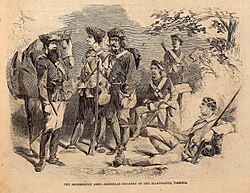
The Confederacy also targeted civilians. Historian Mark E. Neely documented 337 men from western Virginia held at Castle Thunder in Richmond. These men were often arrested for "imagined" offenses, such as voting against the secession ordinance or allowing Union soldiers to camp on their land.
The Policy of "Hard War"
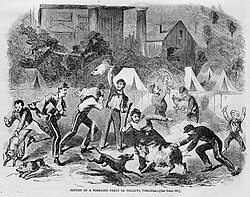
Union troops also inflicted severe hardships on the populace. Following the battle at Philippi, widespread looting occurred despite promises from Brig. Gen. McClellan to respect private property. Later, Gen. George Crook and the 36th Ohio Infantry implemented a scorched-earth policy in Webster County to eradicate guerrillas, leaving a 16-mile path of destroyed buildings and forage.
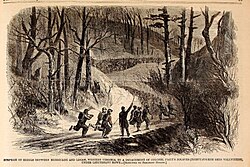
This brutality was not limited to the Union. Confederate General "Grumble" Jones was accused of brigandry and theft during the 1863 Jones-Imboden raid. Meanwhile, Brig. Gen. Robert H. Milroy attempted to levy fines on civilians to compensate for rebel raids, an action later deemed a violation of the laws of war by Maj. Gen. Halleck.
Regional Control and the Aftermath
Control of the state was fragmented. The Union held the Ohio border, the B&O railroad, and the Kanawha Valley, while Confederate forces maintained a tentative hold on the southern and eastern counties. The interior remained a dangerous "no man's land" where guerrilla warfare flourished.
| Authority | Primary Action/Policy | Key Location/Figure |
|---|---|---|
| Union (Wheeling) | Mass arrests via "double oath" | Major Darr / Camp Chase |
| Union (Military) | Scorched-earth / "Hard War" | Gen. George Crook / Webster County |
| Confederate | Political imprisonment | Castle Thunder / Richmond |
| Confederate | Martial Law (1862) | Jefferson Davis / Brig. Gen. Henry Heth |
The war's end did not bring immediate peace. While over 5,000 Confederate soldiers were paroled at Charleston and others at Appomattox, guerrilla fighters like "Rebel Bill" Smith continued to operate. Union soldiers remained in the state to manage public disturbances until 1869.
Frequently Asked Questions
What was the "double oath" in West Virginia?
The double oath was a requirement for civilians to swear loyalty to both the United States Federal government and the Unionist state government organized by Francis H. Pierpont in Wheeling.
Where were many West Virginia political prisoners held?
A large number of prisoners were sent to Camp Chase in Columbus, Ohio, while those arrested by Confederate authorities were often held at Castle Thunder in Richmond.
How did the Union treat civilians in Webster County?
Under the command of Gen. George Crook, Union forces pursued a policy of "hard war," which involved burning habitable buildings and destroying forage across a 16-mile stretch to eliminate guerrilla support.
Who was Bishop Whelan and why is he significant?
Bishop Whelan was the Catholic Bishop of Wheeling. He is significant because President Abraham Lincoln personally intervened to prevent Major Darr from arresting him.
Did the violence end immediately after the surrender at Appomattox?
No. Guerrilla warfare and public disturbances continued in West Virginia, requiring the presence of Union soldiers until 1869.