Ulysses S. GrantAmerican Civil War General18th US PresidentUnion ArmyVicksburg campaign

Ulysses S. Grant: From Civil War General to 18th President

The Life and Legacy of Ulysses S. Grant: From Soldier to President Ulysses S. Grant remains one of the most complex and significant figures in American history. From his early days as a s...

The Life and Legacy of Ulysses S. Grant: From Soldier to President

Ulysses S. Grant remains one of the most complex and significant figures in American history. From his early days as a struggling civilian to his rise as the Commanding General of the Union Army and eventually the 18th President of the United States, Grant's journey was marked by extraordinary military brilliance and a presidency defined by the challenges of Reconstruction.
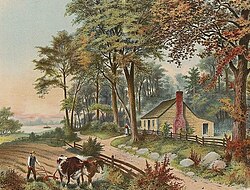
Color drawing of Grant's birthplace, a simple one-story structure, with fence and trees in front, next to the Ohio River with steamboat passing by
Grant's birthplace in Point Pleasant, Ohio
: Grant's birthplace in Point Pleasant, Ohio

Key Facts

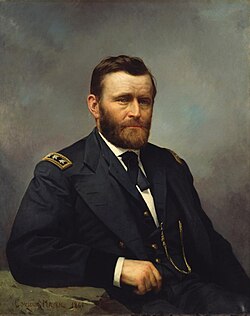
Constant Mayer's portrait of General Grant, 1866
  • Full Name: Hiram Ulysses Grant
  • Presidential Term: March 4, 1869 – March 4, 1877
  • Military Rank: General of the Armies (posthumous)
  • Political Party: Republican
  • Major Conflict: American Civil War
  • Resting Place: Grant's Tomb, New York City

Early Life and Military Beginnings
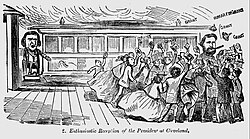
Cartoon illustration from Swingin' Round the Cirkle, or Andy's trip to the West by David Ross Locke, suggesting that Grant was a bigger draw on the multi-city tour than was Johnson

Born on April 27, 1822, in Point Pleasant, Ohio, Grant attended the United States Military Academy at West Point. He graduated and began his service in the Regular Army, eventually serving as a second lieutenant during the Mexican–American War.
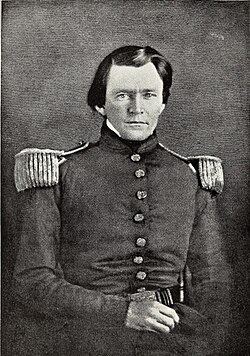
Engraving of a young Grant in uniform
Grant as a young officer, c. 1845–1847
: Grant as a young officer, c. 1845–1847

During the Mexican–American War, Grant saw significant action in several key battles, including Palo Alto, Resaca de la Palma, Monterrey, Molino del Rey, and Chapultepec.
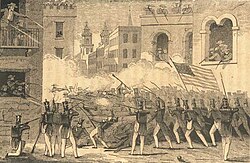
An American depiction of the Battle of Monterrey within the city
The Battle of Monterrey during which Grant saw military action
: The Battle of Monterrey during which Grant saw military action

Following his resignation from the Army in 1854, Grant entered a period of civilian struggle. During these years between major conflicts, he lived in a log house he built known as "Hardscrabble."
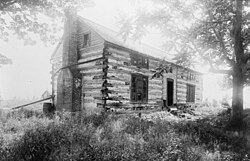
A small log cabin
"Hardscrabble", the log house built by Grant in between wars
: "Hardscrabble", the log house built by Grant in between wars

The Civil War: Rise to Command

Andrew Johnson and Ulysses Grant pictured during Johnson's Swing Around the Circle tour (1866)

When the American Civil War erupted, Grant returned to military service. His early commands included the 21st Illinois Infantry Regiment and the 4th Infantry Regiment. He quickly proved his capability through a series of decisive victories.

Early Victories and the Vicksburg Campaign

Grant's early successes at Belmont, Fort Henry, and Fort Donelson established him as a rising star in the Union Army. His leadership during the Battle of Shiloh was a turning point, despite the heavy casualties sustained.
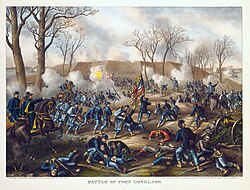
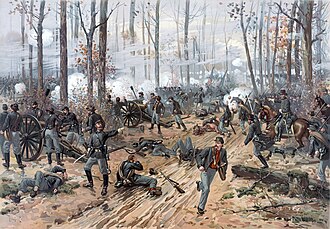
Battle of Fort Donelson by Kurz and Allison, 1887
: Battle of Fort Donelson by Kurz and Allison, 1887
Battle of Shiloh by Thure de Thulstrup, 1888
: Battle of Shiloh by Thure de Thulstrup, 1888

One of his most brilliant strategic achievements was the Vicksburg campaign. By successfully navigating Porter's gunboats through the Confederate lines on the Mississippi River, Grant was able to secure a vital victory for the Union.
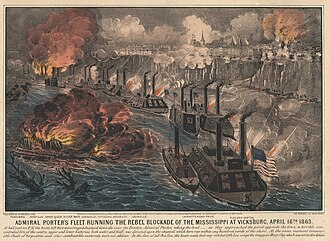
Grant's successful gamble: Porter's gunboats night ran the Confederate gauntlet at Vicksburg on the Mississippi River.
: Grant's successful gamble: Porter's gunboats night ran the Confederate gauntlet at Vicksburg on the Mississippi River.
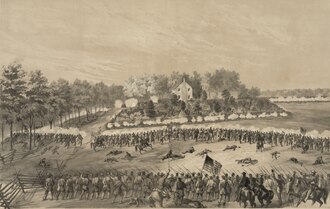
The Battle of Jackson, fought on May 14, 1863, was part of the Vicksburg campaign.
: The Battle of Jackson, fought on May 14, 1863, was part of the Vicksburg campaign.

The Path to Victory

Following the success at Vicksburg, Grant led the Chattanooga campaign, including the victory at Missionary Ridge. He was subsequently promoted to Lieutenant General. His leadership during the Overland Campaign—which included grueling battles at the Wilderness, Spotsylvania, and Cold Harbor—eventually led to the Siege of Petersburg.
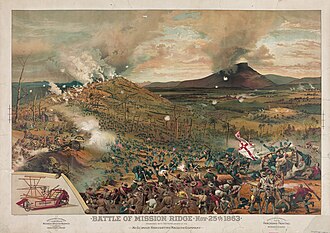
Union troops swarm Missionary Ridge and defeat Bragg's army.
: Union troops swarm Missionary Ridge and defeat Bragg's army.
General Grant at his headquarters in Cold Harbor, Virginia, June 1864
: General Grant at his headquarters in Cold Harbor, Virginia, June 1864

The war reached its climax when Grant's relentless pressure forced the surrender of Robert E. Lee at Appomattox Court House, effectively securing the Union victory.
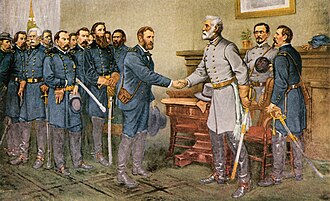
Defeated by Grant, Lee surrendered at Appomattox Court House.
: Defeated by Grant, Lee surrendered at Appomattox Court House.
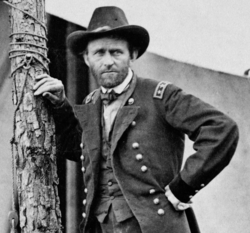
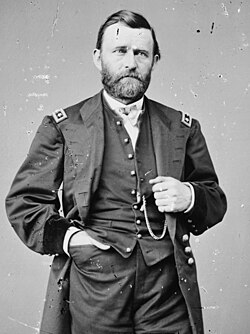
Portrait of General Grant, c. 1861-1865
: Portrait of General Grant, c. 1861-1865

The Presidency and Reconstruction

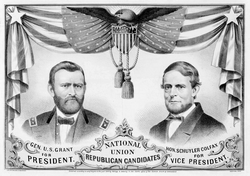
Grant–Colfax Republican ticket

After serving as Commanding General of the U.S. Army, Grant was elected the 18th President of the United States. His administration was tasked with the monumental challenge of Reconstruction—the period of rebuilding the South and integrating formerly enslaved people into the nation's political and social fabric.
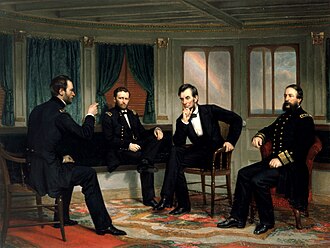
Grant (center left) next to Lincoln with General Sherman (far left) and Admiral Porter (right) – The Peacemakers by George Peter Alexander Healy, 1868
: Grant (center left) next to Lincoln with General Sherman (far left) and Admiral Porter (right) – The Peacemakers by George Peter Alexander Healy, 1868
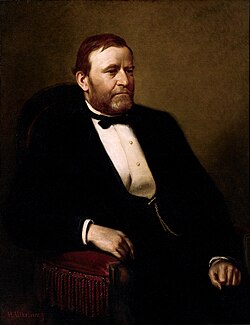
Official White House portrait of President Grant by Henry Ulke, 1875
: Official White House portrait of President Grant by Henry Ulke, 1875

Policy and Administration

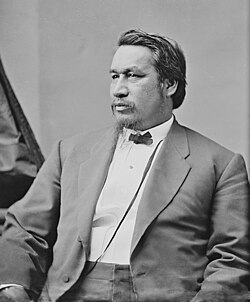
Grant's presidency saw significant actions regarding civil rights and foreign policy. He appointed Amos T. Akerman as Attorney General, who was instrumental in prosecuting the Ku Klux Klan. In terms of Indian policy, he appointed Ely Samuel Parker, a Seneca, as the first Native American Commissioner of Indian Affairs.
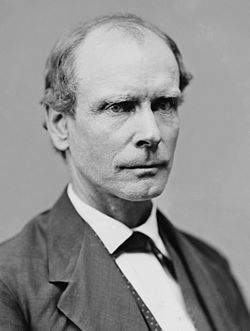
Amos T. Akerman, appointed Attorney General by Grant, who vigorously prosecuted the Ku Klux Klan
: Amos T. Akerman, appointed Attorney General by Grant, who vigorously prosecuted the Ku Klux Klan.
Formal photographic portrait of a sitting mustached man
Ely Samuel Parker, appointed by President Grant as the first Native American (Seneca) Commissioner of Indian Affairs
: Ely Samuel Parker, appointed by President Grant as the first Native American (Seneca) Commissioner of Indian Affairs

On the international stage, Grant's administration engaged in various diplomatic efforts, including the settlement of the Alabama Claims via treaty and arbitration, and interactions with nations such as Hawaii and the Dominican Republic.
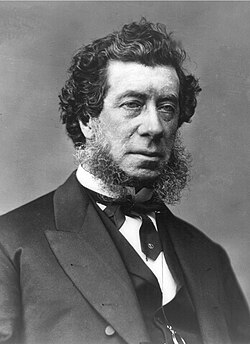
Formal photographic portrait of bearded man
Secretary of State Hamilton Fish and Grant successfully settled the Alabama Claims by treaty and arbitration.
: Secretary of State Hamilton Fish and Grant successfully settled the Alabama Claims by treaty and arbitration.
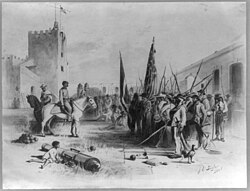
Santo Domingo City; watercolor by James E. Taylor, 1871
: Santo Domingo City; watercolor by James E. Taylor, 1871
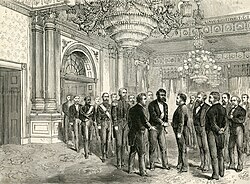
reception line
King Kalākaua of Hawaii meets President Grant at the White House on his state visit, 1874.
: King Kalākaua of Hawaii meets President Grant at the White House on his state visit, 1874.

Challenges and Scandals

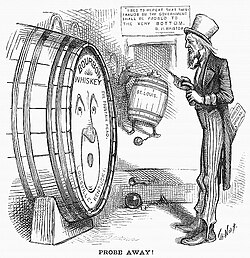
Grant's administration was not without controversy. His second term was marked by the Panic of 1873 and various political scandals, such as the Whiskey Ring investigation. Financial instability was also highlighted by the "Black Friday" gold collapse.
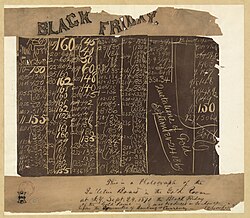
Photograph of the blackboard in the New York City Gold Room on Black Friday, showing the collapse of the price of gold
: Photograph of the blackboard in the New York City Gold Room on Black Friday, showing the collapse of the price of gold
"Uncle Sam" cartoon tapping a Louisville whiskey barrel, captioned "probe away"
Harper's Weekly cartoon on Bristow's Whiskey Ring investigation
: Harper's Weekly cartoon on Bristow's Whiskey Ring investigation

Post-Presidency and Final Years

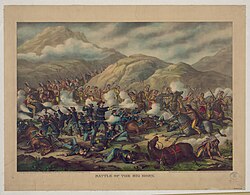
The Battle of the Little Big Horn, 1876

After leaving office in 1877, Grant embarked on a world tour, acting as a global diplomat. Despite facing business failures and attempting a third term, he remained a prominent figure in American life.
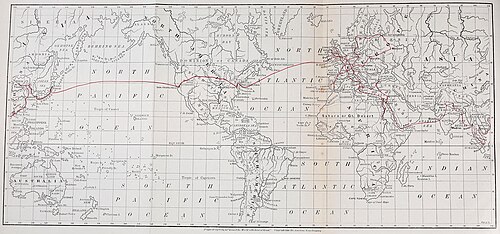
Map of Grant's world tour by J. S. Kemp, 1879
: Map of Grant's world tour by J. S. Kemp, 1879

In his final days, battling illness, Grant focused on writing his memoirs to secure his family's financial future. He passed away on July 23, 1885, at the age of 63.
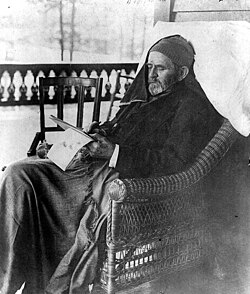
Grant sitting in a porch chair wrapped in blankets
Grant working on his memoirs, less than a month before his death
: Grant working on his memoirs, less than a month before his death

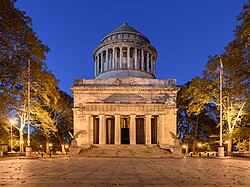
He was honored with a massive funeral procession and is now interred in a grand monument in New York City.
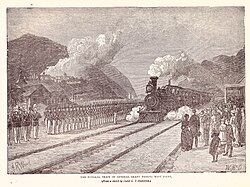
Drawing of a steam engine and train approaching station with an honor guard at attention
Grant's funeral train at West Point
: Grant's funeral train at West Point
Neoclassical structure with dome
Grant's Tomb at dusk, 2016
: Grant's Tomb at dusk, 2016

Summary of Presidential Terms

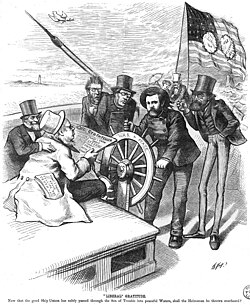
A Thomas Nast cartoon depicting Grant steering a ship and being challenged by opponents during the presidential election of 1872.
Cartoon by Thomas Nast on Grant's opponents in the reelection campaign
Ulysses S. Grant's Executive Roles
Role Period Preceded By Succeeded By
Commanding General, U.S. Army 1864–1869 Henry Halleck William Tecumseh Sherman
18th President of the U.S. 1869–1877 Andrew Johnson Rutherford B. Hayes
Acting Secretary of War 1867–1868 Edwin Stanton Edwin Stanton

Frequently Asked Questions

A cartoon depicting Grant after vetoing the Inflation bill.
Grant is congratulated for vetoing the "inflation bill" in 1874.
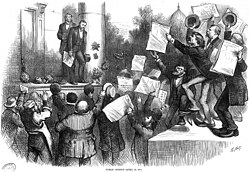
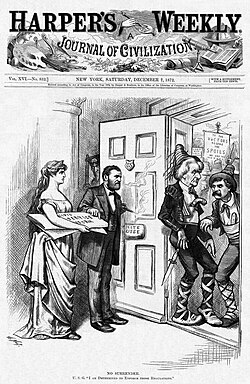
Cartoonist Thomas Nast praises Grant for rejecting demands by Pennsylvania politicians to suspend civil service rules.
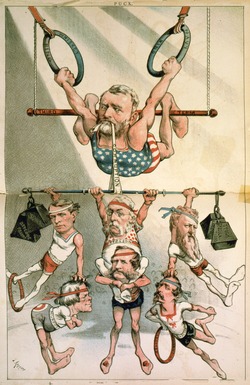
Grant, shown in a cartoon as an acrobat hanging from rings, holding up multiple politician/acrobats
Cartoonist Joseph Keppler lampooned Grant and his associates. Puck, 1880

What was Ulysses S. Grant's highest military rank?

During his lifetime, Grant held the rank of General of the Army. Posthumously, on April 19, 2024, he was awarded the rank of General of the Armies.

Who were Grant's Vice Presidents?

During his presidency, Grant served with two Vice Presidents: Schuyler Colfax (1869–1873) and Henry Wilson (1873–1875). The position remained vacant from 1875 to 1877.

What was the "Vicksburg campaign"?

The Vicksburg campaign was a series of military operations during the American Civil War that resulted in the Union capturing Vicksburg, Mississippi, which gave them control of the Mississippi River.

How did Grant's presidency impact civil rights?

Grant's administration took active steps to protect civil rights during Reconstruction, including the appointment of officials like Amos T. Akerman to prosecute the Ku Klux Klan.

Where is Ulysses S. Grant buried?

Grant is buried in Grant's Tomb, located in New York City.

References

  1. Vice President Wilson died in office. As this was prior to the adoption of the Twenty-fifth Amendment in 1967, a vacancy in the office of vice president was not filled until the next ensuing election and inauguration.
  2. Pronounced /ˈhrəm juːˈlɪsz/ HY-rəm yoo-LISS-eez
  3. One source states Hamer took the "S" from Simpson, Grant's mother's maiden name.[14] According to Grant, the "S." did not stand for anything. Upon graduation from the academy he adopted the name "Ulysses S. Grant".[15] Another version of the story states that Grant inverted his first and middle names to register at West Point as "Ulysses Hiram Grant" as he thought reporting to the academy with a trunk that carried the initials H.U.G. would subject him to teasing and ridicule. Upon finding that Hamer had nominated him as "Ulysses S. Grant," Grant decided to keep the name so that he could avoid the "hug" monogram; and it was easier to keep the wrong name than to try changing school records.[16]
  4. At the time, class ranking largely determined branch assignments. Those at the top of the class were usually assigned to the Engineers, followed by Artillery, Cavalry, and Infantry.[27]
  5. Several scholars, including Jean Edward Smith and Ron Chernow, state that Longstreet was Grant's best man and the two other officers were Grant's groomsmen.[32] All three went on to serve in the Confederate Army and surrendered to Grant at Appomattox.[33]